
You start every January with a new plan: stricter rules, cleaner eating, earlier workouts. By March, the plan has quietly vanished, and you’re left blaming yourself… again. In this episode, we pull back the curtain on why your 2025 diet really failed—and why it has a lot less to do with willpower and a lot more to do with being a midlife woman with an actual life, actual hormones, and actual responsibilities.
We unpack the hidden reasons your “perfect” plan fell apart: night snacking on the couch, saying yes to food you don’t want so you don’t offend anyone, mistaking exhaustion for hunger, and using “I deserve this” food as your only form of self-care. Instead of shaming you for not sticking to the plan, we treat those moments as data that show you what’s really going on with your body, brain, and environment.

You’ll learn why traditional diets aren’t designed for midlife women dealing with perimenopause, stress, aging parents, and a heavy mental load—and why that matters for belly fat, cravings, brain fog, and burnout. Most importantly, you’ll walk away with a simple, kind, three-step “post-mortem” to review 2025 and design 2026 in a completely different way.
If you’re tempted to start another intense diet, cleanse, or “reset,” listen to this first. It might be the thing that finally breaks the start–stop–self-blame cycle you’ve been stuck in for years.
The Biggest Problem Midlife Women Face Regarding Why Diets Don’t Work in Midlife
The biggest problem midlife women face is that most diets are not built for their bodies or their lives. Traditional plans assume stable hormones, low stress, and plenty of free time—none of which describe a midlife woman juggling perimenopause or menopause symptoms, a demanding career, aging parents, adult children, and an overloaded nervous system. When you’re dealing with belly fat, brain fog, night sweats, anxiety, and cravings, a generic “eat less, move more” plan is not just unhelpful, it’s unrealistic. It ignores how your hormones, stress levels, and sleep patterns influence hunger, energy, and mood.
On top of this, diets are designed for ideal circumstances, not real Tuesdays. They don’t factor in late meetings, caregiving emergencies, grief, or the emotional weight of being the default problem-solver in your family. So when your “perfect” plan collides with a week of bad sleep, a parent in crisis, or a brutal project at work, it breaks. Then you assume you are the problem. You tell yourself you’re lazy, undisciplined, or “hopeless,” instead of recognizing that the plan never fit your midlife reality in the first place.
Finally, diets treat overeating as a willpower issue instead of a skills issue. They never teach you how to handle night snacking, restaurant peer pressure, “I don’t want to offend her” eating, or using food as your only form of self-care after a hard day. Without skills like compassionate self-talk, boundaries, stress relief, and planning for low-motivation days, even the most “perfect” macros or meal plans will eventually crack under the weight of real life.
What You Can Do Right Now
Start by doing a gentle post-mortem on your 2025 health goals. Instead of saying, “I wanted to eat better,” write down exactly what you tried: Whole30, intermittent fasting, cutting out sugar, tracking macros, 5 a.m. bootcamps, nightly walks—whatever it was. Then, instead of blaming “lack of discipline,” ask what was happening in your life when those plans fell apart. Were you dealing with a busy season at work? Caring for an aging parent? Struggling with insomnia, hot flashes, or emotional burnout? Naming the real obstacles helps you see that your plan didn’t fail because you’re weak; it failed because it didn’t account for your reality.
Next, choose one specific behavior to focus on in January—like night snacking, “I deserve this” eating after work, or saying yes to food you don’t want in social situations. Then pick one skill to practice around that behavior: kinder self-talk after a slip, setting a small boundary with food, swapping “I deserve this” treats for real rest, or creating a bare-minimum version of your habit for days when you have no energy. This simple, targeted approach lets you build real, sustainable change without trying to overhaul your entire life at once.
The Listener Takeaway: Why This Episode Matters
This episode matters because it finally separates you from the diet failures you’ve been carrying around for years. It shows you that your belly fat, cravings, fatigue, and “I know what to do, I’m just not doing it” struggle are not signs that you’re broken—they’re signals that the strategies you’ve been handed were never designed for midlife women like you. When you see overeating and “falling off the wagon” as skill gaps instead of character flaws, you can start to feel hopeful again instead of ashamed.
You’ll walk away with permission to stop punishing yourself with harsher rules and start asking better questions: What actually got in the way? What is my brain or body trying to tell me? What one skill would make this easier on a real, messy Tuesday? That shift—from self-blame to problem-solving—is what makes long-term change possible. Instead of starting another year with an all-or-nothing reset, you can enter 2026 with a simpler, kinder, more effective approach that respects your midlife body, your responsibilities, and your capacity.
Are you loving the podcast, but arent sure where to start? click here to get your copy of the Done with Dieting Podcast Roadmap (formerly Total Health in Midlife) Its a fantastic listining guide that pulls out the exact episodes that will get you moving towards optimal health.
Take the Quiz: Why Do Your Healthy Habits Keep Falling Apart? If you've ever wondered why you know exactly what to do but still can't seem to stick with it, this quiz was built for you. In about 3 minutes, it identifies your specific pattern: the real reason your follow-through keeps breaking down, and what to address first. Your results are delivered straight to your inbox.
I am so excited to hear what you all think about the podcast – if you have any feedback, please let me know! You can leave me a rating and review in Apple Podcasts, which helps me create an excellent show and helps other women who want to get off the diet roller coaster find it, too.
Watch or Listen to the Episode:
WHAT YOU'LL LEARN
- Why your 2025 diet failed even if you “did everything right” at the start
- How midlife hormones, stress, and exhaustion quietly sabotage rigid diet plans
- The difference between willpower problems and skill problems when it comes to overeating
RESOURCES
- Goal Setting Series Part 4: Maintaining Motivation
- Free Guide: 82 Reasons You Overeat That Have Nothing to Do with Food
- Total Health in Midlife Podcast Ep #189: How to Stop Overeating
- Total Health in Midlife Podcast Ep #201: How to Stop Overeating Without Dieting
- Total Health in Midlife Podcast Ep #233: How to Eat Intuitively
- Total Health in Midlife Podcast Ep #234: Why you Overeat at Night
- Total Health in Midlife Podcast Ep #235: "Food Is Fuel" is a lie
- Total Health in Midlife Podcast Ep #236: The One Thing Diets Never Teach
- Total Health in Midlife Podcast Ep #251: Cravings, Stress, Belly Fat: Why Willpower Isn’t Your Problem
- Total Health in Midlife Podcast Ep #252: Nighttime Cravings in Midlife: It's Not a Willpower Problem
- Total Health in Midlife Podcast Ep #253: Done With Diets but Still Overeating? How to Break the Cycle
- Total Health in Midlife Podcast Ep #254: How to Trust Yourself Around Food Again in Perimenopause
- Total Health in Midlife Episode #262: 3 Types of Overeating
Full Episode Transcript:
251 - Cravings, Stress, Belly Fat: Why Willpower Isn’t Your Problem
Elizabeth: [00:00:00] So if you started last January with a brand new diet and by March you were quietly pretending that. It never happened. Right? This episode is for you and I want you to imagine something for a second. What if the reason that your 2025 diet, quote unquote failed, actually had nothing to do with you being weak or broken or undisciplined and everything to do with the fact that the plan itself.
It was never built for real midlife women and our brains and hormones and life responsibilities. In the next 20 to 30 minutes, I am gonna show you why your fresh start fizzled out, even if you did everything right at the beginning, and why that is actually really good news for you. Because when you understand the real reasons that.
We overeat, we [00:01:00] snack at night. We say yes to food that you don't want or bail on your workouts. You can finally stop punishing yourself and start fixing the right problem instead of beating yourself up. If you're already thinking about trying a new diet this year, I want you to hit pause. Listen to this episode first.
It might be the thing that finally breaks the start strong fall off. Blame myself cycle that you've been stuck in for decades.
Welcome to the Total Health and Midlife Podcast, the podcast for women over 40 who want peace with food, ease in their habits, and a body that they don't have to fight with.
Hey everyone. Welcome back to the Total Health and Midlife Podcast. I am your host, Elizabeth Sherman, and I am really super glad that you are here with me today because it is my mission to help women everywhere improve their health and. Since it's early January, this is the first episode of [00:02:00] 2026, maybe you've got a fresh notebook, a pretty new planner, a couple of new pens that actually still work, and there's that feeling of, okay, 2026, this is the year I finally get my shizz together.
You're flipping through the empty calendar pages and it almost feels like a clean kitchen counter before anyone has cooked on it. So much potential. So many color-coded meal plans and workouts that the future version of you is totally gonna do. And if we're being honest, last year probably started out much the same way.
So much possibility. I wanted you to think back to 2025, January, 2025. You might have sworn off sugar or downloaded a new app designed to help you stay on track or decided that's it. From now on, I'm getting up at 5:00 AM three days a week to work out before anyone else needs me. [00:03:00] And maybe you stuck with it for a while.
long enough for the water bottle to lose its novelty and the new leggings to go through the wash a few times and then life started lifeing. I was reminded of this the other day when I saw a Facebook friend on social media asking for help about going fully vegan because her cholesterol was getting high.
Now I see this kind of thing a lot with my clients overnight. She wanted to go from, I eat like a normal person, normal, in quotes, to, I am now a perfectly organized vegan who never wants for anything and look. There is nothing wrong with being vegan. Lots of people do it and feel fantastic, but for most folks going fully vegan, cold Turkey, when you're already juggling work, aging parents, adult kids, a partner, a dog, a house, maybe your own hot flashes, [00:04:00] it's not as easy as you would think.
In fact, it can feel like a part-time job. And what I see over and over is this. We don't fail because we're weak, we're undisciplined, or any other personal failing. We fail because the plan doesn't account for the life we actually have. The plan was designed for the productivity guru on Instagram who doesn't have your responsibilities, or for the male doctor whose wife is quietly running the rest of his life behind the scenes.
For the wellness influencer who has a house manager, a nanny, a chef, a video editor.
Of course the plan doesn't fit your Tuesday when your mom calls from the doctor's office, your boss moves a deadline and you are eating leftovers for dinner at 9:00 PM just standing in a dark kitchen. So in today's episode, we are not going to beat you up for whatever, quote unquote didn't [00:05:00] work in 2025.
We're gonna do a kind. Honest postmortem. We're gonna look at why those big, fresh start plans fell apart, and how to design 2026 in a way that respects your hormones, your stress, your schedule, and your very real life. Because you are not broken. Your brain and your body have just been trained a certain way.
This year, instead of trying to become a completely different person by Monday, we are gonna look at how to change the training. So let's talk about why that 2025 plan was kind of doomed from the start. Now, most of us make goals as if we're planning for an imaginary version of our life. You know, this version, she goes to bed on time.
She wakes up before her alarm. Her kid never calls with a crisis. Her parents never need her for a [00:06:00] last minute ride to the doctor, her boss. Respects her boundaries, and she's adorable and absolutely perfect, and she also doesn't exist. So you sit down in early January and you decide, okay, I'm gonna cook dinner at home five nights a week.
Real food, no takeout, no quote unquote cheat nights, right? And on paper, it looks amazing. It feels doable. But then when you actually look at your calendar, you forget about the Wednesday night meeting that always runs late. You forget about the week your mom's having a procedure. You forget that by Thursday brain feels like a thousand bees have taken over, and the idea of chopping one more vegetable makes you just want to cry and give up. So it's not that cooking at home is a bad idea. It's that cooking five nights a week with new recipes after long days when you're already stretched [00:07:00] thin does not match the life you actually live.
And not that you can't somehow get there in the future, but right now you haven't leaned into that version of you. It's too dramatic of a shift. And so the same thing happens with our workouts. You decide, I'm gonna start getting up at 5:00 AM go to the gym before work because it's a flex. It's something that disciplined people seem to do, right?
You picture yourself waking up, getting out of bed in the dark earbuds, in coffee, in hand, loving your new identity as this 5:00 AM person. Maybe week one kind of works. You're fueled by fresh start energy and some new workout wear, but then once you have one night of insomnia or your partner gets sick, or your mom calls late night, or you're lying there at midnight with your mind racing about your parents' [00:08:00] health.
Or the project that's due at work and you finally fall asleep at one 30 in the morning and that 4 45 alarm, your body is like, absolutely not. Not today. Now nothing has gone wrong there. Your body is doing what it's supposed to do. It's protecting you from being even more exhausted. If you listened to my goal setting series, you've heard me say this before, motivation is a fickle beast.
We love motivation because it feels fantastic. It feels like a clean slate and a shot of espresso for your soul. Motivation never shows up on the days that you need it most. It's there on January 2nd when you're writing in your planner with your fancy pens. It's not there on a random Tuesday in March when you're stressed, tired, and someone brought Girl Scout cookies into the office.
We build these plans assuming that [00:09:00] motivation will hold our hand from January through December, but it won't. So when motivation disappears. You don't stick to the plan, you think? See, I knew it. I just can't stick with anything. I am the problem. I have a different belief that I come back to with my clients and with myself over and over and over again.
It's that we make mistakes when our reality doesn't meet expectations. And the expectation that sneaks in under the radar is this one. I will want to do this every day. I will want to cook. I will want to go to the gym. I will want to say no to dessert. I will want to get to bed on time. But here's the thing, you won't, not every day, not even most days, sometimes there will be days when you don't wanna move your body.
[00:10:00] Days when you want to eat all the french fries days when all you wanna do is crawl into bed with Netflix and a bag of something soothing. None of that means that there's something wrong with you. Quite honestly, it just means that you're human. So when you say, I know what to do, I'm just not doing it, I want you to hear this.
That sentence is not evidence that you are hopeless. It's just data. It's a sign that there's a gap between the plan and your real actual lived life between what you expect your brain and body to do and how they actually work under stress, hormones, aging and responsibilities. You don't need more shame.
You don't need a stricter plan either. You don't need another January where you white knuckle it for three weeks and then blame yourself when it all falls apart. You need a plan that assumes that you [00:11:00] are going to be tired Sometimes that assumes that you are going to feel stress, that assumes that the weather will be terrible, that your mom will call or your boss will email, or you'll just not have a day when you care about your protein goals.
And you need skills that help you to navigate those moments instead of pretending that they're just not gonna happen. So if it's not about willpower, then what is it about? That's what we're gonna get into next when we strip away all of the drama. Overeating isn't really a willpower problem. It's actually a skills problem, and it's not just overeating.
It's the late night snacking that you don't even really fully enjoy. It's not getting your workout in when you promised yourself that you would. It's staying up way past bedtime, scrolling on your phone, and it's saying, I'm not [00:12:00] having dessert tonight. And then finding yourself in the freezer with the ice cream.
Anyway, it's the same handful of skills that sit underneath every single health habit that you care about. And the first one is how you talk to yourself after a slipup. Because here's the thing, as a human, you will mess up. You will eat past uncomfortably full, you will skip workouts.
You will have weeks where you feel totally off your game. Relapse is not a sign that something has gone wrong. It's actually part of being a human. What actually shapes your identity is what you do next. Now most women go straight to, I blew it.
I'm hopeless. I always do this. What is wrong with me? And if you imagine talking to a friend that way, it makes sense why you don't wanna try again. The [00:13:00] next day, you've turned one overeating episode into a full on character assassination. The skill is learning to say something more like, well, of course that happened.
I was exhausted, I was stressed. I didn't have a plan for when those things happen. Okay, what can I learn for next time? What were the warning signs and what could I have done differently? Same event, totally different experience, and over time, totally different identity. Now, another skill is talking to yourself instead of just listening to yourself.
Let me explain. Your brain is like a radio that never turns off. Some of what it offers is actually really super helpful. Like don't forget to defrost the chicken or remember to pick up your prescription. And some of it is pure [00:14:00] nonsense, especially when you are depleted like you deserve this, or one won't hurt or you've already blown it, you may as well keep going or we'll start again on Monday.
Now our brains. Every single one of us, every single human brain are wired to seek pleasure, avoid pain, and do it as efficiently as possible. That wiring has kept humans alive for millennia, although it's not very helpful when there's a pantry full of snacks and a DoorDash app. At the end of the day, decision fatigue is high.
You're tired of taking care of everyone else, and your brain is saying, I deserve this about the chips or the wine, or the cookies, whatever is easiest. And listen, sometimes that's true. Sometimes the cookie is the right decision, right? Like, I don't wanna live a [00:15:00] life where I never eat a cookie ever again.
The skill here is to pause and talk back to yourself to ask, do I like my reasons for eating the cookie? Is this cookie special? Will future me tomorrow morning or next week be okay that I made this choice? You don't have to argue with every thought. You just have to stop treating every sentence that your brain offers you.
As the truth, as a fact, as something that you have to do. Now, another skill is planning for the days when you're just not gonna feel like it. Now, most plans are built for days when you feel inspired, like, I'm gonna walk 45 minutes, or I'm gonna cook a full dinner tonight. I'm gonna go and be in bed by 10 o'clock no matter what.
There will always be days when you absolutely do not want to [00:16:00] do those things. So instead of pretending that those days will not happen, we build them into the plan. What's your contingency plan? What's the bare minimum of that habit? How can you lower the bar of the task so that it fits when life gets chaotic?
Now having your future selves back. Means acknowledging that the you of tomorrow is not gonna wake up totally different than the person that you are today. She will still be you with your same schedule, your same stress, and your same brain. So we make it easier for her to show up instead of assuming that she will magically become this disciplined person.
And then there's the bonus skill. Dropping the all or nothing thinking when you make a plan. Now, most women decide in January that they are gonna overhaul their food, their [00:17:00] workouts, their sleep, their alcohol, their social media, and their entire personality by next week. And that's not a plan, that's actually a fantasy.
And so instead, we treat your health like a series of dials, not a light switch. Maybe in January you turn up the evening snacking, dial and leave everything else where it is. Or you focus on walking more and you don't touch your food just yet. One skill, one area at a time. Now these skills, self-talk after a slip up, talking back to your brain.
Planning for, I don't feel like it. Letting go of all or nothing thinking are the foundation for every single health behavior that you aspire to, whether it's eating, moving, sleeping, stress, all of it. Now, let's plug this into some real life, very specific [00:18:00] reasons that you overeat that have nothing to do with willpower or even food.
let's make this really concrete because this is where most women think I just need more discipline, when actually you need a totally different skill. So I have this free guide, it's called The 82 Reasons You Overeat That Have Nothing to do with Food.
And one of the reasons that I list in the guide is I don't wanna offend somebody by not eating what they prepared. So. My client, Barbara had a book club gathering and one of the women who was there, someone she barely knew, brought pudding that she was very proud of, and of course she wanted to share it.
She offered it to Barbara, and Barbara knew that it was full of dairy. She also knew that she is lactose intolerant. Her body has made it very, very clear. [00:19:00] But in that moment, Barbara felt trapped like a deer in the headlights. She didn't wanna be rude and she didn't wanna make it awkward, so she ate the pudding anyway, even as her brain was screaming, we are going to pay for this.
What are you doing? She did pay for it. She went home. She felt awful. She ended up in bed feeling sick, and she was totally mad at herself. Now, that's not a willpower problem. That's a boundaries and people pleasing problem. The skill there is learning how to say kindly and clearly. Oh my gosh, thank you so much for offering that.
It looks amazing, but you know, I am lactose intolerance, so. I'm really gonna have to pass, but I so appreciate you thinking of me and then letting them have whatever feeling they're gonna have about that, which honestly probably isn't gonna be anything. [00:20:00] You are not overeating because you're undisciplined, you're overeating because you are taught that keeping other people comfortable matters more than you feeling good.
now another common reason is you're used to snacking while watching TV at night. This is one that I recognize. So there's the couch, there's the TV and the snack, and it's like this three step dance. Your brain has completely memorized, and so by eight 30 at night, you might not even be hungry. It's just this is the next thing that we do.
I sit here, I turn on the show, and I eat The food becomes part of the experience, kind of like the remote. Now, again, it's not a willpower issue. This is a habit loop. The skill here is slowing down enough to ask yourself the question, do I really want this [00:21:00] or is this just what I've always done? Sometimes you still decide, yeah, I want popcorn.
It sounds great, but other nights you might realize, no. I'm actually just tired and bored, and you change one piece of the routine. And so maybe you drink cocoa instead, or you knit while you watch, or you only watch one episode instead of three. And then there's this reason that
totally resonates that you're exhausted and you're mistaking fatigue for hunger. This happens consistently for women in midlife. Let's say it's four 30 or 9:00 PM you're wiped out. Your brain feels like it's running on fumes, and it feels like hunger. You need to get awake. There's this gnawing emptiness of, I need something feeling, and food works for a minute.
It's quick [00:22:00] energy, it's quick comfort, and then you feel heavy or wired or guilty. The skill here is to pause and ask yourself, if I couldn't eat right now, what would I need now? Now if the answer is I need to go to bed or to not have anyone talk to me for a good 10 minutes, or maybe have a good cry, then food was never the need.
Your body was asking for rest or quiet or emotional release, and instead you gave it pretzels.
Then we have a favorite of my clients, which is the reason that I believe that I deserve this after a hard day. And the part that we don't say out loud is because food is the only self-care that I allow myself. Now, this one is huge and very prevalent for so [00:23:00] many women. Food is the one thing. We don't have to justify.
You can't take a weekend away. You feel guilty booking a massage. You don't want to burden anyone by asking for help, but a glass of wine, a drive-through, run a sleeve of cookies sitting on the couch. No one has to approve that. So food becomes your reward, your break, your me time, your silent protest.
Diets never talk about this. They just say, don't eat that. Track your points have willpower. They ignore the emotional economy of your life. The skill is expanding the menu of, I deserve this options. I deserve to rest when I'm tired. I deserve to say no to things that drain me. I deserve a body that I don't [00:24:00] constantly push.
I deserve a body that I don't constantly punish. Food can still be a pleasure, but it doesn't have to be your only pleasure. I have one more example that I'd like to share. Now. My client, Susan, knew exactly what she wanted whenever she went out to eat, but she hated the idea of. Quote unquote being difficult.
She worried that the server would roll their eyes or that the kitchen staff would spit in her food if she asked for croutons on the side or dressing on the side, or a substitution. So she would order something that she didn't really want, just to be easygoing, and then she would go home, not satisfied, and she would eat.
Again, this is not a discipline problem. It's a, I'm not allowed to take up space problem. I'm not allowed to have what I [00:25:00] want.
I'd like the salad, no croutons dressing on the side, please, and practicing sitting in the discomfort of maybe, possibly someone thinking that you're a little extra. When you zoom out, none of these are solved by diets or more willpower. They are solved by boundaries, honest self check-ins, new routines, and letting yourself matter.
There are the kinds of reasons that I dig into in my guide, the 82 Reasons You Overeat that have nothing to do with food, because once you see the real reason, you can actually practice the right skill instead of beating yourself up. So I wanna slow this down for a minute and actually coach you through a little reflection on 2025.
Now, if you're able, you might even pause after each question that I ask and jot a few things down or just answer in your head. So the first [00:26:00] question that I have is. What were your actual goals and what did you actually try? Now I don't want you to answer with the vague version of, I wanted to eat better, or I wanted to move more.
I'd like you to get specific. Did you try Whole 30? Did you do a dry January? Did you track macros for a while? Did you sign up for a 5:00 AM bootcamp? Did you say no sugar or no carbs after 3:00 PM or I'm only eating clean? Maybe you stacked a couple different habits together. Like I'll do 10,000 steps a day.
I'll drink a gallon of water, no snacks in bed by 10, and I'm gonna meditate Now. List all of those things out in your mind. You had reasons for choosing them, you were trying to help yourself. That's really important. It matters. Now, the second question that I have for you is what really got in the way?
And here's the [00:27:00] rule you're not allowed to answer with, well, I'm just weak, or I have no discipline, or there's something wrong with me. Those are not reasons, those are insults. So instead, zoom out and really look at what was happening around you at that time. What was going on at work? Did your job get busier?
Did a big project start? Was there a new boss? Were there layoffs? Was there pressure? What was happening at home? Were you dealing with aging parents who needed more help, or adult kids who were moving out or moving back in? Were there health scares yours or someone else's? Did someone close to you get sick or did you lose someone?
Where were you exhausted? Where were you grieving? Where were you overextended saying yes when you really wanted to say no. Did you start stress eating again right [00:28:00] after a tough conversation? Did you stop walking regularly when the days got shorter and darker and colder? Did your evening snacking ramp up on nights when your mom's doctor visits did connect the dots?
There were reasons. Not excuses to stay stuck, but reasons that explain why the old plan didn't fit the reality of your life. When you can see that clearly instead of, well, I just blew it, you can start to ask yourself. Okay, so given all that, what would a kinder, smarter plan look like? Which brings us to the third step.
How do you want to plan for those obstacles next time? Without overhauling everything at once. Because here's the thing, those same obstacles, they will still be there when you hit your goal. Whatever your goal [00:29:00] is, whether it's weight or your ideal lab numbers or whatever it is that you are chasing, the reason why you're making these health plans, your mom will still need things.
Your job will still have busy seasons. Your family will still have drama. Perimenopause or menopause will still be a thing for you. The point of 2026 is not to wait for a magical, calmer version of life to appear. The point is to build the skills to navigate your real life as it is. So I want you to pick one area to focus on this January.
Just one. Maybe it's evening snacking on the couch. Maybe it's the, I deserve this glass of wine or the drive through stop after a brutal day. Maybe it's ordering what you actually want at restaurants. Instead of people pleasing with your food choices, just pick one. then your question for [00:30:00] 2026 becomes, what skills do I need to practice around this one thing?
What would make this 10% easier for the future version of me when I don't wanna do it? That's how you start to move out of shame and into problem solving. You are not asking, why am I such a mess? You're asking what got in the way and how can I support myself better next time? In the next part, we're gonna talk about how to simplify all of this so that you're not trying to be a whole new person overnight, but instead you're making small, very doable shifts that actually fit the woman that you are today.
So as I was planning this year, I picked out a word for myself. Simplify and the more I sat with it, the more I realized this is what so many of my clients need. What so many of us need to do with our health [00:31:00] as well. You've outgrown a lot of the things over the years. Cheap clothes that don't fit right after a few washes.
Cheap makeup that never quite matched your skin or made you break out cheap food that made you feel awful an hour later. You get. Now that cheaper usually means more work and more frustration in the long run. Diets are the cheap version of health. They don't account for your hormones in midlife.
They don't account for your stress levels, your responsibilities. Your aging parents, your adult kids, your work, your mental load, they're built for a fantasy life, not your actual Tuesday. You are allowed to outgrow cheap diets too.
Your past attempts don't define your future success, and there's an overused but very appropriate quote that [00:32:00] fits here. Insanity really is doing the same thing over and over and over again, expecting different results.
So for January, 2026, I wanna offer you one simple experiment. Pick one skill to practice. Maybe it's the way that you talk to yourself after a slip. Maybe it's giving yourself a different, I deserve this. That isn't always food or alcohol. Maybe it's setting small boundaries with food, like saying no to Barbara's pudding or asking for what you actually want in a restaurant.
Don't try to do all of them, just one. And if you want help figuring out what's really driving your overeating or snacking, or I just don't do what I say I'm going to do, I have a resource for you. It's called the 82 Reasons You Overeat that have nothing to do with food. It's a guide that walks you through all of these hidden reasons, people pleasing, [00:33:00] exhaustion, stress habits, so that you can start getting curious instead of being judgmental.
You can grab it by going to elizabeth sherman.com/eight two dash reasons, or you can also find it by following the link in the show notes. Use it as a little guiding light. Okay? If this is the reason I overeat, what skill do I need to practice instead of just beating myself up? You are not broken.
There's nothing wrong with you. Your brain and hormones are doing exactly what they were designed to do. 2026 doesn't have to be the year that you punish yourself even harder. It can be the year that you change the training gently, thoughtfully. One small skill at a time, and I will be here to walk you through it.
That's all I have for you today. Have an amazing day, and I will talk to you next time. Bye-bye.
Now before you go, [00:34:00] if today's episode hit a little too close for home, or if you've ever wondered why did I eat that, I have something for you. It's called The 82 Reasons You Overeat that have nothing to do with food Now, it's not a guilt trip, and it's definitely not another diet plan. It's a free guide that will help you to finally understand why you keep eating, even though you swore you wouldn't.
Here's a secret. It's not about willpower, it's about everything else. You can grab your copy right now@elizabethsherman.com slash 82 reasons. Seriously, go download it. You'll feel seen, and it might just be the start of something different.
Enjoy the Show?
- Don’t miss an episode, follow the podcast on Spotify and subscribe via Apple Podcasts or RSS.
- Leave me a review in Apple Podcasts.
- Join the conversation by connecting with me on Social!


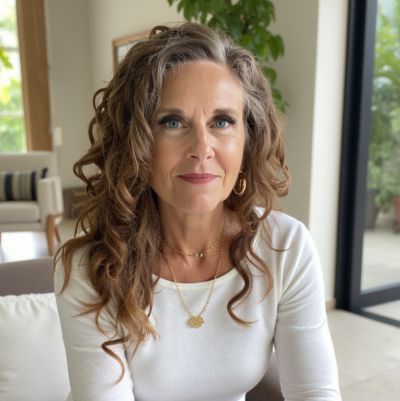
Elizabeth is a Master Certified Life and Health Coach with over 20 years of experience, dedicated to helping women in midlife thrive through holistic health and wellness. Her personal journey began with a desire to reduce her own breast cancer risk, which evolved into a mission to guide women through the complexities of midlife health, from hormonal changes to mental clarity and emotional resilience.
Elizabeth holds certifications from prestigious institutions such as The Life Coach School, Precision Nutrition, and the American Council on Exercise, as well as specialized training in Feminist Coaching and Women’s Hormonal Health. Her approach is deeply empathetic, blending her extensive knowledge with real-life experience to empower women in their 50s and 60s to build sustainable health habits that last a lifetime.
Recognized as a top voice in women’s health, Elizabeth speaks regularly on stages, podcasts, and webinars, inspiring women to embrace midlife with energy, confidence, and joy. Her passion is helping women regain control of their health, so they can fully engage in the things that matter most to them—whether that’s pursuing new passions, maintaining strong relationships, or simply feeling great in their own skin.