
You’re doing “all the right things” with food… and yet the scale won’t budge, your cravings are loud, and you’re so tired at night that the pantry starts calling your name. In this episode of Total Health in Midlife, Elizabeth breaks down why overeating, night snacking, and constant grazing are almost never about willpower—and how they’re tied to real, physical changes in your midlife body.
We’ll dig into how low protein, blood sugar swings, poor sleep, and a more sensitive nervous system in perimenopause and menopause quietly drive overeating long before you ever see the chocolate. You’ll hear how emotions like stress, loneliness, and “I just need a break” sneak into your eating habits, even if you don’t see yourself as an “emotional eater.”
Instead of another list of rules to “just be good,” you’ll learn a simple way to understand why you’re really eating when you’re not hungry—and why that matters for your weight, energy, and long-term health. If you’ve ever wondered, “Why can’t I stop eating at night even though I know better?” this episode will help you see that your overeating actually makes sense—and can be changed without another diet.
The Biggest Problem Midlife Women Face Regarding Midlife Overeating and Cravings
The biggest problem midlife women face with overeating and cravings is that they blame their character instead of understanding their biology, emotions, and habits. When you’re waking up tired, dealing with perimenopause or menopause symptoms, and carrying the mental load for everyone, nighttime snacking or weekend overeating can feel like a personal failure. Most women think, “I just need more discipline,” when in reality unstable blood sugar, poor sleep, hormone shifts, and chronic stress are pushing their bodies toward fast, easy energy in the form of sugar, chips, and late-night treats.
At the same time, emotional and lifestyle factors—loneliness in an emptying house, resentment about always being the responsible one, and a total lack of intentional pleasure—turn food into the easiest way to get relief. Add in well-worn habits like snacking while cooking, “touring the kitchen” between Zoom calls, or the automatic “I deserve this” dessert after dinner, and overeating becomes an autopilot loop. Diet culture tells midlife women the solution is more rules and restriction, but that usually makes cravings worse, increases shame, and leaves the real root causes—hormones, nervous system overload, and unmet emotional needs—completely unaddressed.
What You Can Do Right Now
Starting today, you can begin to interrupt overeating without going on another diet. For the next 24–48 hours, any time you reach for food outside of a usual meal, pause and ask yourself, “Am I hungry?” If the answer is yes, eat. Your body needs fuel. If the answer is no, ask, “Okay, then why do I want this? What am I looking for right now?” You might notice boredom, stress, frustration, or a desire for comfort or reward. You don’t have to put the food back; the goal is to wake up to the real reason you’re eating.
To make this easier, use the free guide 82 Reasons You Overeat That Have Nothing To Do With Food. Scan the list, circle the reasons that sound like you, and start matching what you notice in real time with what’s on the page. Instead of “I’m just out of control,” you’ll begin to see patterns like, “I eat when I’m lonely,” or “I snack when I’m avoiding work,” or “I always want sugar when I haven’t slept.” That awareness is the first step toward changing how you eat in a way that respects both your midlife body and your real life.
The Listener Takeaway: Why This Episode Matters
This episode matters because it gives you something most women in midlife have never been offered: a shame-free explanation for why you overeat that doesn’t boil down to “try harder.” When you understand how hormones, blood sugar, sleep, stress, emotions, and habits all fit together, your overeating stops feeling random and becomes something you can actually work with. Instead of fighting your body, you start to see it as a partner that’s been trying to help you cope with exhaustion, overwhelm, and unmet needs.
The real relief here is knowing that nothing about you is broken. You don’t have to give up your favorite foods, live on willpower, or keep starting over every Monday. With a few simple awareness tools and a better understanding of your midlife physiology, you can build trust with yourself around food again, feel more in control of your evenings and weekends, and finally support your weight, energy, and long-term health in a way that actually fits your life.
Are you loving the podcast, but arent sure where to start? click here to get your copy of the Done with Dieting Podcast Roadmap (formerly Total Health in Midlife) Its a fantastic listining guide that pulls out the exact episodes that will get you moving towards optimal health.
Take the Quiz: Why Do Your Healthy Habits Keep Falling Apart? If you've ever wondered why you know exactly what to do but still can't seem to stick with it, this quiz was built for you. In about 3 minutes, it identifies your specific pattern: the real reason your follow-through keeps breaking down, and what to address first. Your results are delivered straight to your inbox.
I am so excited to hear what you all think about the podcast – if you have any feedback, please let me know! You can leave me a rating and review in Apple Podcasts, which helps me create an excellent show and helps other women who want to get off the diet roller coaster find it, too.
Watch or Listen to the Episode:
WHAT YOU'LL LEARN
- Why your midlife body drives cravings and night eating long before willpower even shows up
- How emotions like stress, loneliness, and “I just need a break” secretly shape your eating (even if you don’t think you’re an emotional eater)
- A simple 2-question check-in you can use this week to understand why you’re really eating when you’re not hungry
RESOURCES
- Beyond Overeating program with Elizabeth Sherman
- 82 Reasons You Overeat That Have Nothing To Do With Food (free guide)
Full Episode Transcript:
252 - Nighttime Cravings in Midlife: It's Not a Willpower Problem
[00:00:00]
Elizabeth: If you've ever stood in front of the pantry at night thinking, what is wrong with me?
Why can't I just stop eating? This episode might be the thing that you've been missing. Because here's the thing, your late night snacking your I will be good on Monday. Weekends, your all day grazing healthy foods. None of that is about you being lazy or having no discipline or not knowing what to do. In fact, if you have spent years white knuckling your way through diets, trying to just say no and promising yourself that this is the last night that you will eat after dinner.
You've probably been working way harder than you need to, and in today's episode I am gonna walk you through the real reasons you overeat that have nothing to do with willpower, including one that almost every woman that I work with. Completely misses. So if you've ever thought, I just cannot be trusted around food, do not skip this [00:01:00] one.
Welcome to the Total Health and Midlife Podcast, the podcast for women over 40 who want peace with food, ease in their habits, and a body that they don't have to fight with.
Hey everyone. Welcome back to the Total Health and Midlife Podcast. I am your host, Elizabeth Sherman, and I am really glad that you are here today. So I wanna start by asking you a question that you've probably asked yourself more times than you can count. What is wrong with me?
Why can't I just stop eating at night? Maybe it's after dinner. Maybe the kitchen is closed. I put that in quotes. Everyone else is done. And somehow you find yourself standing in front of the pantry with your hand in the chocolate chips or rummaging around the fridge for a piece of cheese, or you're on the couch and the TV is on and your hand keeps going back into the popcorn bowl, even though you're not even tasting it anymore.
Or maybe your thing is the weekend [00:02:00] you're dialed in all week, you eat your salads, your protein, your veggies for dinner, you're tracking all of that, all the gold stars, right? And then Friday hits and someone opens a bag of chips, or there's wine or a charcuterie board, and suddenly it's Sunday night and you're Googling.
How do I do a reset on my diet again? Of course, Monday, you wake up and think, seriously, what is wrong with me? I know better. I am a grown woman. Why can't I just get my shizz together? Now, if this sounds familiar, I really want you to lean in today because in this episode we are gonna talk about the real reasons you overeat that have nothing to do with willpower or being quote unquote good or quote unquote bad with food.
We are gonna look at what's happening in your body, things like blood sugar, hormones, sleep, and we are gonna look at what's happening in your emotional world, like stress, [00:03:00] loneliness, wanting a reward at the end of the day. And we're gonna look at the habits and environments that quietly set you up to wander through the kitchen on autopilot.
And by the end of our time together, my goal is that you will stop asking the question. What is wrong with me? And start asking a much more useful, helpful question. Oh, okay. Given everything that's going on, why does it actually make sense that I'm eating this way and I'm not just gonna explain it and leave you hanging?
You'll walk away with one simple thing that you can try in the next day or two. Not perfection, no giant overhaul that will start to change this pattern. And if you wanna go deeper, I've got a free guide called The 82 Reasons That You Overeat That Have Nothing to do with Food that pairs perfectly with what we're talking about today.
And I'll tell you more about that later. But just know that if you've [00:04:00] ever felt broken around food, this episode and that guide are here for you. So let's get really honest about what this actually looks like in real life, because this doesn't happen in a vacuum. It happens in your very real, very busy, very messy life.
Maybe for you. It starts right after dinner. So the dishes are in the dishwasher, and the dishwasher is on a timer. The kitchen is technically closed. Everything is quiet and dark, but you're still kind of on duty. Someone needs your help. Finding their earphones or their matching shoe, and the dog needs to go out.
And there's an email from your boss that absolutely could have waited until tomorrow. And by the time you sit down on the couch, you are tapped out. You've been on all day. So you grab something, maybe it's a small bowl of ice cream, a few cookies, some popcorn, and at [00:05:00] first it feels really nice. Your shoulders just relax and drop a little bit, and your brain quiets down and you think, I deserve this.
This is my time. But then the show keeps going, the snacks, keep going. The bowl needs refilling and you find yourself in front of the pantry. Again, not even really deciding your habit just does it on autopilot. And when you finally turn the TV off and head to bed, that's when you realize, oh, I really overdid it.
And then the mental chatter starts like, what is wrong with me? I'm so super uncomfortable now. Why did I even do that? I wasn't even hungry. I said I wasn't gonna do this tonight. I have zero discipline tomorrow. I have to be good.
Or maybe your thing isn't nighttime, maybe [00:06:00] it's the weekend. So for example, you are. On it in terms of your diet. Your breakfast is Greek yogurt and berries. You have salads for lunch and some vegetable and chicken, sensible dinner, and you are checking all the boxes you feel in control, and then Friday rolls around and somebody brings donuts into the office or there's a happy hour.
Maybe you have dinner plans. Or plans with a friend or a family gathering and you think, okay, I'll just have a little, but then that little turns into screw it. I've already blown it. I'll just start over on Monday. So Friday night slides into Saturday bagels and maybe some chips with lunch. And by Sunday you're picking it leftover straight from the fridge and finishing the cookies so that they are out of the house and out of eyesight.
And then Sunday night, you're sitting there possibly bloated, definitely annoyed, scrolling on your phone, looking for the [00:07:00] next diet. Maybe it's whole 30, the no sugar challenge. Maybe I need to cut carbs again. And you tell yourself. I just need to try harder, or if I could just get some discipline, then I'd be fine.
And there's the sneaky one that a lot of women don't even recognize as they're overeating the all day quote unquote healthy snacking. So you start your day with coffee and then maybe a little bite of something, and mid-morning you grab a handful of almonds and then a few grapes, and then a cheese stick and lunches like a snack plate.
Afternoon hits and you wander through the kitchen between Zoom calls and have a few cherry tomatoes here, some crackers there, maybe a spoonful of peanut butter straight from the jar because it's protein, right? And none of it feels dramatic. Or like you're overeating, you're not binging on drive-through burgers in the dark.
And it all looks [00:08:00] completely reasonable. And hey, it's mostly healthy, right? If I asked you when was the last time you actually felt hungry, before you ate, you might not have any idea. And still at the end of the day, the self-talk is exactly the same regardless of which situation we're talking about. Like, why can't I just be normal around food?
Other people don't think about this all the time. Or maybe I just wasn't born with that one cookie gene. That's what I used to think. Those people can stop after one. I clearly cannot. And so you go looking for answers in the one place that you've ever been taught to. Look. Find more rules, more restriction.
Be good. No sugar, no carbs, no fun. If you've ever said, just tell me what to eat and I will do it, that's the conditioning that I'm talking about. Diets have trained us to [00:09:00] believe that the solution is always to tighten up, try harder, get stricter, and when that inevitably doesn't last, because you are a human woman with a life, you are not a robot.
You don't question the strategy, and so you blame yourself. And in this episode today, I want to gently flip that on its head, because what if the problem isn't you? What if the problem is that the tools that you've been given were never designed for a woman in midlife with your body, with your responsibilities and your emotional load?
And so that's what we're gonna unpack next. Now before we even talk about habits or emotions, I wanna zoom in on something that's actually really super important. Your body is not working against you. In fact, most of the time it's trying to help you given the tools that it has. So by the time that you're standing in front of the [00:10:00] pantry at nine o'clock at night, it's not like willpower is standing there alone in an empty room.
There is a whole cast of characters that came on stage hours before that moment. Your blood sugar, your hormones, your sleep, your stress, your beliefs, and all of the other events that happened earlier in the day. So let's start with something that is super simple and super overlooked. Protein and blood sugar.
Now, as we move out of our reproductive years, we become more sensitive to insulin and blood sugar fluctuations. One of the main jobs of protein is to keep you feeling full and to help your blood sugar stay steady between meals. When we don't get enough protein, we are so much more likely to ride that blood sugar rollercoaster, go up, crash, and then you crave.
I had a client who really brought this to life. She was at a work conference and told me, [00:11:00] I don't understand what happened. I was weirdly snacking all afternoon. I kept going back for pretzels and that is so not like me. And so we walked it back. We figured it out. She told me that she had had a healthy breakfast at the hotel bar, so she had oatmeal and yogurt from the hotel buffet, and on the surface that sounds healthy, right?
That's exactly the kind of thing that we've been told to eat. But when we looked closer, there's actually not a lot of protein in that meal. The oatmeal is mostly carbs, and the yogurt was one of those little containers that's more like a dessert than a solid protein source. So what happened? Her blood sugar spiked from the carbs and then dropped mid-morning and then again in the afternoon, and her body went, uh, hey, we are running low on energy here.
We need some, and our brains [00:12:00] know that the easiest, fastest energy in that conference room is the pretzels. It wasn't a willpower failure. It's basic biology. Now imagine a whole day of that, a breakfast that doesn't really stick with you grabbing something light for lunch because you're busy and you're maybe skipping an afternoon snack, and by the time you get home, your body is awful on feed me mode.
Now, of course. You are gonna want to eat while you're cooking. Of course you're going to wanna go back for seconds. Even when you told yourself that you wouldn't, your body isn't trying to sabotage you. it's trying to keep you alive and functioning given what you gave it.
Now layer in sleep when we don't get enough sleep, even if it's one bad night or worse, the chronic, I'm fine. I'll just push through. Level of tired that most women in midlife walk around with your body cranks up the hormones that tell you to eat, [00:13:00] especially the ones that make high sugar. High fat foods look really, really tasty, so you wake up groggy.
You get through the morning on coffee and grit and by 3:00 PM your body is basically yelling. We are exhausted. We need some fast fuel. And what's fast fuel? Certainly not carrots and plain chicken. Your brain is scanning for things like cookies, candy, and chips, and anything that will hit the system quickly.
Again, this is not a moral issue. Your cells did not get enough time to repair overnight. Your brain didn't get the deep sleep it needs, and so your system looks for shortcuts. Then we add in the midlife piece that almost no one talks about. Your nervous system becomes more sensitive distress as your hormones shift.
When you are younger, you might have been able to white knuckle your way through crazy workloads, [00:14:00] kids schedules, family drama, and. Still more or less feel okay. Many of my clients tell me that they don't feel stressed because they've gotten so used to managing all of the plates in the air. But in your forties and fifties and beyond, that same load can feel heavier by your body.
Your tolerance is different. Your stress response is different.
So now not only are you riding a blood sugar roller coaster because you're under fueled or under protein, but you're also running on too little sleep or poor quality sleep, and your nervous system is also more reactive to all of it. And if food has always been one of the ways that you calm down, if grabbing a snack has been your way of taking the edge off for years.
Your brain is not going to spontaneously come up with, you know what we should do right now? A 10 minute breathing practice in a gentle walk. No, your [00:15:00] brain is gonna say, Hey, we know what works food. Go get the crackers. And that's not because you're weak, that's because your brain has learned very efficiently.
Mind you, that food gives you fast energy. So when you put all of that together, the unsteady blood sugar, the poor sleep, the more sensitive nervous system, and a long history of using food as a quick fix, it actually makes. Perfect sense that you're reaching for snacks at night. There's nothing wrong with you.
Your body is trying to protect you from feeling worse. It's trying to give you energy. It's trying to soothe you with the tools that it has available. And so the problem isn't that your body is broken or that there's something wrong. The problem is that no one has ever shown you how to work with your biology instead of constantly fighting against it, or how to add tools beyond food so [00:16:00] that your brain has more options.
And once we see that, I have no willpower stops being the story, the story becomes, oh, I see. Given the way that I'm sleeping, eating and handling stress, my behavior makes total sense. And from there we can start changing it. Okay, so we've talked about how your biology sets the stage. Now let's talk about the other big piece, your emotions.
Now when most women hear emotional eating, they picture the movie version, right? Crying on the couch, kind of ice cream, sad music in the background. And so a lot of women say, oh, that's not me. I don't do that. I'm not an emotional eater, but here's how I define emotional eating. It's anytime we eat for reasons other than physical hunger.
That's it. Now if you are not [00:17:00] physically hungry, but you're eating because you're stressed, you're bored, you're lonely, or rewarding yourself, or avoiding something. That's emotional eating. Now, you might not like that reason because of the judgment that you have about emotional eating, but let me be clear here that I do not judge emotional eating.
I think it's part of our human experience and keep listening so that I can explain that better. Eating emotionally doesn't mean that you're being dramatic. It doesn't mean that there's something wrong with you. It just means that you're human. So let's walk through what this actually looks like for most of us.
Now, for many women, the biggest desired emotion at the end of the day is relief. You've been on since your feet hit the floor this morning. You have work, parents grown kids, the dog, the group texts, the bills. You've made 6 million tiny decisions and your [00:18:00] brain is fried. You finally sit down on the couch and your whole body just says, oh my God, thank you.
And food slips in as part of that decompression, the glass of wine, the popcorn bowl, the little dessert that you always have with your show. You're not necessarily hungry, but you are desperate for your brain to turn off, and that snack becomes the little metronome, handball, bolt of mouth, repeat.
It's rhythmic. It's almost meditative, and you don't have to think about it. Then there's the loneliness and disconnection, which is huge for women in midlife, for many of us, and almost nobody is talking about it honestly. Your kids are grown and mostly out of the house. You don't see other parents from school anymore, and some of your friendships were built on convenience, meaning kids' sports, school events, seeing [00:19:00] each other at the office, and now those points of contact aren't there anymore, so you might feel disconnected from your partner as well.
Maybe you're going through a great divorce or your marriage just feels. Flat, maybe the person that you talk to the most lives in your phone and not on your neighborhood. So you sit at the kitchen table at night and it's quiet, maybe a little too quiet, and you open up the pantry and you're not thinking I'm lonely, therefore I eat crackers.
You're giving yourself something to do, something that feels comforting when connection feels so far away. And then there's the overwhelm and exhaustion. Now, this sounds a lot like I cannot do one more thing. Today I am spent. All day long, you've been the responsible one. You've answered emails, made appointments driven people places, listened to other people's problems, fix the [00:20:00] printer, picked up prescriptions, right?
And by the time evening hits, anything that requires effort feels just like way too much. And so the idea of having a feeling and actually processing it, absolutely not. Food is easy. You don't have to schedule it, you don't have to explain it. You don't have to be brave. You just open the cabinet and boom, there's instant relief.
And underneath all of that, for so many of us, it's this a total lack of intentional pleasure. Your whole day may be packed, but it's packed with obligation things for your boss, things for your kids, things for your parents. Things for the house. Where in there is something that feels like pure, simple joy.
Just for you, if your answer is, uh, my coffee, Elizabeth, you are so not [00:21:00] alone. So your brain does what humans brains do. It goes looking for pleasure and the fastest, cheapest, most socially acceptable pleasure available at nine o'clock at night in your kitchen is food. This is why when clients tell me, I don't know why I overeat, we dig a little bit and find, oh, I eat when I'm lonely, or I eat when I'm bored.
I eat when I feel unappreciated. I eat when I'm resentful, and I don't feel like I'm allowed to be mad. I eat because I never give myself anything fun during the day. And so here's the part that I really want you to hear. Emotional eating is not bad. You are not bad or naughty or weak or anything because food makes you feel better for a minute.
What emotional eating is is information. It's a signal. It's [00:22:00] your body and brain saying, Hey, something is going on here and we need comfort. We need rest. We need connection. We need a break. We need pleasure. The problem isn't that you use food to take the edge off. The problem is that food has become the only tool in the toolbox, and it's happening on autopilot without you even realizing what you're actually needing in that moment.
And so once we can see, oh, I'm not just randomly out of control, I'm actually trying to meet an emotional need. The shame starts to loosen a little bit. So instead of what is wrong with me, it becomes, okay, what am I really hungry for right now? Is it chips or is it comfort? Is it cookies or is it connection?
Is it a glass of wine? Or is it permission to stop working? When we can start asking those questions gently without judgment. [00:23:00] Emotional eating becomes less of a character flaw and more of a clue. And clues are really super useful because we can work with those. So now we've got this mix of biology and emotions running in the background, and on top of that, we layer habits and your environment.
This is where things start happening on autopilot.
Let's take a look at snacking while cooking. So you've been going hard all day. Maybe lunch was rushed or it was really light, and by the time you walk in the door, you are starving. You drop your bag, you kick off your shoes, and you head straight for the kitchen and you pull out the cutting board and before you even know it, you've also pulled out the nuts or the cheese, or you're breaking bread off of.
Little pieces just to taste it. You're chopping vegetables with one hand and popping food into your mouth with the other, and you tell yourself, I don't wanna spoil my dinner. But you're [00:24:00] basically eating dinner before dinner, right? Biologically, it makes sense. You're under fueled emotionally. You're done for the day, but habit wise, your brain has learned.
We start cooking and we start snacking. And so you don't even need to be especially hungry for that loop to fire. It's just what happens when you walk into that space at that time of day. Same with what I call the kitchen tour, especially if you work from home, you finish a zoom call, you stand up to stretch, you walk around a little bit and your feet walk you to the kitchen before you even decide to go there.
And so you open up the fridge, you stare. You're not hungry, but you're just like looking and you're kind of trying to do something. A few grapes here, a couple crackers there, a spoonful of peanut butter because it's protein, right? And each one of those moments doesn't feel like a big deal, but every time you act out that [00:25:00] script, you finish a task, walk to the kitchen, open something and eat.
Your brain is strengthening that pathway and your nervous system learns. Work is stressful. Break equals food and repeat. Then there's that late afternoon dead zone. It's too early for dinner and you're not done for the day, but there's nothing really urgent at this exact moment, and so you're kind of bored, you're kind of restless, you're a little tired, and your brain goes to, I need a vibe.
I need a pick me up. We need something to mark this as part of the day. For some women that might be wine. For others, it might be a snack or both. Again, it often starts for a reason. You were going through a stressful season, you were exhausted, so that glass of wine or that bowl of chips gave you something to look forward to, but months or years later, [00:26:00] even if the stress level isn't exactly the same, your body still leans on that ritual.
Four o'clock hits and it's like the bell rings. Oh, it's time for our treat. Right? And then there's the after dinner. I deserve this loop all day long you have been responsible. You answered the emails you dealt with the school or the boss, or the parent or the plumber.
You were the patient one, the kind one, and you were so incredibly functional. And so you didn't snap at anyone, or at least you really tried hard not to, and you did the invisible labor that keeps everyone else's life running. And so by the time the dishwasher is humming and the house is finally quiet, there's this little voice that says.
I have been so good all day. I deserve a reward, and because most women have been taught to minimize their needs, not take up too much space or [00:27:00] not be too much, it often feels easier to give yourself sugar than to give yourself permission. Permission to rest. Permission to say no, permission to leave the dishes.
Permission to take a bath or read your book or just go to bed early. And so the treat becomes the stand-in for all of that. The square of chocolate, the ice cream, the handful of whatever it is that you eat over the sink. Here's the thing I really want you to notice. Most of these patterns didn't start because you're out of control.
They started because you were tired, or you were stressed, you were underfed. You needed comfort, you needed a break. And so food worked. So your brain wrote it down. Note to self, when X happens, we do Y we feel better. And over time the original trigger might fade. The crazy project ends. The kids grow up, the crisis [00:28:00] passes, but that loop is still there.
So we walk in the door, we snack while cooking. We finish a task, we wander into the kitchen. It's 4:00 PM I pour a drink or grab a snack. The kids are in bed, the dishwasher is on. I deserve this. That's what I mean by autopilot. There is nothing morally wrong with any of these behaviors, but if you don't see them clearly, it can feel like, I don't know what happens to me at night.
I just lose control. In reality, this is your beautiful, efficient brain doing exactly what it's been trained to do, and there's actually good news in there because anything that you've trained yourself into, you can actually train yourself out of not overnight. Not with one more set of diet rules, but with awareness and different choices and intentions and new loops that work with your body and your life [00:29:00] instead of against them.
So when you put all of this together, it starts to tell a very different story than I'm just a woman with no self-control around food. So you've got biology in the mix, blood sugar swings because you're under fueled or low on protein hormone shifting in midlife, a nervous system that's more sensitive distress and probably not good enough quality sleep.
You've got emotions, relief, loneliness, overwhelm, boredom, resentment, all stacked on top of years of being the responsible one. The helper, the fixer, and then you've got habits and your environment. The kitchen tours, the snacking while cooking the 4:00 PM treat the after dinner. I deserve this routine, all of which your brain has practiced so many times.
It could do them with its eyes closed.
and then we look at all of that and go clearly. The issue is that I [00:30:00] am gluttonous and I have no character. No overeating is not gluttony. It's not a lack of morals. It's not proof that you are lazy or weak or broken. if you are eating when you're not hungry. There's always a reason, and that reason is emotional.
Even if the emotion is something quiet and sneaky, like I'm a little lonely. Or I'm tired of being the grownup, or I just want something that is all mine. Here's the other shift I want for you. The goal is not to eliminate emotional eating forever. I don't think that that's realistic, and honestly I don't think it's even desirable.
Food is emotional, birthday cake, holiday dinners, popcorn at the movies. Those are all emotional experiences and that's totally okay.
What we wanna do is change unconscious, emotional eating. The kind where you look [00:31:00] down and realize that the bag is empty and you barely tasted it. The kind where you find yourself in the pantry and you're not even sure how you got there. The kind where food is your only way to cope and afterwards you feel worse.
Not better. That's what we're working on. And the best way out of that isn't be stronger or just don't eat it. It's learning a different set of skills. Skills like pausing before you eat and checking in with your body, noticing, am I actually hungry or is something else really going on here? Naming what you're feeling, even if it's, huh, I'm just off.
Making conscious choices instead of an automatic one. Sometimes the conscious choice will be, yep, I am 100% eating this cookie. If that's the case, great. I want you to enjoy the hell outta that cookie. Sit down with it, taste it, [00:32:00] savor it. Because here's the funny thing, when you're present with your food.
Not watching tv, not distracted. By scrolling on your phone, you actually need less of it to feel satisfied. You enjoy it more, and you don't end up in that shame spiral after thinking. I don't even remember eating that. This is what I teach my clients how to build those skills step by step so that food becomes the one tool in the toolbox, not the only one, and it's not the enemy.
You don't need a harsher voice in your head. You need better tools in your hands. Alright, Let's make this really practical. Now, for the next 24 to 48 hours, I want you to try one simple experiment for me. No food rules, no perfection, no starting over on Monday. Anytime you reach for food outside of your usual meals, so not your normal breakfast, your lunch, or your dinner.
I want you [00:33:00] to pause for just a moment and ask yourself the question, am I hungry? That's it. You don't even have to overthink it. It's just a quick check-in. If the answer is yes, your stomach is growling, your body feels low on energy, you feel that physical emptiness, then please, yes, go eat. I will never be the person, the coach, who tells you to muscle through real hunger.
That's not what we do. If the answer is no, I am not hungry, and you realize. Actually, I ate an hour ago, or my body feels fine, but my brain wants a snack. Then you get to ask yourself a second question, okay, then why do I want this? Why am I looking for food right now? And don't worry about getting it right.
You might come up with something super simple like, I'm bored, or I'm stressed from that email, or I'm annoyed with my partner [00:34:00] or coworker. I'm lonely. I just want a break. I want something fun. Now you do not have to stop eating just because the reason is emotional. You can totally still decide, yes, I'm gonna have that cookie, or I'm still gonna grab a handful of chips.
Totally fine. If you choose to eat, do it on purpose. Sit down if you can and taste it. Let it be a conscious yes instead of an automatic habit because the real win with this experiment is not eating quote unquote perfectly. The win is waking up and realizing that, oh, I'm not hungry. I'm avoiding that thing that I don't wanna do.
Waking up on the couch and noticing, oh, this is about wanting comfort, not calories, that tiny pause, am I hungry? And if not, why do I want? This is the very first skill in changing this pattern. Now, if you want [00:35:00] help figuring out what those why's are. This is where my guide, the 82 reasons that you overeat that have nothing to do with food comes in inside.
I've listed out all of those sneaky specific reasons that we eat that have nothing to do with our hunger. Things like stress habits, loneliness.
I'm resentful, but I don't feel like I'm allowed to be mad. I haven't had a single fun thing all day, those types of reasons. What I'd love for you to do is download the guide, make yourself a cup of tea, and just read through the list circle or highlight the ones that feel like, yeah, that's me. Then over the next few days, when you catch yourself reacting to food and you ask yourself, why do I want this?
You'll actually have language for it. You'll start connecting the dots between, oh, this isn't random, this is number 27, or this is number 42, and that's when [00:36:00] things begin to click, because diets can tell you what to eat, but they don't teach you why you're eating in the first place. This work does. This is exactly the kind of work that we do inside My Beyond Overeating program.
We take this awareness and we turn it into a step-by-step process so that you can trust yourself around food. Again. For now, just start with the experiment. Pause and ask yourself, am I hungry? If not, what am I looking for? Again, there's nothing wrong with you. Your overeating makes sense. And when you see the full picture, once it makes sense, you can change it.
One small conscious choice at a time.
Alright, that's all I have for you today. Have an amazing day and I'll talk to you next time. Bye-bye.
Now before you go, if today's episode hit a little too close for home, or if you've ever wondered why did I eat that, I have something for you. [00:37:00] It's called The 82 Reasons You Overeat that have nothing to do with food Now, it's not a guilt trip, and it's definitely not another diet plan. It's a free guide that will help you to finally understand why you keep eating, even though you swore you wouldn't.
Here's a secret. It's not about willpower, it's about everything else. You can grab your copy right now@elizabethsherman.com slash 82 reasons. Seriously, go download it. You'll feel seen, and it might just be the start of something different.
Enjoy the Show?
- Don’t miss an episode, follow the podcast on Spotify and subscribe via Apple Podcasts or RSS.
- Leave me a review in Apple Podcasts.
- Join the conversation by connecting with me on Social!


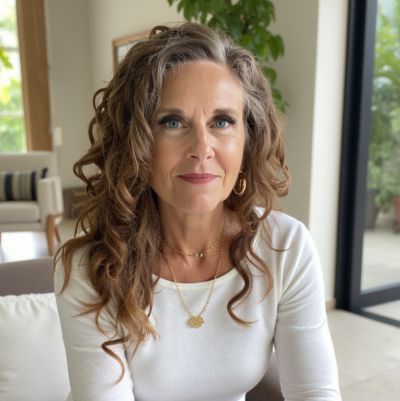
Elizabeth is a Master Certified Life and Health Coach with over 20 years of experience, dedicated to helping women in midlife thrive through holistic health and wellness. Her personal journey began with a desire to reduce her own breast cancer risk, which evolved into a mission to guide women through the complexities of midlife health, from hormonal changes to mental clarity and emotional resilience.
Elizabeth holds certifications from prestigious institutions such as The Life Coach School, Precision Nutrition, and the American Council on Exercise, as well as specialized training in Feminist Coaching and Women’s Hormonal Health. Her approach is deeply empathetic, blending her extensive knowledge with real-life experience to empower women in their 50s and 60s to build sustainable health habits that last a lifetime.
Recognized as a top voice in women’s health, Elizabeth speaks regularly on stages, podcasts, and webinars, inspiring women to embrace midlife with energy, confidence, and joy. Her passion is helping women regain control of their health, so they can fully engage in the things that matter most to them—whether that’s pursuing new passions, maintaining strong relationships, or simply feeling great in their own skin.