

Consistency breaks down for women 40+ in their health habits, not because you lack discipline or motivation, but because information alone cannot survive stress, hormonal shifts, and cognitive overload without the specific skills, systems, and support designed for a high-stakes, "loud" life.
TL;DR: The Knowing–Doing Gap
- The Myth: You think you’re inconsistent because you’re undisciplined or flawed.
- The Midlife Reality: Your "Loud Life"—hormonal shifts, caregiving, and decision fatigue—overwhelms willpower-based strategies.
- The Root Cause: Your nervous system is seeking relief and safety, not sabotaging your goals.
- What Fails: More rules, stricter tracking, or waiting for a "calmer season" that never arrives.
- The Solution: Building a personalized health operating system focused on skills like "talking to yourself" rather than just "listening to your brain."
The Midlife Consistency Trap: When "Knowing" Isn't Enough
You are a capable, well-educated woman. You’ve navigated career pivots, managed complex family dynamics, and likely have a "black belt" in problem-solving. When it comes to your health, you aren't lacking information. You know that movement matters, sleep is foundational, and vegetables are a "good idea."
Yet, when life gets loud—when a work deadline collides with a teenager’s crisis or a night of perimenopausal insomnia—the gap between what you know and what you do feels like a canyon.
You might tell yourself that you’ve "failed" again. You might quietly wonder why everyone else seems to have it figured out while you’re ordering takeout for the third time this week because you just cannot make one more decision.
But here is the truth: there is nothing wrong with you. You aren't broken, and you don't need more discipline. You are simply trying to apply "calm-water" strategies to a high-seas life.
The Hidden Rule: The Superhuman Expectation
Most of us are living by an unspoken rule: “I shouldn’t need rest, help, or accommodations to take care of my health.”
In midlife, many women are like frogs in a boiling pot. You’ve slowly taken on more responsibility at work and home because you’re good at it. People rely on you. You’ve bought into the productivity myth that says your value is tied to your output.
As a result, you judge your health "failures" in a vacuum. You remember the skipped walk or the half-empty bag of cookies, but you forget the emotional flood of the meeting that preceded it. You see weakness where there is actually just a total lack of remaining capacity. Consistency isn't a moral virtue; it's a function of bandwidth.
Why Typical Health Advice Fails the "Loud Life" Test
Most health programs are built on the "Try Harder" model. They give you a list of rules (the knowing) and tell you to execute them (the doing). This fails because:
- Willpower is a finite resource. In midlife, that resource is often drained by 10:00 AM.
- Cognitive load is real. When you are managing a career and a household, "thinking" about what to eat becomes a burden, not a benefit.
- Hormonal variability is a wild card. Strategies that worked in your 20s don't account for the fatigue or reactivity of perimenopause.
When you judge yourself for not being perfect, you create a shame loop. And shame is the least effective fuel for long-term behavior change.
The Skill You’re Actually Missing: Talking vs. Listening to Your Brain
If the problem isn't a lack of information, the solution isn't more information. The solution is a specific micro-skill: the ability to talk to yourself instead of just listening to yourself.
Every morning at 5:45, your brain offers you an argument. It says, "It’s cold. You’re tired. You can just do it tomorrow." Your brain is doing its job—seeking comfort and avoiding pain.
When you "listen" to your brain, you accept those thoughts as facts. You stay in bed and then spend the rest of the day feeling guilty.
When you "talk" to your brain, you recognize the argument as protective, not evil. You say: "I hear you. You want to stay comfortable. But I also know that moving for 20 minutes is how I’ll feel steady today. Let’s just get up and see."
Consistency begins when you stop expecting the resistance to go away and start learning how to navigate through it.
What Does "B-Minus" Consistency Actually Look Like?
Consistency is not a streak on an app. It is not doing everything perfectly seven days a week. In a loud life, consistency looks like "B-minus humanity."
It looks like:
- Faster recovery: Not turning one "off" day into a "lost" month.
- Compassion over judgment: Blaming the circumstances, not your character.
- Adjusting the dial: Understanding that on a messy Tuesday, a 10-minute walk counts as a win.
Consistency is about making the best decision available to you given the energy, time, and emotional bandwidth you actually have—not the bandwidth you wish you had.
The Messy Tuesday Translation: How to Salvage the Day
Imagine it’s 6:30 PM. You’re exhausted. The dinner you planned isn't happening.
The Old Pattern: "Screw it. I already messed up. Let's order the greasiest thing on the menu, have three glasses of wine, and 'reset' on Monday."
The New Pattern: You notice the depletion. You ask, "What is the best decision from here?" Maybe you order the pizza, but you add a salad. Maybe you skip the wine because you know it ruins your sleep. You salvage the day instead of spiraling.
The win isn't fixing the day so it looks like a Pinterest board; the win is preventing the snowball effect. Something is always better than nothing.
If You’re Noticing This, Your Next Steps...
- You feel like you’re "starting over" every single Monday.
- You use food or wine to "numb out" after a day of being everything to everyone.
- You feel guilty when you rest, even though you are bone-tired.
- You have the "manual" for health but feel like you’re reading a foreign language.
These aren't signs that you are failing; they are signs that your current system isn't built for your current life.
Common Questions About Midlife Health Consistency (FAQ)
Because the "load" is higher. You are often balancing peak career demands with caregiving for both children and aging parents, all while navigating significant physiological changes. Your old strategies were designed for a different life.
No. Usually, it means the plan is too rigid and doesn't account for your actual life. You don't need more discipline; you need more flexibility and better skills.
By redefining what "all" looks like. If you believe anything less than 100% is a failure, you will always be in a cycle of quitting. Learning to value the "B-minus" efforts is the key to longevity.
It’s the space between having information (what to do) and the ability to implement it (how to do it) in a real-world environment. Closing it requires skills like emotional regulation and cognitive reframing, not just another meal plan.
Sources & References
- Behavior Change & Self-Regulation: The American Psychological Association (APA) on the science of willpower and how stress depletes our ability to make healthy choices.
- Stress & Decision Fatigue: The National Institutes of Health (NIH) on how chronic stress and cognitive load impair executive function and goal-directed behavior.
- Midlife Physiology: The North American Menopause Society (NAMS) FAQs on midlife health, addressing fatigue and the "brain fog" that often interrupts consistency.
- The Power of Small Wins: Dr. BJ Fogg’s research at the Stanford Behavior Design Lab on why "tiny" habits are more sustainable than willpower-heavy overhauls.
- Self-Compassion & Resilience: Dr. Kristin Neff’s research on self-compassion, proving that kindness—not judgment—is the most effective driver of long-term habit change.
Next Steps: Support for the "Doing"
If you are tired of white-knuckling your way through health goals, you don’t need another diet. You need an environment that supports follow-through. Here is how we can work together to bridge that gap:
- Download the Free Guide: The 8 Basic Habits Guide – Learn the foundational habits that hold up even when life gets loud.
- Listen to the Podcast: Total Health in Midlife – Weekly episodes exploring the intersection of midlife physiology, mindset, and sustainable health.
- Join the Program: Beyond Overeating – A skills-based approach to finding food peace and stopping the "start over Monday" cycle for good.
- Work with Me 1:1: The Total Health Solution – My high-touch coaching experience designed to help you build a personalized health operating system. Book a Clarity Call to see if we’re a fit.
The goal isn’t to make life quieter; it’s to learn how to live well inside the noise.
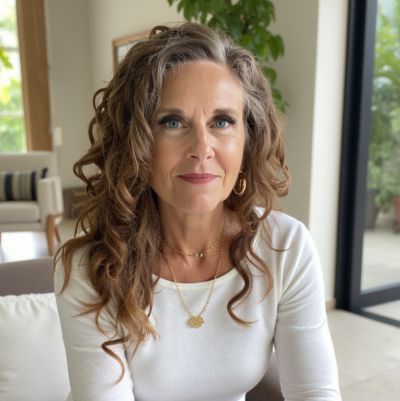
Elizabeth is a Master Certified Life and Health Coach with over 20 years of experience, dedicated to helping women in midlife thrive through holistic health and wellness. Her personal journey began with a desire to reduce her own breast cancer risk, which evolved into a mission to guide women through the complexities of midlife health, from hormonal changes to mental clarity and emotional resilience.
Elizabeth holds certifications from prestigious institutions such as The Life Coach School, Precision Nutrition, and the American Council on Exercise, as well as specialized training in Feminist Coaching and Women’s Hormonal Health. Her approach is deeply empathetic, blending her extensive knowledge with real-life experience to empower women in their 50s and 60s to build sustainable health habits that last a lifetime.
Recognized as a top voice in women’s health, Elizabeth speaks regularly on stages, podcasts, and webinars, inspiring women to embrace midlife with energy, confidence, and joy. Her passion is helping women regain control of their health, so they can fully engage in the things that matter most to them—whether that’s pursuing new passions, maintaining strong relationships, or simply feeling great in their own skin.