
We’ve been told all our lives that thinner is better. But now, in midlife, we’re also told that wanting to lose weight makes us shallow or brainwashed by diet culture. That its vain & that our appearance or weight is the least interesting thing about us.
So… is it okay to want to lose weight?
In this episode of Total Health in Midlife, I’m asking the question that so many women are silently wrestling with, but don’t feel like they’re allowed to say out loud. I’ll walk you through the real reasons behind that desire, what we’re hoping weight loss will “fix,” and why the fantasy often doesn’t match the reality.
If you’ve ever said things like “I just want to feel better in my clothes” or “I want to feel more like myself,” but underneath it, you meant I want to lose weight, this episode is for you.
We’ll talk about how to explore that desire without shame, how to build true health regardless of the number on the scale, and what it really takes to feel better in your body today, not 20 pounds from now.
Are you loving the podcast, but arent sure where to start? click here to get your copy of the Done with Dieting Podcast Roadmap (formerly Total Health in Midlife) Its a fantastic listining guide that pulls out the exact episodes that will get you moving towards optimal health.
Take the Quiz: Why Do Your Healthy Habits Keep Falling Apart? If you've ever wondered why you know exactly what to do but still can't seem to stick with it, this quiz was built for you. In about 3 minutes, it identifies your specific pattern: the real reason your follow-through keeps breaking down, and what to address first. Your results are delivered straight to your inbox.
I am so excited to hear what you all think about the podcast – if you have any feedback, please let me know! You can leave me a rating and review in Apple Podcasts, which helps me create an excellent show and helps other women who want to get off the diet roller coaster find it, too.
WHAT YOU’LL LEARN
- Why “I want to lose weight” is more emotionally loaded in midlife than ever before
- The sneaky expectations we attach to weight loss—and how they often backfire
- What a client’s 80-lb weight loss really taught me about feeling better in your body
- A gentler, more sustainable path to feeling strong, capable, and at peace with your body—whatever size it is
RESOURCES
- Episode 95: What Are You Willing to Do?
- Download the Free Guide: The 8 Basic Habits That Healthy People Do
- Book a Strategy Call
Listen to the Full Episode:
Full Episode Transcript:
246 - Is it OK to want to lose weight?
Elizabeth: [00:00:00] Have you ever said, I just wanna feel better in my body, when what you really meant was I want to lose weight. But then you felt guilty for even thinking that because we're not supposed to want to lose weight. You've done the work. You believe in body positivity, you've sworn off dieting, and yet you still secretly wish your jeans fit like they used to.
Today we're talking about the uncomfortable question that almost no one in midlife and health and wellness wants to touch, which is, is it okay to want to lose weight? And more importantly, what do you think is actually going to change? If you do lose the weight, this isn't a lecture.
It's not a pitch for another plan. It's a raw, honest look at what it really means to live in a body that's changing and to question the stories that you've been told about what that body should be. Because the goal [00:01:00] isn't just to feel smaller, the goal is to feel free. So stick around. This one might change the way that you see everything.
Welcome to the Total Health and Midlife Podcast, the podcast for women over 40 who want peace with food, ease in their habits, and a body that they don't have to fight with.
Hey there, and welcome to the Total Health and Midlife Podcast. I am your host, Elizabeth Sherman. So thank you so much for tuning in today. Alright, let's get into it. Today's episode is asking a question that I know so many women in midlife are secretly wondering, but may not feel like they can say out loud.
Is it okay to want to lose weight? Now, if you feel your body clenched just by hearing that. Yeah, I get it. Same. This one is loaded like emotionally, culturally, morally, even politically. On one hand, we've got the body positivity and fat acceptance [00:02:00] movements reminding us rightfully, that worth has nothing to do with size, that bodies of all shapes deserve, respect, care, and representation.
And honestly, I am 100% cure for that. But on the other hand, many of us, myself included, grew up steeped in messaging that told us that thinness equals success. That thinness equals health. That thinness equals value. We know better. And yet if we're being honest, that old voice still whispers. You would feel better if you were smaller.
You would look better in photos. Your doctor would stop finally lecturing you, and so we find ourselves in this weird guilt riddled middle ground. Where we kind of want to lose weight, but we feel like we're not supposed to want it. Where we say things like, I [00:03:00] just wanna feel lighter or healthier. I wanna feel good in my clothes again because saying I want to lose weight out loud feels shameful.
So today I wanna open this up. We're not here to judge. We're not here to pick sides. We're here to get honest, to poke at the real reasons behind our desires, to look at what weight really means to us and what it doesn't. If you've ever felt stuck between wanting to care for your health and not wanting to hate your body, you are in the right place.
So let's start talking about it.
Here's the dilemma. We grew up in a culture that drilled it into our heads that you can never be too rich or too thin. now, we all knew that it was a joke, right? But also not really, because somewhere along the way we learned to measure our goodness by how little space we took up. How much could we [00:04:00] shrink?
How disciplined could we be, how together we looked, especially when everything else was falling apart. And now here we are in midlife. A little wiser, a little bit more tired, a lot more done with everyone else's expectations, and yet there's still this lingering shame. Shame that if we want to lose weight, we're not allowed to, because doesn't that mean that we're still buying into diet culture and shame if we don't, because shouldn't we be doing something for our health? Right? We say things like, I just wanna feel like myself again. I want to feel better in my genes. I'm trying to clean up my eating. But behind those words, the subtext is something that we're often too embarrassed to admit. We just want to feel good in [00:05:00] our bodies again, we want to feel at home in them.
We want to stop thinking about food all the damn time. But here's the thing, and I cannot stress this enough. Your midlife body is not wrong. It's not broken, and it's not failing you. It's changing. Of course it is. You've lived a life, you've had stress, babies, relationships, surgeries, grief, joy, years of caretaking and commuting and putting everyone else first.
This body has carried all of that and it shows and it should.
Midlife is not a malfunction and it's not a betrayal. It's biology, it's hormones, it's age, it's wisdom, and it's okay if it also feels confusing or uncomfortable, but hating your body or feeling ashamed of wanting to feel better in it doesn't help you to [00:06:00] move forward. That's what we're after today. Not just the truth, but the freedom that comes from understanding it.
So let's get to the heart of it. What do you think will actually change when you lose weight? Will you finally feel confident? Will your knees magically stop hurting? Will your partner love you more?
Will you suddenly start showing up in photos, speaking up in meetings, or booking the vacation that you've been putting off? And what if none of that happens? What if the weight comes off but your brain stays the same? It's still picking you apart. It's still saying it's not enough. This is where we need to get really honest, because the goal itself might not be the problem, but rather the fantasy that you've built around it, that's where things get slippery.
I ask my [00:07:00] clients this all the time. If you could wake up tomorrow in the exact same body you have right now, but feel energized, confident, strong, and grounded, would you still want to lose weight? Sometimes the answer is yes, but often it's no because what they actually want isn't weight loss.
It's what they think is going to come along with it. It's relief. Relief from the discomfort. Relief from the stress relief, from constantly negotiating with themselves over the food. And look, I get it, even though I teach this stuff, body image, self-trust, midlife health, I still have these moments too, that little flicker of maybe I should tighten things up.
Maybe I could get a little bit leaner. Then I hear the voice in my head say, okay, but do you want to think about food more? Do you want to weigh your almonds again? Do you want to spend the next three months [00:08:00] tracking macros and managing your energy output like a science experiment? Because at this point in my journey, that's what it would take.
giving up some freedom and ease for the possibility of maybe being a little bit smaller. And most of the time that trade off just doesn't feel worth it to me anymore. See, this is the shell game. I wanna warn you about one where your brain says, once I lose the weight, I'll finally feel good. But when you get there, the goalposts have moved.
Now you've got loose skin, or you're tired, or it's still not enough. You keep chasing this version of yourself who's never quite satisfied and no number on the scale will ever be able to fix that. So instead of asking, how do I lose weight, try asking, what am I really hoping will be different? Because the answer to that question, [00:09:00] that's where your real work and your real peace begins.
So I wanna tell you about a client of mine. She came to me a little bit over a year ago, and at the time she felt stuck, frustrated, and in her words, not in control of her body or her eating. So she wanted to lose weight, and that was the goal. We didn't pretend otherwise. Now, over the course of the year, she has lost over 80 pounds, which yes, is a huge deal.
But what was more interesting, what really stuck with me was what happened emotionally as the weight started coming off. Every time she hit a milestone, down 10 pounds down 2050, I would ask her, how does it feel? Every time she would say something along the lines of, it's great, but I'm proud, but the weight loss isn't the thing that's making me happy.
So I'd ask her what was, [00:10:00] and she was setting boundaries. She was showing up differently in her relationships. She was letting go of guilt and starting to care for herself, not in a martyr kind of way. Like I'll rest when everything is done. But in a real, meaningful, embodied way, she started listening to her body.
She started taking herself seriously. She started standing up for herself and organizing her life around her needs, not just around everyone else's expectations. And food just stopped being the star of the show. Not because she was white knuckling her way through cravings, and not because she weighed and measured every single bite that she took, but because of other things.
Her energy, her peace, her values, those became more important. The weight came off because she was happier, not the other way around. And I want to pause on that because [00:11:00] it's the exact opposite of what most of us believe. We believe if I lose weight, then I'll feel better. But what if it's actually, if I feel better, more supported, more in alignment, then I'll stop needing food to get me through the day and my body will reflect that shift.
She didn't chase thinness. She chased healing, and the weight loss was just her body saying, yes, this feels safe now. That's the thing that no one tells you. When you're trapped in the diet mindset, that weight loss doesn't require self-loathing. It doesn't require obsession. It doesn't even require punishment.
What it does require is creating a life that feels so good, so stable, so aligned that food no longer has to be your only reliable [00:12:00] comfort.
So let's talk about what it actually takes, because if you want to lose weight, I am not here to stop you. I'm not gonna shame you. I'm not gonna go roll my eyes and tell you to just love yourself more, right? You can want to lose weight. You can, but if you are going to go after it, let's be really clear about something.
It's not about trying harder, it's about having the skills that you need to live in a body of that size that you're trying to get to without losing your mind in the process. Now, in episode 95 of the podcast, I talked about this exact thing that weight loss isn't just about what you do, it's about what you are willing to do, and there's a threshold.
There's a point where you have to ask yourself. How strict am I willing to be? How much of my mental energy am I okay [00:13:00] devoting to this? What's the actual cost of chasing that smaller size? And it's different for everyone. Some people get super lean and love the structure.
Others get to a point where the thought of measuring almond butter feels like a prison sentence and too much, there's no moral superiority in either direction. But if you're going to make changes, especially at this stage of life, they need to support you, not grind you down. I often draw this graph into my coaching.
Now, on one axis, you've got strictness the rules, the tracking, the discipline. Now on the other axis, you have your happiness with your body, your food, and your life. And the hard truth is that for most of us, the more strict the rules, the less joy we have in eating. Maybe our body gets smaller, but our life starts [00:14:00] to shrink right along with it.
So when a client tells me I want to lose weight, my first question is always, are you willing to do what it takes to live in that smaller body every single day moving forward? Not just to get there, but then to stay there. And if the answer is no, that's not failure. It's just clarity. Because here's the other thing that we don't say enough.
You don't have to lose weight, not for your doctor, not for your partner, not for some imaginary version of you from 20 years ago.
But if you do want to, then it needs to come from a place of support structure and skill building. Not shame, not shortcuts or punishment, because if it were just about knowing what to eat and how to move, you would already be there. The missing piece is almost always skills. Skills for managing stress [00:15:00] without food, skills for navigating weekends, travel and tired weeknights.
Skills for compassion when perfection falls apart, then even if we do lose the weight, it will not last because we're still missing the foundation. So let's focus on that instead, let's build something that can actually support you for the long haul.
So let's land here somewhere in the middle of those two, because I think that's where most of us actually live. Not in the extremes and not in the all or nothing. But in this complicated, very human space where we want to feel good in our bodies, we are learning to challenge diet culture. We're tired of food being the center of everything, and we still sometimes wish our jeans fit differently.
That doesn't make you a hypocrite. It makes you [00:16:00] a woman in midlife trying to make sense of decades of mixed messages. You can want to feel stronger and still carry softness. You can want to improve your habits and not want to live under a food tracking microscope. You can love your body and still wish parts of it looked different.
You are allowed to want weight loss and you are allowed to not want to do anything about it right now. Maybe you've got too much on your plate. Maybe your mental health needs care first. Maybe you just don't want to think about it anymore. That's okay too because here's the truth I want you to carry with you.
There's nothing wrong with you. You're not behind and you aren't alone. Your body is not a project that needs fixing. Your weight is not a moral issue. Your desire to feel better, whatever that means for you is [00:17:00] valid. But let's make sure that what you're chasing is actually yours and not someone else's fantasy.
Not some magazine cover from 1987, not your 28-year-old self who didn't know what you know now.
The empowered midlife path is saying, I get to decide what health looks like for me. I get to take care of myself without obsessing. I get to love myself as I am and still want to grow. That's not giving up. That's wisdom. That's maturity. That's freedom.
Now before we wrap up, I want to leave you with a few questions to sit with maybe in your journal, maybe on a walk, maybe just in the quiet moments when you're not distracted by everyone else's needs. What am I expecting to be different? If I lose weight, what do I think will finally be available to me on the other side of that number?
And then. What's actually [00:18:00] in my control today? Not hypothetically, not if everything goes perfectly, but today with your schedule, with your energy, with your life. And if you're not quite sure how to answer that, try this. What if you focused on becoming the version of yourself? Who doesn't need food to escape?
Who doesn't see weight loss as a finish line? As a side effect of the life that actually feels good to live. If you want to go deeper into that conversation, listen to episode number 95. What are you willing to do? It will help you to think about your own line in the sand and what you're willing to trade for the body or lifestyle that you say that you want.
And if you want to stop overthinking it altogether, start with the eight basic habits that healthy people do. They're not flashy, they're not trendy, but they do work [00:19:00] because they create the kind of stability and self-trust that makes change feel doable and sustainable. You can download that free guide@elizabethsherman.com slash habits.
I'll also drop a link in the show notes. If this episode brought up questions for you or you're ready for more support, figuring this stuff out on your own body, your own life, book a strategy call with me. I would love to help you sort through the noise and find what actually works for you, or just stick around.
keep listening. We are in this together. So that's all I have for you today. Have an amazing day, and I will talk to you next time. Bye-bye.
Thank you for joining us on today's episode. If you're feeling overwhelmed by all the health advice out there and looking for something that's straightforward, my eight basic habits that healthy people do, guide and checklist is just what you need. It breaks down essential habits into simple, actionable steps that you already know how to [00:20:00] do.
By following these habits, you'll set yourself on a path to better health, surpassing most people that you know. To get your free copy, just click the link in the show notes or go to elizabeth sherman.com/habits. It's an easy start, but it could make all the difference in your health journey. Grab your guide today and take the first step towards a healthier you.
Enjoy the Show?
- Don’t miss an episode, follow the podcast on Spotify and subscribe via Apple Podcasts or RSS.
- Leave me a review in Apple Podcasts.
- Join the conversation by connecting with me on Social!


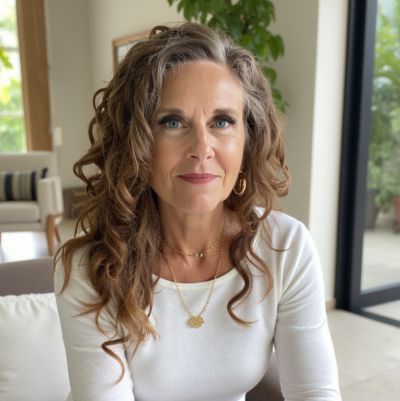
Elizabeth is a Master Certified Life and Health Coach with over 20 years of experience, dedicated to helping women in midlife thrive through holistic health and wellness. Her personal journey began with a desire to reduce her own breast cancer risk, which evolved into a mission to guide women through the complexities of midlife health, from hormonal changes to mental clarity and emotional resilience.
Elizabeth holds certifications from prestigious institutions such as The Life Coach School, Precision Nutrition, and the American Council on Exercise, as well as specialized training in Feminist Coaching and Women’s Hormonal Health. Her approach is deeply empathetic, blending her extensive knowledge with real-life experience to empower women in their 50s and 60s to build sustainable health habits that last a lifetime.
Recognized as a top voice in women’s health, Elizabeth speaks regularly on stages, podcasts, and webinars, inspiring women to embrace midlife with energy, confidence, and joy. Her passion is helping women regain control of their health, so they can fully engage in the things that matter most to them—whether that’s pursuing new passions, maintaining strong relationships, or simply feeling great in their own skin.