
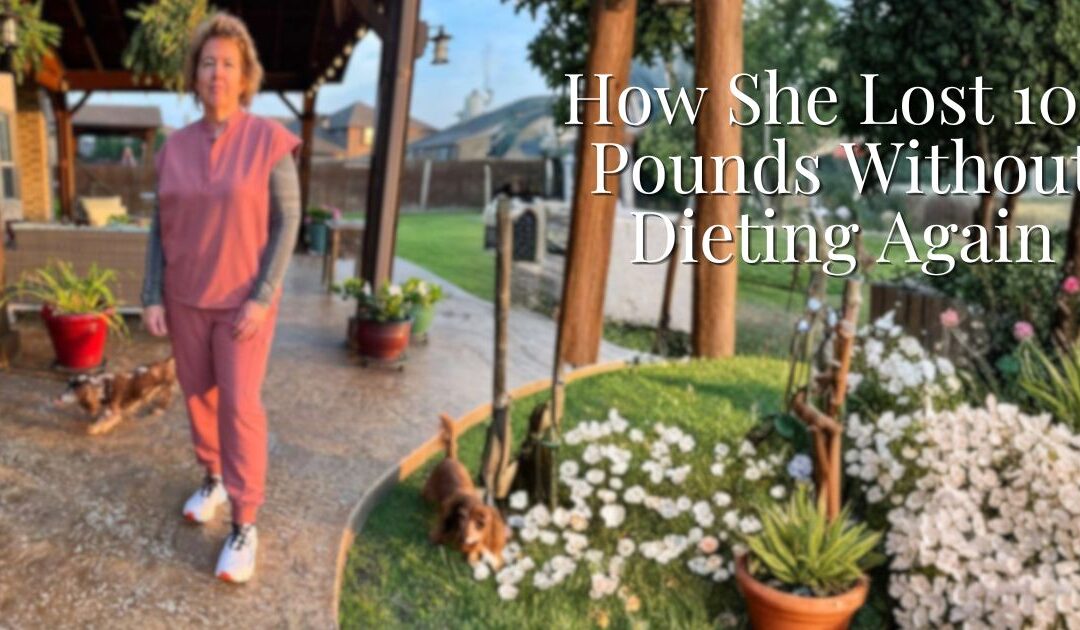
She lost 100 pounds without going on another diet by learning to trust herself around food again, one sustainable change at a time, and the weight came off as a side effect of that work, not the point of it.
TL;DR
- The real problem was never the food. It was that she'd never learned to trust herself.
- She'd been dieting since she was 11, and had cycled through Weight Watchers, keto, Atkins, the grapefruit diet, and the five-bite diet before anything stuck.
- What worked was changing one sustainable thing at a time, not overhauling her whole life.
- Learning to feel her feelings instead of numbing them with food mattered more than any food rule.
- Skip this: living and dying by the number on the scale.
She Dieted Since She Was 11. Losing 100 Pounds Wasn't What Fixed It.
Chris started dieting at 11 years old. By the time she found my podcast in her mid-40s, she'd tried Weight Watchers, Atkins, keto, the grapefruit diet, and the five-bite diet. She lost weight on all of them and gained it back on all of them, plus a little more each time.
She's a nurse who runs a household and still has aging parents and adult kids who need her. By the time she came to me, she was hiding food in her bedroom at night, eating past the point of being sick.
Here's the part that matters. She already knew what she was supposed to do. What she didn't know was why knowing it had never once been enough to make it stick.
This is her story: how she lost over 100 pounds, threw away her scale, and wore a bathing suit in public for the first time in years. If you read it as a weight loss story, you'll miss the part that changed her life. Hear the full conversation, in her own words, on episode 279 of the podcast.
The Real Problem Was Never the Food
For years, Chris believed she just loved food too much, and that getting her eating under control would fix everything else. That belief kept her stuck and ashamed, because if the problem really was just food, failing to control it felt like a personal failing.
What was actually happening: she was under enormous stress, from work, from caregiving, from being last on her own to-do list, and food was the fastest way to stop feeling any of it. Not just the bad feelings. All of them.
"It really wasn't about the number on the scale. It was more about how I felt about myself, and how I was treating myself."
Once she started paying attention to what was underneath the eating, instead of only trying to control the eating itself, things started to shift. She began journaling and doing what I call thought downloads: writing out what she was feeling instead of eating it. That's when the real work started.
What Actually Changed
Chris didn't overhaul her whole life at once. What she found, first through a nine-week program and then a year of one-on-one coaching, was permission to change one thing at a time. Pick one small, doable change for the week. Don't aim for perfect. Aim for what I call B-minus work: showing up most of the time instead of demanding all of the time.
In nine weeks, she lost 20 pounds and kept going. Over the next year and a half, she lost more than 100 pounds total, and her husband, who cooks for both of them, lost weight right along with her simply because he changed how he cooked.
Worth noticing: I never once asked Chris her weight the entire time we worked together. The further we got, the less it meant to her.
If you want a starting point for noticing your own patterns before you try to fix anything, my free guide walks through where to look first. Grab 8 Habits That Healthy People Do (and Why You Don't)

Why Knowing What to Do Was Never Enough
Chris told me something I hear from almost every woman I work with. She knew what she needed to do. She just couldn't make herself do it.
That gap, between knowing and doing, is not a willpower problem, and it's not a discipline problem either. It's what happens when your habits sit on top of decades of putting everyone else first, running on almost no rest, and believing your needs come last. You can know the right answer and still not act on it, because the system underneath you was never built to let you.
If you want to know exactly where your follow-through breaks down, I built a free quiz for that. It takes about three minutes: Take the quiz
The Day She Threw Away Her Scale
Chris had a goal: hit exactly 100 pounds lost, then get rid of her scale for good. The morning she hit it, she took a photo, texted it to me, and put the scale straight in the trash.
"That number doesn't mean anything. It's how you feel. It's how your body feels, and everybody's body feels good at a different point."
She hasn't weighed herself since. What she uses instead: how her clothes fit, her energy, whether she's sleeping. That's a more reliable measure than a number that moves for reasons that have nothing to do with self-care.
"It's one less thing my brain has to lie to me about, worry about, tell me stories about. It's freeing."
If the scale has more control over your day than you'd like to admit, I wrote a piece on what to build instead. Read The Skill of Self-Trust
What Success Actually Looked Like
The number on the scale was never the real marker. Here's what was:
- A closet where every single thing fits. No more trying on twenty things and taking off nineteen.
- A bathing suit and shorts, bought and worn in public, at hot springs in Colorado, after one aborted attempt and one that stuck.
- More willingness to show up, look people in the eye, and say yes to plans she used to turn down.
- Waking up most mornings looking forward to how the day would feel in her body.
"Now I know I can do whatever I want to do. I can achieve it, no matter what it is, in my health or my personal life or my professional life."
How to Start This Yourself
You don't need Chris's exact program to notice these same patterns. Here's where to begin.
- Notice what's happening when you overeat. Today: the next time you eat past full, just notice it. Nothing to fix yet.
- Name what's underneath it. This week: try one thought download, writing what you're feeling instead of eating it.
- Pick one sustainable change, not an overhaul. This week: choose one thing to adjust, and let everything else stay the same.
- Practice reading your body instead of the scale. Next week: go one day without weighing yourself, and notice how you feel.
- Let one small brave thing build toward the next. Next week: do your version of "wear the bathing suit," something small you've been avoiding.
Two Ways to Approach This
| What you're focused on | The diet approach | The systems approach |
| What gets your attention | What to restrict | What's underneath the eating |
| How you measure progress | The number on the scale | How your clothes fit, how you feel |
| What happens after a hard day | Start over Monday | Notice, adjust, keep going |
| The standard you're held to | Perfect adherence | B-minus, most of the time |
Frequently Asked Questions
Usually because the plan treats weight loss as a math problem instead of a self-trust problem. The pattern returns once the restriction ends and nothing underneath has changed.
Yes. Chris lost more than 100 pounds without a meal plan, a macro count, or a calorie target, by picking one sustainable change at a time and noticing what was driving the eating.
Nighttime eating is often less about hunger and more about it being the first quiet moment of the day. Once you've spent morning to night meeting everyone else's needs, food can become the fastest way to feel something, or nothing at all.
It means the goal is a body you can trust, not a specific number, and it doesn't require pretending you don't want your clothes to fit better. Weight loss can still happen. It's just not the measure of the work.
Because that gap isn't about willpower. It's what happens when your habits sit on top of exhaustion, decision fatigue, and years of putting yourself last.
Yes. For many women, not weighing in removes one of the biggest triggers for the behavior they're trying to change. Chris hasn't stepped on a scale in over six months.
It's common after years of diets that worked short-term and failed long-term. It's rarely a sign something is wrong with your body, more a sign those approaches never touched the real problem.
For Chris, about a year and a half of steady, one-change-at-a-time work. There's no fixed timeline, because the point isn't speed. It's building something that holds up in a normal, imperfect life.
The Takeaway
Chris came to me wanting to lose weight. That's how almost everyone finds me, and there's nothing wrong with wanting that. But somewhere in the middle of the work, the weight stopped being the point. What changed was how she talked to herself, how she showed up for herself when no one was watching, and whether she believed she was worth taking care of.
The weight came off because that other work got done. That's not a coincidence, and it isn't unique to Chris.
If any part of her story sounded familiar, that isn't a coincidence either.
Where to Go From Here
If you want to know specifically where your own follow-through breaks down, not generic advice, but the actual reasons it's different for you, the Total Health Systems Audit is built to find that. It's the same kind of work that helped Chris figure out what was going on underneath her eating.
Learn more about the Total Health Systems Audit
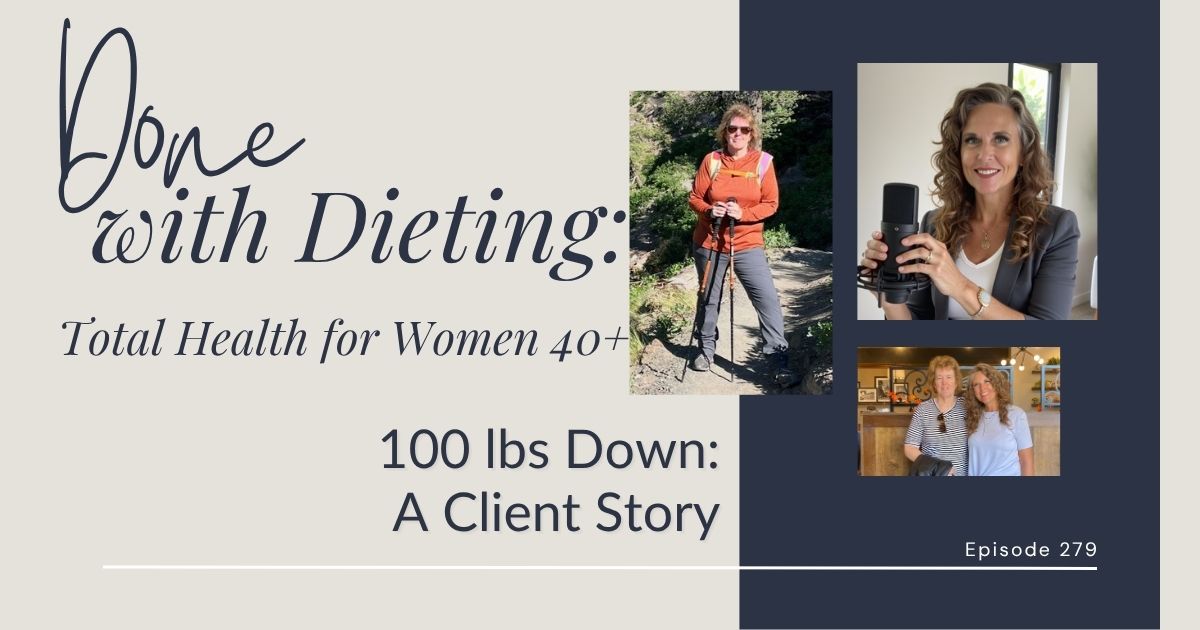
And if you want to hear this whole conversation in Chris's own words, bathing suit and hot springs included, listen to episode 279
Evidence & Attribution
- A review on weight cycling notes it's common in people who've struggled with weight, and its long-term health consequences beyond obesity itself remain scientifically debated. → https://pubmed.ncbi.nlm.nih.gov/25429313/
- A systematic review and meta-analysis found weight-neutral approaches showed greater improvement in bulimia symptoms than traditional weight-loss approaches, with no significant differences on most other outcomes, performing comparably overall. → https://pubmed.ncbi.nlm.nih.gov/31393568/
- Johns Hopkins Medicine explains that chronically elevated cortisol from stress can increase food consumption, fat storage, and weight gain, with afternoon and evening flagged as a high-risk window for stress-driven overeating. → https://www.hopkinsmedicine.org/health/wellness-and-prevention/tips-to-manage-stress-eating
Elizabeth is a Master Certified Life and Health Coach with over 20 years of experience, dedicated to helping women in midlife thrive through holistic health and wellness. Her personal journey began with a desire to reduce her own breast cancer risk, which evolved into a mission to guide women through the complexities of midlife health, from hormonal changes to mental clarity and emotional resilience.
Elizabeth holds certifications from prestigious institutions such as The Life Coach School, Precision Nutrition, and the American Council on Exercise, as well as specialized training in Feminist Coaching and Women’s Hormonal Health. Her approach is deeply empathetic, blending her extensive knowledge with real-life experience to empower women in their 50s and 60s to build sustainable health habits that last a lifetime.
Recognized as a top voice in women’s health, Elizabeth speaks regularly on stages, podcasts, and webinars, inspiring women to embrace midlife with energy, confidence, and joy. Her passion is helping women regain control of their health, so they can fully engage in the things that matter most to them—whether that’s pursuing new passions, maintaining strong relationships, or simply feeling great in their own skin.