

You've read the books. You've listened to the podcasts. You know what you're supposed to eat, how much you're supposed to move, and roughly how much sleep a human being requires to function like one. So why isn't any of it sticking? This episode is not about giving you more information. It's about asking a question most health content never asks: what if the real problem isn't that you don't know what to do — it's that you don't actually believe it will work for you?
Host Elizabeth Sherman opens with a story from her own past: standing in her dining room in workout clothes, surrounded by chocolate wrappers, a certified nutritionist and personal trainer who couldn't follow her own advice. What she eventually learned didn't come from a better plan or stronger willpower. It came from finally learning to listen to her own body — and that changed everything.
In this episode, Elizabeth unpacks the difference between having information and having conviction. She explains why following external health rules for years can quietly sever the connection between what you know and what you feel — and why that disconnection, not laziness, is what's breaking your follow-through.
If you've ever said "I know exactly what to do, I just can't make myself do it," this episode was built for you.
The Biggest Problem Midlife Women Face Regarding Healthy Habit Follow-Through
The most common frustration among women in midlife isn't a lack of information about healthy habits — it's the persistent gap between knowing and doing. Most women over 40 have accumulated years of health knowledge: they understand the value of sleep, protein, hydration, stress management, and regular movement. But understanding something intellectually is not the same as believing it will make a difference in your specific body, your specific life, on a specific Tuesday when everything has already gone sideways.
This distinction matters because belief is what drives behavior, not information. When women have been following external rules — calorie counts, macro targets, rigid meal plans — for years without ever developing a felt sense of how food and habits actually affect their energy, mood, and cravings, they lose the internal feedback loop that makes follow-through feel worth the effort. The result is compliance-based health: you do the thing when motivation is high, and you fall apart when it isn't, because there's no internal conviction holding the behavior in place. In midlife especially, where hormonal shifts, accumulated stress, and decision fatigue are all working against you, compliance without conviction is not a sustainable strategy.
The solution is not more discipline. It's rebuilding the connection between what you do and how you actually feel — so that healthy habits stop feeling like instructions written for someone else's body.
Are you loving the podcast, but arent sure where to start? click here to get your copy of the Done with Dieting Podcast Roadmap (formerly Total Health in Midlife) Its a fantastic listining guide that pulls out the exact episodes that will get you moving towards optimal health.
Take the Quiz: Why Do Your Healthy Habits Keep Falling Apart? If you've ever wondered why you know exactly what to do but still can't seem to stick with it, this quiz was built for you. In about 3 minutes, it identifies your specific pattern: the real reason your follow-through keeps breaking down, and what to address first. Your results are delivered straight to your inbox.
I am so excited to hear what you all think about the podcast – if you have any feedback, please let me know! You can leave me a rating and review in Apple Podcasts, which helps me create an excellent show and helps other women who want to get off the diet roller coaster find it, too.
Watch or Listen to the Episode:
WHAT YOU'LL LEARN
- Why having all the right information still isn't enough to change your behavior — and the one thing that actually is
- How years of following external health rules can quietly disconnect you from your own body's signals (and what it takes to rebuild that connection)
- The four specific things that break down when midlife women can't follow through — and why none of them are willpower or discipline
- What Elizabeth discovered after years of overtraining, overeating, and feeling like a fraud as a certified nutritionist — and the shift that finally changed everything
- Why motivation is the wrong thing to wait for, and what to do instead on the days it doesn't show up
RESOURCES
- Take the free quiz: Why Do Your Healthy Habits Keep Falling Apart?
- Free guide: 8 Habits That Healthy People Do and Why They Don't Stick
Full Episode Transcript:
268 - What if You're Not Lazy? What if You Just Don't Believe It Yet?
Elizabeth: [00:00:00] So we know what we're supposed to do, right? We know we're supposed to eat more vegetables, move our bodies, drink enough water, go to bed at a reasonable hour, stop treating the pantry like a coping strategy. At night when we're supposed to be in bed, like you've been told, we've all been told many times by doctors, by articles, by podcasts.
Maybe this podcast probably by yourself on a Sunday night when you feel optimistic about the next day. But here's the thing that I want to sit with today. Knowing what you're supposed to do and actually believing it. Believing it in a way that lands in your body and makes you want to act on it. Those are two completely different things and for most of us, we have spent years confusing one for the other.
We think because we have the information that we have the belief. We think because we know vegetables are good and sleep matters, and we really should slow down on the wine, that somewhere in our nervous [00:01:00] system that we are convinced. But what if we're not? Like, what if The reason that you cannot make yourself do the things you know that you're supposed to do is not that you're lazy, not that you lack discipline, not that you don't care enough, but rather.
You never actually believed the information would make a difference for you specifically in your actual life, because that's a very different problem and it has a very different solution. So stay with me today because this might be the episode that finally explains that gap.
Welcome to the Total Health and Midlife Podcast, the podcast for women over 40 who want peace with food, ease in their habits, and a body that they don't have to fight with.
Hey everyone. Welcome back to the Total Health and Midlife Podcast.
I am Elizabeth Sherman, your host, and I am really glad that you're here today. So I wanna start off with a [00:02:00] story. I've told versions of it before, but. I think it's one of those things that bears repeating because I think it's the clearest illustration I have of what I actually wanna talk about today. So years ago I was standing in my dining room staring out the window through our plantations, shutters at the street outside.
It was the middle of the afternoon. I was still in my workout clothes, I was done with my clients and I was ashamed. I had a bunch of empty chocolate wrappers on the counter that were not new.
This was almost a daily occurrence for me. The overeating, the regret, and the shame. Here's what made it really super confusing is that I was a certified nutritionist and personal trainer. I spent my days teaching other people how to live healthy lives. I knew exactly what I was supposed to do. In fact, that's one of the reasons why I [00:03:00] became a nutritionist, is so that I would know all of the rules, like I could write plans in my sleep.
I was running an hour every single day. I was lifting weights. I was logging every single bite. I was spending money on a myriad of supplements, carb blockers, metabolism, boosters, and I would hope that something would finally be the fix to what I was doing, and none of it was working. My body didn't reflect the effort that I was putting in, and I was exhausted.
I was frustrated. And. To be honest, I was quietly terrified and I also had an injury that was probably a stress fracture from over training, and I was too scared to rest because I was convinced that if I stopped, I would gain all the weight. I had the information, I had more information than most people [00:04:00] walking around, and I was a complete mess.
What I didn't have, what took me a long time to understand was my belief about the information that I have. I didn't believe that my body could be trusted. I didn't believe my own signals. I didn't believe that the information that I had actually applied to me. I had been following other people's rules for so long that I had completely lost the thread between what I was doing and how I actually felt.
I knew what I was supposed to do. I just couldn't connect it to anything real inside of me, and so that is what this episode is about. Now, let me be specific about what I mean, because I think this distinction matters a lot. There's a kind of knowledge that lives in your head, right? It's abstract, it's correct.
It's the thing that you could repeat back to a doctor or a [00:05:00] friend or yourself on a Sunday morning when you're feeling clearheaded and optimistic. Vegetables are great. I should not eat sugar. Sugar is gonna kill me. Sleep matters. Chronic stress is hard on your body. Alcohol is not actually helping you wind down, it's just postponing the wind down and making tomorrow harder.
Like you know, all of this. Right? And then there's a different kind of knowing the kind that's rooted in your actual experience, the kind where you felt the difference, where you've eaten a real lunch and noticed that you didn't spend the afternoon in a fog where you've gotten eight hours of sleep and then woken up feeling like.
A revived human being instead of just this troll where you've gone three days without wine and realize that you are sleeping so much better and that anxiety isn't around and your afternoon cravings may have even disappeared. [00:06:00] That second kind of knowing is belief. It's embodied, it's yours, and most women are operating almost entirely on the first kind.
They have the information. They do not have the felt sense of why it matters, and because we don't have that felt sense, following through on what we should be doing feels like instructions for someone else's life. And so what happens is that knowing becomes compliance, not conviction, and compliance is exhausting to maintain because it has no internal engine.
It depends entirely on willpower, which is not a renewable resource. It depends on motivation. Which is famously unreliable. It depends [00:07:00] on you being rested enough, resourced enough, and undistracted enough to override every competing impulse in your body and your environment. Compliance breaks down at the end of the day every single time.
So why don't most women have that embodied knowing? Because for a very long time, the information that most of us were given about health and our bodies was not designed to help us listen to ourselves. It was designed to teach us to follow external rules. Count this, avoid that, earn this, restrict that.
Hit this number. Meet that target. Don't drink alcohol, don't drink your calories, eat your vegetables. The whole framework was built on distrust of the body. The body wants the wrong things. The body cannot be trusted. You are not hungry, you're thirsty, right? The body needs to be [00:08:00] managed and controlled, and a lot of us absorbed that framework completely.
We learned to follow plans instead of signals. We learned to eat by the clock and the chart and the point system. We learned that hunger was something to be managed, not something to be listened to. We learned that how I felt was probably wrong. And here's what happens when you operate for that way for long enough, you lose that connection to your body.
You stop being able to tell what your body is actually communicating because you haven't been paying attention, you've been overriding it for years. So now you have all this information about what you should be doing, and almost no internal reference point for why it would matter. So, you know, vegetables are good.
You've never slowed down to notice that you feel different on days when you actually eat them. You know, sleep is important. You love [00:09:00] sleep, but you're so chronically undersleep that you normalize how bad you feel and
then you can no longer feel the difference. The information floats in your head, unconnected to anything tangible or real, and then someone tells you to just do the thing and you try and you can't sustain it, and you conclude that you must be the problem. You're not the problem. You've just been trying to follow a map with no landmarks that you recognize.
And so I wanna come back to my story because there's a part that I skipped over that actually really matters. When I finally hired a coach, the thing she didn't do was give me more information. I didn't need more information. What she did was she taught me how to listen.
She introduced me to the Hunger Scale, not as a tracking tool, but as a communication tool. The way that I was gonna listen to my body, [00:10:00] the question wasn't how many calories do I need? It was, where am I right now? What is my body telling me and what happens after I eat at first? This was genuinely terrifying.
I had been following other people's rules for so long that making a decision based on my own internal signals felt like driving in a new city without GPS or MapQuest or anything like that. Like what if I got it wrong? What if I ate too much? What if my body was giving me bad information? But slowly the feedback loop started closing.
I would eat something, I would pay attention to how I felt an hour later, and then I would file that information somewhere real. I would pay attention to it and try to remember. My hunger became more predictable and my energy levels leveled [00:11:00] out. I stopped being constantly sore because I stopped over training because I stopped believing that more was always better and started noticing that my body was actually telling me to rest on occasion.
And here's what I want you to hear. The body that I had been fighting for years to show up to, to be this. This ideal form, when I started listening to her, she actually showed up and not because I finally found the right plan, but because I stopped fighting her and I start, started working with her. My habits now do not come from obligation or punishment.
They come from the relationship that I have built over the years with my body. I move and I eat the way that I do because I have spent years actually paying attention to how things make me feel. And I know in my body, not [00:12:00] just in my head, what helps and what doesn't. And that is belief.
That's the thing that makes follow through possible without this herculean effort. And I want you to know that this is available to you, but you can't get there through absorbing more information. You get there through experience and attention, and someone who teaches you how to interpret what your body is already saying.
Now let's talk about what actually breaks down when follow through fails. Because I hear women say all the time, I just don't have the discipline, Elizabeth, and I wanna offer you a different way to see that. Because discipline is not actually what's missing. What's missing is usually one of a handful of very specific things and be aware.
None of them mean that there's something wrong with you. So the first thing is [00:13:00] capacity, not willpower, but capacity.
Your ability to make decisions, regulate your emotions, tolerate discomfort, and start new tasks. And it is a finite resource. By the time you get to 7:00 PM after a full day of work, family caregiving and mental load, that resource is depleted. The version of you who made a plan this morning and was operating with a full tank is gone.
The version of you who is now standing in the kitchen is running on fumes. The healthy choice at 7:00 PM is not hard because you're lazy. It's hard because you are trying to do something that requires cognitive and emotional resources that you have already spent earlier in the day.
And again, there is nothing wrong with you if this is something that you struggle with. This is your life. Conditions and [00:14:00] conditions can be changed. Now, the second thing that breaks down is what I call the setup. Now, most plans sound reasonable in the abstract and fall apart in practice because nobody built the conditions for the plan to actually work.
So like for example, the chicken is in the fridge raw. The vegetables need to be washed. The sheet pan might still be in the dishwasher and the version of you who planned dinner at 8:00 AM assumed that evening you would arrive home refreshed. Maybe you know, with a cocktail in your hand, motivated and ready to cook for the woman with a full staff.
Now evening you. Did not get that memo.
The question is never, why didn't I do it? The question is, what would've been needed to be different for this to actually happen? And that's where the real change lived. Now the third [00:15:00] piece is motivation, and I wanna reframe motivation completely. Women often believe that they need to feel motivated before they can act.
I need to feel motivated to go exercise. I need to feel motivated to make dinner. I need to feel motivated to eat the salad, that if the feeling isn't there, that's a signal that they shouldn't even try. Motivation is supposed to arrive first and inspiration will carry them through to the action.
Motivation is not a prerequisite most often, it's actually a byproduct. So what that means is you start walking and somewhere around the corner you're glad that you went. You start chopping the vegetables and then you're in it. You're like, this isn't so bad. you lay out the mat and something [00:16:00] shifts.
But if you sit at the kitchen table waiting to feel like making dinner, you are gonna order takeout every single time. This doesn't mean that you force yourself through everything. It means that you stop treating the absence of motivation as a reason to stop, because it's not. It's just something that we do.
And the fourth piece which matters, especially in midlife, is that the conditions in your body have changed. Sleep deprivation hits harder. Chronic stress accumulates differently, undereating throughout the day, and then trying to make great decisions at dinner is a complete setup for failure that has nothing to do with your values or who you are as a person.
Women in midlife often hold themselves to standards built for an earlier version of their life, a version that was running on different [00:17:00] hormones, fewer responsibilities, and a heck of a lot more margin. That version could push through anything, and not because she was more disciplined, but because she had more in reserve.
Your current body is reporting. Honestly, she's not betraying you. She's telling you what she needs, and if you've been overriding that information for years, the first step isn't a better plan. It's learning how to hear her. So here's what I want you to take away from this episode. The reason your habits keep falling apart is probably not what you think it is.
You think it's laziness, you probably think it's a lack of discipline. It's not. It's not laziness or a lack of discipline. It's probably not that you don't care enough or want it badly enough or that something is fundamentally wrong with you. It's more [00:18:00] likely that you have a lot of information that has never connected to anything that
has felt real in your body. You have been following instructions designed for someone else's life, and then you keep wondering why they keep slipping. And underneath all that, one or more specific things are breaking down your capacity at the end of the day, the conditions that you've built around your intentions, your relationship with motivation, or a body that has changed.
And is now asking for something different from what you've been giving her. Now, none of these things that I mentioned are fixed by trying harder. None of them are fixed. By shaming yourself into compliance, they're fixed by getting a clearer picture of what's actually going on. Now I have something for you because that is exactly what I built a quiz for.
[00:19:00] It helps you to figure out the answer to the question. You know, if I know what to do, why am I not doing it? The quiz title is called Why Do Your Health Habits Keep Falling Apart? And it's designed for the woman who has the information. She's made the plans, she's tried to do the thing and she keeps ending up back at the beginning wondering what is my problem?
The quiz helps you to stop guessing. It helps you to identify the specific pattern that's breaking your follow through, the actual one, the one that you've been blaming yourself for, and when you can see what's actually getting in your way, you know what to address first. The quiz takes about three minutes and your results come straight to your inbox.
To get the quiz, go to elizabeth sherman.com/quiz. Because the goal isn't to become more disciplined. The goal is to build a real relationship with your own body. The [00:20:00] one where follow through is not an act of willpower, but rather an act of self-care and self-love. it's just what you do because you finally believe it matters.
That is available to you. It was available to me standing in that dining room with the empty wrappers and the shame and all the information in the world. the path out was not more knowledge, it was learning to listen. So go get your quiz. Go to elizabeth sherman.com/quiz. That link will also be in the show notes.
That's all I have for you today. Have an amazing day, and I will talk to you next time. Bye-bye. Hey, before you go, if you are someone who says, I know exactly what I should be doing, I just don't do it. Hey, if that's you, I made something for you. It's a free three minute quiz that gets underneath that exact problem. Not to give you more information, but to show you [00:21:00] the specific reasons, your follow through keeps breaking down because it's not the same for everyone. And once you can see your pattern clearly, everything else seems to change. Head to elizabeth sherman.com/quiz. It's free, it's fast, and it's honest.
Enjoy the Show?
- Don’t miss an episode, follow the podcast on Spotify and subscribe via Apple Podcasts or RSS.
- Leave me a review in Apple Podcasts.
- Join the conversation by connecting with me on Social!


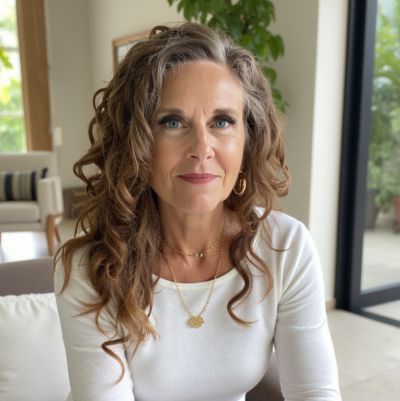
Elizabeth is a Master Certified Life and Health Coach with over 20 years of experience, dedicated to helping women in midlife thrive through holistic health and wellness. Her personal journey began with a desire to reduce her own breast cancer risk, which evolved into a mission to guide women through the complexities of midlife health, from hormonal changes to mental clarity and emotional resilience.
Elizabeth holds certifications from prestigious institutions such as The Life Coach School, Precision Nutrition, and the American Council on Exercise, as well as specialized training in Feminist Coaching and Women’s Hormonal Health. Her approach is deeply empathetic, blending her extensive knowledge with real-life experience to empower women in their 50s and 60s to build sustainable health habits that last a lifetime.
Recognized as a top voice in women’s health, Elizabeth speaks regularly on stages, podcasts, and webinars, inspiring women to embrace midlife with energy, confidence, and joy. Her passion is helping women regain control of their health, so they can fully engage in the things that matter most to them—whether that’s pursuing new passions, maintaining strong relationships, or simply feeling great in their own skin.