
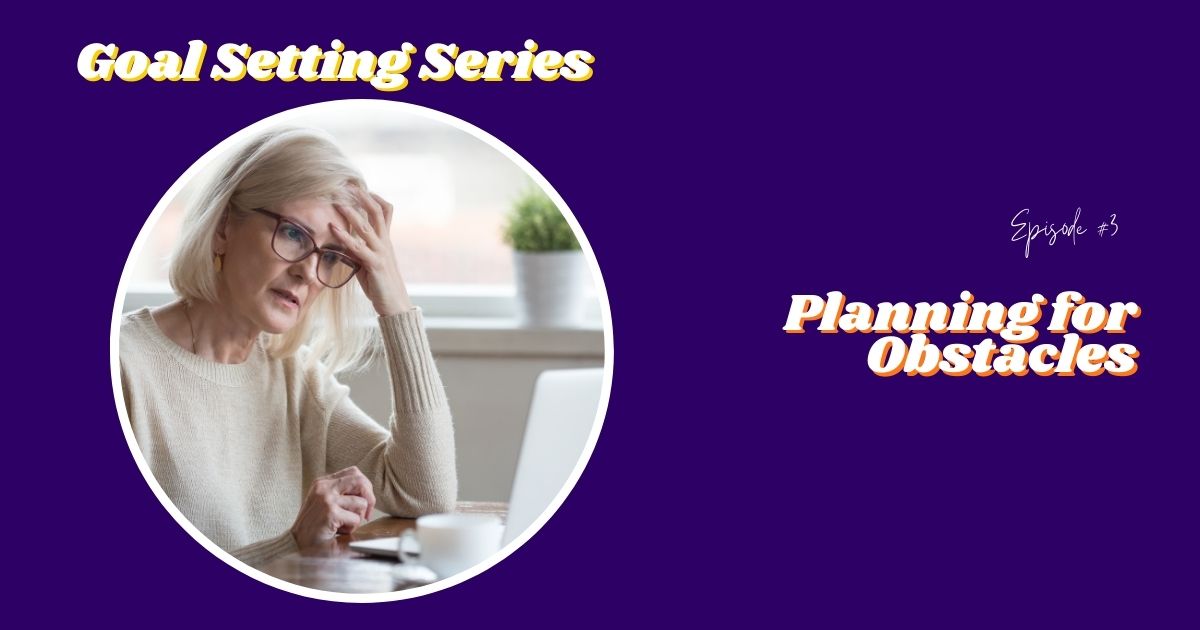
Most midlife women think they fail at their goals because they lose motivation, get too stressed, or can’t stay consistent. But what if the real reason has nothing to do with discipline at all? In this episode of Total Health in Midlife, we uncover the hidden forces that derail your habits long before you ever “fall off track.”
This conversation is about the obstacles you don’t see coming—the emotional labor, invisible responsibilities, and overloaded schedule that make traditional goal-setting impossible. You’ll learn why your habits collapse the moment life gets chaotic, why this pattern is predictable, and how to finally build goals that can survive the real rhythm of your days.
If you’ve ever wondered, “Why can’t I stay consistent?” or “Why do my goals fall apart the minute I’m busy?”, this episode will show you what’s actually happening beneath the surface. And more importantly, it will show you how to fix it.
The Biggest Problem Midlife Women Face Regarding Navigating Obstacles
The biggest challenge midlife women face isn’t a lack of motivation, willpower, or discipline—it’s the overloaded structure of their daily lives. Women in midlife carry a disproportionate amount of emotional labor, decision-making, caregiving responsibilities, and invisible tasks that don’t show up on a calendar but consume significant mental energy. When health goals are stacked on top of an already maxed-out life, even small disruptions—an unexpected email, a sick parent, a work deadline—can derail the entire plan. This isn’t personal failure; it’s predictable system overload.
Another major issue is that traditional goal-setting methods were never designed for women with this level of responsibility. Most frameworks assume ideal conditions: consistent schedules, external support, uninterrupted routines, and minimal emotional load. Midlife women don’t live in those conditions. Their obstacles aren’t rare surprises—they’re built into the architecture of their days. Without naming these structural barriers, women blame themselves for something that has nothing to do with personal inadequacy.
Finally, many women expect obstacles to disappear once they reach their goals. But reaching a goal doesn’t eliminate obstacles—it just means you’ve developed the skills to navigate them. The obstacles stay; you become more skilled at handling them. This episode explains how to build obstacle-resistant systems so your goals can survive real life instead of collapsing under it.
WHAT YOU’LL LEARN
- Why your habits fall apart when life gets chaotic—and why that’s not your fault
- How to identify the invisible obstacles that quietly derail your goals
- The simple three-step framework for life-proofing your habits so they finally stick
What You Can Do Right Now
Start by identifying the obstacles that predictably disrupt your routines. Look at past experiences with honesty, not judgment: vacations, busy seasons at work, social events, holidays, late nights, caregiving needs, emotional fatigue. These patterns reveal exactly what will challenge your goals moving forward. When you see your obstacles clearly, you can prepare for them rather than being blindsided.
Next, use the three-step framework:
Anticipate what’s coming, adjust your expectations or the size of your habit, and align your systems with your real life—not the fantasy version of a “perfect” week. This shift helps you stay consistent even during stressful or unpredictable seasons.
The Listener Takeaway: Why This Episode Matters
This episode matters because it releases women from the toxic belief that they “just need more discipline.” You’ll walk away with a new understanding: you don’t have a consistency problem—you have a system problem. And systems can be changed.
Once you see that obstacles are predictable and solvable, you stop blaming yourself and start building habits that actually fit your life. You’ll feel more capable, more confident, and more in control of your health—not because life gets easier, but because you finally have a structure that supports you.
RESOURCES
- Life Proof Your Health Playbook
- Goal Setting Series 1: Setting Realistic Goals
- Goal Setting Series 2: Myths of Achieving Goals
- Goal Setting Series 3: Planning for Obstacles
- Goal Setting Series 4: Maintaining Motivation
Are you loving the podcast, but arent sure where to start? click here to get your copy of the Done with Dieting Podcast Roadmap (formerly Total Health in Midlife) Its a fantastic listining guide that pulls out the exact episodes that will get you moving towards optimal health.
Take the Quiz: Why Do Your Healthy Habits Keep Falling Apart? If you've ever wondered why you know exactly what to do but still can't seem to stick with it, this quiz was built for you. In about 3 minutes, it identifies your specific pattern: the real reason your follow-through keeps breaking down, and what to address first. Your results are delivered straight to your inbox.
I am so excited to hear what you all think about the podcast – if you have any feedback, please let me know! You can leave me a rating and review in Apple Podcasts, which helps me create an excellent show and helps other women who want to get off the diet roller coaster find it, too.
Listen to the Full Episode:
Full Episode Transcript:
GSS-3: Planning for Obstacles
Elizabeth: [00:00:00] Okay, let me ask you a question. How many times have you set a goal, like a real meaningful this time? I mean it kind of goal only to watch it fall apart. The moment that your life gets inconvenient and every time you blame yourself, you tell yourself, I should have tried harder, I should have planned better, I should have been more disciplined.
here's what almost no one tells us. The thing that keeps derailing you has nothing to do with discipline. It has nothing to do with motivation, and it's not something that you can fix by trying harder. There's a pattern underneath your obstacles, a predictable, repeatable pattern.
And once you know how to spot it, you can finally stop blaming yourself for something that was never your fault in the first place. If you've ever wondered, why can't I just stay on track? This episode is going to answer that question in a way that you've never heard [00:01:00] before. And once you hear it, you won't be able to unhear it.
So stick around.
Welcome to the Total Health and Midlife Podcast, the podcast for women over 40 who want peace with food, ease in their habits, and a body that they don't have to fight with.
Hey everyone. Thank you for tuning into the Total Health and Midlife podcast. I am your host, Elizabeth Sherman, and welcome back to our goal setting series A four part mini series designed to help you set goals in a way that actually works for the life that you're living today, not the life that you hope that you'll have someday, and not the imaginary perfect week life.
The real one. So if you've ever set a goal with the best of intentions to walk every morning, to eat more vegetables, to cut back on snacking at night, and then found yourself falling off a week later, you are exactly where you need to be. Because this series isn't about inspirational pep talks. It's about understanding the moving parts underneath your goals so that you can [00:02:00] finally follow through on them without burning out.
Or feeling like you're constantly starting over.
and today's topic, this is the one that most women don't wanna see coming, but it's the one that makes or breaks everything. We're talking about obstacles. Most of us start a new goal. Strong day one, you're excited. Day three, you're still committed. And then life does what? Life does. Your workload explodes.
Your parent needs help. The dog gets sick. You hit a stressful patch at work, and then suddenly the habit that you are doing so well with is the first thing to go. You look at that disruption and you think, Ugh. You know what? I blew it or what is wrong with me? Why can't I stick with anything? But here's the truth.
Nothing has gone wrong. And in fact, these obstacles aren't a surprise. They're not a sign of personal failure. They're [00:03:00] predictable. Typically, they're normal, and honestly, they're part of the goal setting process that most of us were never really taught to plan for. And I see this all the time. One of my clients, Leah, is an administrator at a major university.
Every semester without fail, her schedule becomes. Absolute chaos. Beginning of the semester, end of the semester, the demand spike and meetings multiply, and her workload swallows her days whole. She used to go in each semester hoping that this time would be different, that she'd finally keep up with her health habits because she knew what to expect, and every time she would lose her footing and feel like she had failed again.
The turning point wasn't when she tried harder. It was when she finally said, okay, you know what? These obstacles aren't random. They're baked into my life. So how do I plan for them instead of pretending [00:04:00] that they're not gonna happen? And that shift changed everything. And that's exactly what we're gonna talk about today, why obstacles derail you and why it's absolutely not your fault.
And. How to start planning for them so that you can keep showing up for your health even when life gets messy.
So let's talk about the real villain in all this. And no, it's not your lack of discipline, your lack of motivation, or your lack of follow through. It's the overloaded plate that you're living with every single day. I like to use the metaphor of the plate with the spaghetti stacked with meatballs. We talked about it in episode one.
We've talked about it in episode two, and most women in midlife, especially the women that I work with. Already have a plate that's piled so high with responsibilities that you can't even see the surface anymore. Work deadlines, aging parents, partners who rely on you emotionally. A home that doesn't run itself.
Adult [00:05:00] kids who still need guidance, community commitments, pets appointments, logistics. Your plate is full before you even think about adding a health goal. But when January rolls around or when you hit that moment of something needs to change, you try to add a brand new habit on top of that mountain of responsibilities.
And maybe it's meal prepping every Sunday, or walking every morning, or packing lunches, or getting to bed earlier, whatever it is. And for a moment, it actually works. The health habit, the meatball, it stays on top until life starts to. Shake or get unpredictable, and then it rolls right off of your responsibilities.
And not because you did anything wrong and not because you're flaky and not because you never stick with things like it's some moral judgment, but because Gravity won, your life has no margin and you've been trying to balance something [00:06:00] fragile on top of something that's already unstable. Now this shows up with every single woman that I work with, every single one.
And I wanna tell you a story, but I'm gonna generalize the details because I wanna protect the client behind it. She is a high achieving professional with demanding career, and she's raising teens. She's supporting an aging parent with significant medical needs, and her partner processes the world differently and relies on her.
Her heavily to manage the logistics of the family's everyday life, and one of her kids also has complex health challenges of their own. Now she is brilliant. She's capable, she's organized. She's deeply committed to her family. She is the kind of woman that everyone turns to because she gets things done.
But when she tried to make her health a priority, even something [00:07:00] small like walking a few times a week or eating regular meals, it kept slipping. Not because she didn't care and not because she wasn't trying, but because her life was already so full. The tiniest disruption, a school situation, a medical appointment, a late meeting, knocked her habit straight off the plate.
Her story is not unusual, and in fact, it's the norm. and this is where we see the real villain in our story. The traditional goal setting models, most of the systems that you've been taught, like the planners, the productivity gurus, the Just Get up earlier advice, they were built for people with wide open schedules, external support, fewer emotional demands, and someone behind them picking up the slack.
They were never designed for women in midlife whose plates are already [00:08:00] overflowing with invisible labor. So when your goals fall off, it's not that you failed. It's that no one ever showed you how to integrate health into the foundation of your life, instead of stacking it precariously on top. And that's where everything begins to change.
Now, here's the part that most women never hear. Obstacles are not a sign that something went wrong, Obstacles are actually the path because they're predictable and they're quite honestly unavoidable. And if you're a woman in midlife, they are baked into the structure of your life. You don't face obstacles because you're inconsistent.
You face obstacles because we're human and we live in this life that just is never predictable. You have a full, rich, demanding life [00:09:00] because you're the person that everyone counts on, and because you've been conditioned to believe that if you could just try harder. You could somehow glide through your day without interruptions, without cravings, without stressors, or schedule hijacking.
And let's be honest, obstacles come in all sorts of different flavors.
Sometimes they're small, like going out to dinner with friends and thinking, okay, so tonight I'm going to eat light only to find yourself navigating appetizers shared plates that one friend who always orders another round and the feeling of not wanting to be the odd one out. Sometimes they're midsize, like planning a vacation and telling yourself.
I'll work out every morning, even though historically you've never once worked out on vacation. But the idea sounds great in your head when you're looking at the resort pictures online, and sometimes the obstacles are big, like a busy season at work. [00:10:00] The holidays, travel for a conference, a parent needing care, your partner struggling, an unexpected project landing in your lap.
The obstacles themselves aren't the problem. The problem is that most of us don't plan for them. We walk straight into predictable barriers as if they're surprises, and then we treat each one like they're evidence that we're bad at following through. One of the things that I do with my clients is I ask really pointed questions because I've been doing this long enough to know exactly what's coming.
I've seen the same patterns a thousand times. So when someone tells me I'm going on vacation, but I'm gonna stay on track with my health habits, the work that we're doing, or I'm going out with friends, but I'm only gonna have one drink or. I'll keep up with my workouts. Even though it's my busy week of the year, I [00:11:00] can already see the future obstacle, and I'm not psychic.
It's just pattern recognition. Every obstacle that you've ever encountered has left a breadcrumb trail. You just haven't been taught to pay attention to it. But when you start looking at your past missteps with curiosity rather than judgment, the future becomes unbelievably predictable.
The same obstacles show up over and over and over again. Obstacles are not moral failings. They're not evidence that you're weak or unfocused. They're actually structural. They're environmental. They're logical. They're emotional. They're part of being a woman with a fully lived life. And when you start expecting them, instead of being blindsided by them, everything starts to change.
Now, one of the most powerful things you can do for yourself is to start identifying your personal obstacles, the patterns that seem to show up [00:12:00] again and again, and quietly derail you. Because once you can name them, the shame starts to actually fall away. You can't blame yourself for something that you can see clearly.
You can only blame yourself when you're trying to fight the shadows and most of the obstacles that we hit. Aren't dramatic, they're subtle. They're woven into your identity. They've been reinforced for decades. Maybe you say yes when you wanna say no because you don't wanna disappoint someone. Or maybe because you've been the reliable one for so long that it feels easier just to absorb the extra work, then deal with the feeling of letting someone else down.
Maybe you believe that you're the only one who can do things right, because historically, you have been the one to hold everything together. And yes, you probably can do it faster, better, and more efficiently than the other people around you. But [00:13:00] the cost is that your goals get pushed to the bottom of the pile every single time.
Maybe you fall into perfectionism where if you can't do the full 45 minute workout, you skip it all together. Or if the vegetables aren't washed and prepared in perfect containers, you end up grabbing whatever's easiest instead. Maybe you default to over-functioning.
You carry the emotional labor, the logistics, the errands, the doctor's appointments, the reminders, the household rhythm, and none of it shows up on your calendar, which means that you completely underestimate how much your capacity has available. Maybe your systems were designed for a past version of you, the one who had fewer responsibilities, a different schedule, different hormones, or a different level of mental bandwidth, and now you're trying to force your current life into a structure that simply doesn't fit.
These patterns aren't [00:14:00] personality flaws. They're learned and survival strategies. They've kept you afloat for years, but now they're preventing you from moving forward to the life that you actually want.
I tell my clients all the time, we make mistakes when our expectations don't match reality. And when you expect to have a completely smooth week, and then obstacles appear, which they always do, you interpret that as failure. You beat yourself up and you think you should have done better. The truth is nothing is wrong.
You just expected yourself to live in a world where there were no obstacles, and that's not the world any of us live in.
and here's the part that surprises most people, even when you reach your goal. Now, whether that's weight loss, exercising, consistently eating differently, building strength, whatever it is, the obstacles actually do not [00:15:00] disappear. Life doesn't suddenly get easier. What changes is you, you develop the skills to navigate obstacles so they don't derail you anymore.
The obstacles stay, but you grow. I know this deeply from my own experience, especially with my own A DHD brain. My default brain is to create systems that look beautiful in theory. They're color coded, they're structured, they're organized, but they fall apart instantly in real life. And what I've learned and what I teach my clients is that the system has to flex.
It has to bend. It has to work inside the real world version of your life, not the ideal one that you wish that you had. And when you start identifying your patterns, your defaults, your predictable friction points, you stop expecting perfection, you stop blaming yourself, and you start building goals that can actually [00:16:00] stand up to your actual rhythm of your days.
So once you start recognizing your patterns and naming your obstacles, the next step is learning how to work with them instead of pretending that they won't show up. Obstacles don't require perfection, but they do require preparation, and this is where life proofing your goals becomes essential.
Traditional goal setting teaches you to rely on motivation, willpower, and white knuckling your way through challenges. But if you've lived more than five minutes past the age of 40, you know that motivation is the least reliable partner that you'll ever have. And willpower disappears the moment someone needs you.
Work gets stressful or your day takes a left hand turn. Life proofing is different. It's practical, it's honest. It respects the reality of your actual life, not the idealized [00:17:00] version you keep hoping will magically appear. And there are three steps to it. First, anticipate, look ahead. What's likely to get in the way?
What obstacles do you already know are coming? Busy seasons at work, travel holidays. Hormonal swings, family needs, late meetings. None of this is surprising, and when you anticipate obstacles, you're not caught off guard and you don't make their appearance mean anything about you. Next is adjust. So once you know what's coming, you adapt your plan.
You shrink the goal, you shift the frequency, and you build in a buffer.
You do the two minute version instead of the 20 minute version, you protect your energy, not the fantasy of what the day should look like. And then there's a line, this is the part that most women skip. Aligning your goals with the [00:18:00] structure of your life means asking What needs to change in my environment, my schedule, or my expectations for this goal to survive real life.
Now, maybe it's putting something on the calendar instead of hoping that you'll remember. Maybe it's delegating a task that you've been gripping too tightly.
Maybe it's letting something else drop so that your goal has space to exist. When you start approaching your goals from this place, anticipating what's real, adjusting before you get overwhelmed and aligning your habits with the life that you actually live. Everything becomes more doable. You stop trying to be superhuman, and you stop relying on adrenaline and guilt, and you start building a system that bends with you instead of breaking underneath you.
And this is what allows your habits to stick. This is what creates sustainability. This is what makes health possible [00:19:00] in midlife. Now, if you're hearing yourself in this episode, if you're noticing your patterns, seeing your obstacles more clearly, or realizing that you've been trying to build your health on top of an already overflowing life, then you need a system that doesn't
require perfection. You need a system that's designed for your reality, not the fantasy version of your life that you wish you had time for.
And that's exactly why I created the LifeProof Your Health Playbook inside the Playbook. I walk you through exactly how to identify your unique obstacles, not the generic ones that the internet throws at you, but the actual patterns that show up in your days, in your home, in your schedule, in your emotional bandwidth, and you will learn how to build systems that wrap around your real life so that your habits don't fall apart every single time the dog gets sick, your boss moves a deadline, your parents need help or.
[00:20:00] The holidays roll in. It helps you to create habits that hold up even when life gets chaotic, because chaos isn't the exception, it's the rule.
Now if you want your goals to finally stick, if you want health habits that feel doable and not overwhelming, your next step is to download the LifeProof Your Health Playbook. It's the bridge between wanting the goal and becoming the woman who can live the goal.
You can find it at elizabeth sherman.com/lifeproof, playbook, and there are dashes in between each of those words, and I'll link it in the show notes as well. That's all I have for you today. Have an amazing day, and I will see you tomorrow. Hey, before you go, if you're ready to stop forcing yourself into someone else's idea of a healthy routine and discover your own, take a look at the Life Proof Your Health Playbook. It's a step-by-step guide that helps you to build a foundation that actually supports your life. [00:21:00] Instead of competing with it inside, you'll learn how to create margin.
Plan with flexibility and anchor habits in a way that feels natural, not exhausting. You'll also get a full video and audio series so that you never feel lost along the way. To get the LifeProof Your Health Playbook, go to elizabeth sherman.com/life Proof Playbook and get your copy there and you'll find everything that you need in the show notes.
Let's make your health something that finally fits the life you have.
Enjoy the Show?
- Don’t miss an episode, follow the podcast on Spotify and subscribe via Apple Podcasts or RSS.
- Leave me a review in Apple Podcasts.
- Join the conversation by connecting with me on Social!


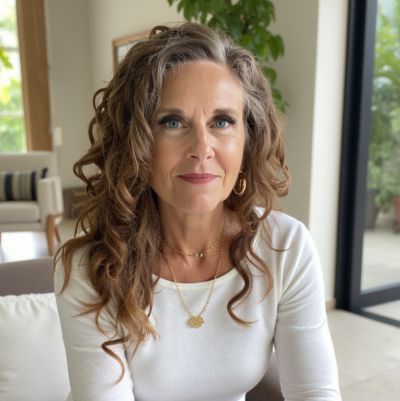
Elizabeth is a Master Certified Life and Health Coach with over 20 years of experience, dedicated to helping women in midlife thrive through holistic health and wellness. Her personal journey began with a desire to reduce her own breast cancer risk, which evolved into a mission to guide women through the complexities of midlife health, from hormonal changes to mental clarity and emotional resilience.
Elizabeth holds certifications from prestigious institutions such as The Life Coach School, Precision Nutrition, and the American Council on Exercise, as well as specialized training in Feminist Coaching and Women’s Hormonal Health. Her approach is deeply empathetic, blending her extensive knowledge with real-life experience to empower women in their 50s and 60s to build sustainable health habits that last a lifetime.
Recognized as a top voice in women’s health, Elizabeth speaks regularly on stages, podcasts, and webinars, inspiring women to embrace midlife with energy, confidence, and joy. Her passion is helping women regain control of their health, so they can fully engage in the things that matter most to them—whether that’s pursuing new passions, maintaining strong relationships, or simply feeling great in their own skin.