You know what you're supposed to do. Eat better, move more, get to bed at a decent hour. You have the information. You've had it for years. And yet, at some point between making the plan and the moment it actually matters, something shifts. You end up exactly where you didn't want to be, again, and you can't quite explain why.
There's a quote that gets attributed to Maya Angelou: we do the best we can with what we know, and when we know better, we do better. Most women in midlife reject that idea immediately, because they do know better. That's the whole problem. But there are four words missing from that quote that explain everything. And once you hear them, the gap between knowing and doing is never going to look the same way again.
In this episode, Elizabeth breaks down exactly what's happening in the moment your plan falls apart. Not in a vague, mindset-work kind of way. In a specific, here's-the-actual-mechanism kind of way. Your brain is offering you thoughts that feel completely true, completely reasonable, and have just enough logic in them to hold up for about thirty seconds. And you've been acting on them without knowing that's what you were doing.
This episode is for you if you've ever finished a day wondering how you ended up so far from where you planned to be.
The Listener Takeaway: Why This Episode Matters
If you've been blaming your follow-through, your resolve, or your ability to stay consistent, this episode is going to give you something more useful than another strategy. It's going to show you the actual mechanism behind the gap between knowing and doing. The relief isn't in finding a better plan. It's in understanding that you've been following through on your beliefs all along, and that those beliefs can be examined and changed.
Women in midlife are not failing at their health goals because they lack information or motivation. They're acting on thoughts that feel like facts, thoughts about what they deserve, what's realistic, what counts, and what the consequences of their choices actually are. Once you can see the thought for what it is, you get to decide whether you want to keep believing it. That's not a small thing. That's where everything changes.
Are you loving the podcast, but arent sure where to start? click here to get your copy of the Done with Dieting Podcast Roadmap (formerly Total Health in Midlife) Its a fantastic listining guide that pulls out the exact episodes that will get you moving towards optimal health.
Take the Quiz: Why Do Your Healthy Habits Keep Falling Apart? If you've ever wondered why you know exactly what to do but still can't seem to stick with it, this quiz was built for you. In about 3 minutes, it identifies your specific pattern: the real reason your follow-through keeps breaking down, and what to address first. Your results are delivered straight to your inbox.
I am so excited to hear what you all think about the podcast – if you have any feedback, please let me know! You can leave me a rating and review in Apple Podcasts, which helps me create an excellent show and helps other women who want to get off the diet roller coaster find it, too.
Watch or Listen to the Episode:
WHAT YOU'LL LEARN
- Why knowing what to do has never been your actual problem, and what is actually driving your decisions in the moments that matter
- The two types of thoughts your brain offers when your plan and real life collide, and why both feel completely justified in the moment
- What a belief actually is, how it forms without you noticing, and why it's been quietly overriding your plans for years
RESOURCES
- Episode 268: What You Know vs. What You Believe
- Take the free quiz to find out why your healthy habits keep falling apart
Full Episode Transcript:
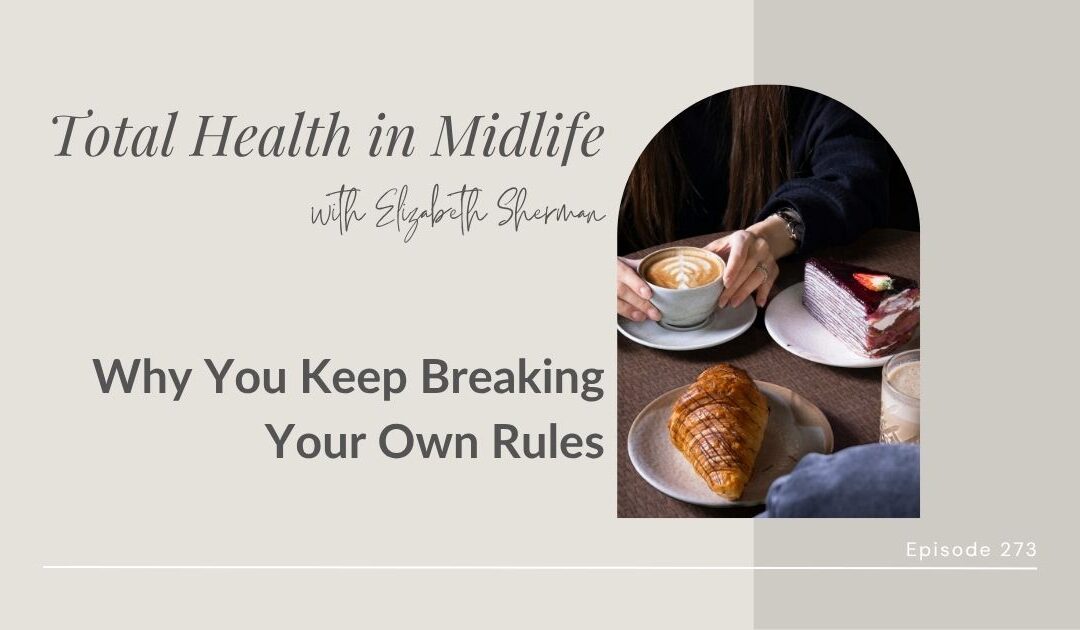
273: Why You Keep Breaking Your Own Rules
Elizabeth: [00:00:00] So I wanna tell you about a quote that most people find comforting, and then I wanna tell you about the four words that added to the end of it that changed. Everything for me. The quote is one that you've probably heard before. The idea that we do the best that we can with what we know, and when we know better, we do better.
It's generous, it's forgiving, and if you're someone who knows exactly what you should be doing and you still can't make yourself do it consistently, it probably doesn't quite land for you because. You know better, right? You know that you should be doing the things that you're not. And that's the whole problem.
Those four words that I mentioned, fix that. They explain the gap in a way that nothing else has for me. And once you hear them and really understand it, the reason that you keep ending back up at square one is gonna make complete [00:01:00] sense. So stay with me and let's get into it.
Welcome to the Total Health and Midlife Podcast, the podcast for women over 40 who want peace with food, ease in their habits, and a body that they don't have to fight with.
Hey everyone. Welcome to the Total Health and Midlife Podcast. I am Elizabeth Sherman, and I am so incredibly happy that you are here with me today spending a little bit of your time. And if you just heard that intro and you're wondering what four words I could possibly be talking about, good. I'm glad that you're here.
I want you to stay with me, and we are totally gonna get there. But first I wanna talk about you because you had a plan, and maybe it was about food, maybe it was about exercise, maybe it was about something completely different, entirely like going to bed at a reasonable hour or not pouring that second glass of wine on a random Wednesday when you swore yourself that you weren't gonna.
Drink during the week. [00:02:00] You knew what you wanted to do. You thought it all the way through, and then at some point between making that decision and the moment it actually mattered, something shifted. You ate the thing anyway. You skipped the workout, you stayed up too late, and now you're sitting with that particular brand of frustration that isn't just about the cookie or the missed workout.
It's the fact that you knew and it still didn't help. That's what this episode is all about. It's not about the cookie, it's not about the workout. It's the gap between knowing what you want to do, having all of the information, and then actually doing it when the moment arrives.
Because if you've been living in that gap for a while, you've probably started to wonder if the problem is you, if something is just a little bit broken in your follow through or your resolve or whatever it is that we're calling it this week. And [00:03:00] I wanna let you know that it's not, nothing is broken.
And I'm going to explain exactly what is happening. Now, there's a quote that I love and I completely stand by, and the quote is something along the lines of, we do the best we can with the information that we have, and then Maya Angelou says, and when we know better, we do better.
And I've always really loved that quote because it's generous and it gives people room to be human. But when it comes to health, most women that I talk to like completely reject that idea because we all know better. Like there is no lack of information on the interwebs about what we should be doing and why we should be doing
There is no lack of knowledge available to us, and most of us, [00:04:00] most women, we have all of that information and that's part of the problem. We think that if we gather more information, that that will create the, the urge to do better. That the problem must be that I just don't know enough and I just wanna share that.
That's part of the problem, but we all know that sugar isn't helping us. We all know that we would feel better if we moved our bodies. We know that a third glass of wine is going to wreck our sleep. We're not operating with incomplete information. We have all of the information, and yet sometimes we still do the thing that we know that we shouldn't do or we didn't do the thing that we should have done, right?
And so that quote, as comforting as it is, doesn't quite cover it [00:05:00] until I heard an addendum, four words added to the end. That changed the entire meaning for me and it really brought me down. A rabbit hole, so to speak, of trying to understand what this whole thing is about. So the whole thing is we make the best decisions we can based on the information that we have, and our beliefs. And our beliefs. That's it. That right there is the missing piece because here's what's true. In the moment that you decide to eat the cookie or skip the workout or tell yourself that you'll start again on Monday, you're not ignoring what you know, right? You're acting on what you believe, you believe about yourself, about what is going to happen next, about what you [00:06:00] deserved, what was even possible for you.
That is a completely different problem than not having enough information, which means. It needs a completely different solution. And so that's what we're really gonna be talking about today. Now, here's what's actually happening in that moment between your plan and your decision, your brain offers you a thought, not a fact, a thought, but it doesn't arrive labeled as such.
It arrives feeling like an obvious, reasonable common sense solution. It arrives feeling like it's you. And because it feels like you, you don't question it, you just act on it. The thoughts that show up in these moments tend to fall into two different categories. The first kind moves you towards something that feels good right now, and the second kind moves you away from something that feels uncomfortable right now.
And both of them feel completely. [00:07:00] Reasonable. They make sense in the moment. Both have just enough truth in them to be convincing, and that's what makes them so incredibly effective. The toward pleasure thoughts sound like it's just one cookie. One cookie is not going to derail anything. You deserve this.
You have had a hard day and this is a really small thing and you deserve it. Everything in moderation, right? That's actually the healthy approach. And here's the thing, none of those thoughts are entirely wrong. One cookie genuinely will not derail anything, and you do deserve good things. Moderation is a real concept, and there's a shred of truth in every single statements that I just said, which is exactly why your brain reaches for them and exactly why you don't push back on it
the away from discomfort. Thoughts sound a little bit differently. They sound like, I [00:08:00] don't have time today. I'll do it tomorrow when I have the full hour. I should really clean the kitchen first. I can't focus if this thing is a mess. I need to watch some videos before I am gonna do the thing, so I'm doing it right.
I just don't feel like it today. This other thing is more important right now. So do you see the pattern? Each one contains a grain of truth. You might actually have less time today. The kitchen might actually be bothering you. You might not like living in a messy house.
Learning proper form is technically a reasonable thing to want to watch videos to do. I personally know that one. When I got my rower, I was so incredibly excited, and then my brain informed me very sensibly that I couldn't use it just yet, that I needed to [00:09:00] watch some YouTube videos to learn the technique, to map out some dedicated workouts, all of which at the time sounded very reasonable, very responsible, none of which.
Was actually the point. The point was that I was a little intimidated and my brain handed me a very tidy excuse wrapped in the language of preparation, and I almost took it the toward pleasure thoughts and the away from discomfort thoughts are doing the same job. They are protecting you from something, from deprivation, from failure, from discomfort, from the gap between where you are and where you want to be.
Your brain is not trying to sabotage you. It's trying to help you to feel okay right now. The problem is that right now, and your actual goals are often pulling you in opposite directions, and when your brain hands you one of these thoughts and it feels [00:10:00] true and it feels like you, and it has just enough logic in it to hold up for 30 seconds, you act on it and not because you're weak.
Not because you don't care, because you didn't know that you were allowed to question it. Now that's the part that no one tells us. The thought is not the truth. It's just a suggestion, and you get to decide whether you believe it or not. So if the brain is offering you thoughts, where do beliefs come in?
Now a belief is a thought with an emotion attached to it. That's it. That's the whole definition. A thought that you've had enough times with enough feeling behind it that it stopped feeling like a thought, and it had started feeling like the truth. Think about the moderation thought the first time your brain offered you everything in [00:11:00] moderation.
It was probably just a thought, someone that had said something about it on the internet, something that you heard, something that made sense, something that you filed away in the back of your brain, but then you thought about it again and again, and each time you acted on it, there was a feeling attached.
Maybe it was relief, maybe it was permission. The particular comfort of having a reasonable explanation for a decision that you'd already made, and do that enough times, and it's no longer a thought that you're having. It's something that you know about yourself and about how eating works, and so it starts to feel like fact.
Same with I don't feel like it today. The first few times maybe you noticed it as kind of an excuse. After enough repetitions, enough times you stayed on the couch and nothing terrible happened. It becomes something closer to a personal policy, a truth [00:12:00] about your body, your energy levels, your relationship with exercise.
The stronger the emotion attached to a thought, the faster it becomes a belief. That's why the thoughts wrapped in shame or fear or relief tend to calcify quickly. They have a lot of feeling emotion charge behind them, and so they're sticky, and here's why this matters so much. Once a thought becomes a belief, you stop examining it.
You don't question the facts, you just live inside of them. And so when your brain offers you, I don't have time. You don't think is that actually true right now? You just start looking for your keys because apparently you're not going to the gym today, and this isn't something wrong with you. This is a very human thing.
This is how our brains work. They're efficient. They take the thoughts that have served you before and they [00:13:00] attach them to familiar situations and serve them back up so that you don't have to think too hard. That's genuinely useful in a lot of contexts. In this context, it's keeping you stuck because the beliefs running your decisions around your health were mostly formed a long time ago.
In different circumstances by a younger version of you who is working with different information and different conditions, and you've never gone back and asked whether they still apply, you just keep acting on them, which means that you've kept getting the same results and wondering what is wrong with you.
There's nothing wrong with you. You're just believing thoughts that you've never examined before. So let's go back to that moment for a second. You have a plan. You've decided that you're not eating sugar after dinner anymore. You've decided that you're going to use the rower three times a week, right?
You've decided that you're going to be [00:14:00] in bed by 10. You know what you want to do. You know what you should do. You've thought it through, the plan is solid. Maybe you even want to do the thing that you know you should do, and then the moment arrives. It's Monday, it's five o'clock. You're standing in the kitchen and your brain offers you that you've had a really hard day, and it's just one piece of chocolate, one glass of wine, and you can have it because restricting yourself completely is actually disordered and you're not doing that anymore. Or you're looking at your exercise equipment and your brain offers. You know, you should probably be more knowledgeable about this.
You should probably watch a few more videos to make sure that your form is right and you don't injure yourself, and you follow that thought, not the man. Like this is the difference between knowing what to do and actually doing it. I wanna be really clear about what's actually happening [00:15:00] there, because most people misread it completely.
They think that this gap exists because they don't have the right system in place yet, or not enough motivation, or they think that they need someone to hold them accountable, as if the problem is that nobody's there watching them, and so they look for a better plan, A stricter structure, an app, a program, a coach who will check in with them every single day, and sometimes that helps until the moment arrives again, and the brain offers the thought again, and the belief wins again.
In episode 268, I talked about the difference between knowing something and believing it, that you can know that vegetables are good for you and still not eat them. You can know that sleep matters and still stay up until midnight, like knowing is information. Believing is something you feel in your body as truth.
The [00:16:00] gap between knowing and doing is not an information gap. It's a belief gap. You're not failing to follow through on your plan. You are successfully following through on your beliefs every single time. Your follow through is actually impeccable. It's just pointed at the wrong thing. When your brain says that if you can't eat chocolate after dinner, you will never be able to enjoy it again. And you believe even a little, that deprivation leads to restriction.
That leads to a miserable relationship with food. You're going to eat the chocolate and not because your plan failed, because your belief one, when your brain says, I don't have time for the full workout, so I should skip it entirely, and you believe that partial effort doesn't count, you're going to skip the workout.
The belief is doing the deciding [00:17:00] the plan. Never really had a chance. I had this exact experience with chocolate after dinner. I've told this story before I decided that I was done with it as a nightly habit, and I was fine with that decision until my brain very helpfully pointed out that if I couldn't eat chocolate after dinner.
There was never gonna be a time that I would be able to eat it again, which of course is not true. It's not even slightly true, but in the moment, it felt true enough in that moment with that particular emotion attached to it that I almost caved almost. The only reason I didn't is because I caught the thought before I acted on it.
I recognized it for what it was, a belief masquerading as logic. A thought that my brain had offered so many times it had started to feel like a fact. And I asked myself, wait a minute, is that actually true? [00:18:00] And it wasn't. And that question is the entire game. So what do you actually do with this information, because I'm not gonna tell you to just push through the thought.
That's the approach that you've probably already tried and it works until it doesn't, which is usually right around the third week of January or the second week of any new plan that you've ever made. And I'm not gonna tell you to judge yourself for having the thought in the first place.
The thoughts are not the problem. Your brain is doing exactly what brains are designed to do. Getting angry at it for offering you a convincing excuse is like getting angry at your phone. For Autocorrecting, it is just doing its job. What I want you to do instead is get curious when the thought arrives and it will.
The only thing that you need to do is pause long enough to ask two [00:19:00] questions. One, is it actually true, and two, is this helpful? That's it. Not a journaling exercise. You don't have to do a whole bunch of stuff. You don't have to go to therapy on it. Just two questions in the moment before you act on it.
When your brain tells you that you don't have time for the full workout, so that you should skip it entirely, is that actually true? Do you genuinely have zero minutes or do you have 20 minutes that your brain has decided? Don't count. And is the belief that a shorter effort has no value actually helpful to you?
Or has it been the reason that you've skipped more workouts than you can count? When your brain tells you that it's fine because it's healthy food and healthy food doesn't really count, and so you can eat all of it. Is that actually true and is believing that [00:20:00] actually getting you closer to feeling the way that you wanna feel?
I used to tell myself I needed to clean the kitchen before I went for a run, and there was some truth in it. I do think more clearly in a tidy space, but was it actually true that the kitchen had to be cleaned before I could even leave the house? No. Was that belief helpful also?
No. It just gave my brain a very domestic sounding reason to stay inside and to avoid the discomfort of running. The pause is where your follow through lives, not in more planning, not in more information, not in finding the right program in that small gap between the thought arriving and you acting on it.
You don't have to be perfect at this. You don't have to catch every thought every time.
You're just looking for moments where you can slow down just enough to ask what your brain is telling you [00:21:00] is actually true and whether you actually want to keep believing it. That's not white knuckling it. That's just paying attention and it changes everything. You are not someone who lacks follow through.
You are someone who has been following through on beliefs that you didn't know, that you had beliefs that formed quietly over time, out of the thoughts that your brain offered and you accepted because they felt true and nobody told you that you could question them. And again. That does not mean that something is wrong with you.
It means that you are a human being. That's just what happens when we move through life on autopilot, which is most of us, most of the time. Knowing what to do and not doing it. That's a gap that is real, but it's not about information. You have the information. What you have underneath the information are beliefs about what's actually [00:22:00] going to happen if you do the thing or you don't do the thing, and how soon you're going to feel it either way.
And those beliefs are running your decisions whether you're aware of them or not. So the work isn't finding a better plan. The work is understanding what you actually believe and deciding whether those beliefs are still ones that you want to keep. That starts with knowing your specific pattern because the thoughts that your brain offers you and the beliefs that are underneath them are not generic.
They are yours. Trying to solve this without knowing your particular version of it is like trying to fix something without knowing what's actually broken. that's exactly what the quiz that I built is designed to do. Go to elizabeth sherman.com/quiz. This quiz takes about three minutes.
It's super simple. It identifies your [00:23:00] specific pattern. The real reason your follow through keeps breaking down and what to look at first. Your results go straight to your inbox if you know what to do, but you can't seem to make yourself do it. The quiz will show you why. Go to elizabeth sherman.com/quiz.
I'll also make sure that I put that in the show notes, and it's really just. An eyeopening experience. So thank you for spending your time with me today. I appreciate you so much. That's all I have for you today. Have an amazing week, and I will talk to you next time. Bye-bye.
Hey, before you go, if you are someone who says, I know exactly what I should be doing, I just don't do it. Hey, if that's you, I made something for you. It's a free three minute quiz that gets underneath that exact problem. Not to give you more information, but to show you the specific reasons, your follow through keeps breaking down because [00:24:00] it's not the same for everyone. And once you can see your pattern clearly, everything else seems to change. Head to elizabeth sherman.com/quiz. It's free, it's fast, and it's honest.
Enjoy the Show?
- Don’t miss an episode, follow the podcast on Spotify and subscribe via Apple Podcasts or RSS.
- Leave me a review in Apple Podcasts.
- Join the conversation by connecting with me on Social!


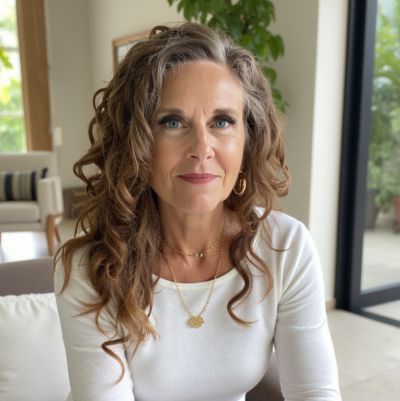
Elizabeth is a Master Certified Life and Health Coach with over 20 years of experience, dedicated to helping women in midlife thrive through holistic health and wellness. Her personal journey began with a desire to reduce her own breast cancer risk, which evolved into a mission to guide women through the complexities of midlife health, from hormonal changes to mental clarity and emotional resilience.
Elizabeth holds certifications from prestigious institutions such as The Life Coach School, Precision Nutrition, and the American Council on Exercise, as well as specialized training in Feminist Coaching and Women’s Hormonal Health. Her approach is deeply empathetic, blending her extensive knowledge with real-life experience to empower women in their 50s and 60s to build sustainable health habits that last a lifetime.
Recognized as a top voice in women’s health, Elizabeth speaks regularly on stages, podcasts, and webinars, inspiring women to embrace midlife with energy, confidence, and joy. Her passion is helping women regain control of their health, so they can fully engage in the things that matter most to them—whether that’s pursuing new passions, maintaining strong relationships, or simply feeling great in their own skin.