

If you’re hitting your step goal every day and still dealing with stubborn belly fat, low energy, or burnout, this episode is for you. The advice to “just walk more” sounds simple—but for many women in midlife, it’s not delivering the results they were promised.
In this episode of Total Health in Midlife, Elizabeth Sherman breaks down the truth about step goals and why obsessing over numbers like 10,000 steps a day can quietly work against your health in midlife. Especially if you’re navigating perimenopause, fatigue, stress, or unexplained weight gain, this conversation will help you understand what’s really going on.
We’ll look at where the 10,000-step rule came from, why it became so powerful in Western fitness culture, and how tying your worth to activity metrics can fuel burnout, injuries, and frustration. More importantly, Elizabeth shares what to focus on instead—so your movement actually supports your body, hormones, and energy.
This episode isn’t about doing less. It’s about doing what actually works for your midlife body—without guilt, obsession, or chasing numbers that were never designed for you in the first place.
The Biggest Problem Midlife Women Face Regarding Step Goals, Belly Fat, and Burnout
One of the biggest problems midlife women face is believing that hitting a daily step goal—often 10,000 steps—is the key to weight loss, belly fat reduction, and better energy. This belief is deeply ingrained, but it’s rarely questioned. Many women feel like they’re “doing everything right” by walking more, yet they’re still gaining weight, feeling exhausted, or burning out.
The issue isn’t walking itself. Walking is beneficial. The problem is when step goals become a moral measure of health or effort. When health is reduced to a number on a watch, women start using steps to prove they’re disciplined, committed, or “good enough.” This mindset can lead to overexercising, ignoring recovery, and pushing through injury or extreme fatigue—especially during perimenopause, when the body’s stress tolerance is already lower.
For midlife women, belly fat and burnout are often tied to hormones, chronic stress, poor recovery, and inconsistent fueling—not a lack of steps. Chasing higher step counts without addressing these factors can actually increase cortisol, worsen fatigue, and stall fat loss. This episode reframes the problem so women can stop blaming themselves and start working with their bodies instead of against them.
What You Can Do Right Now
Instead of fixating on a single daily step number, start by shifting your focus to overall activity and recovery. Look at how often you move throughout the day, how strong you feel, and how well you recover—not just what your tracker says. Short walks, strength training, yoga, rowing, and other non-step-based movement all count, even if your watch doesn’t reward them.
If you’re currently tracking steps, use them as neutral data—not a judgment. Gradually increase movement by 10–20% every couple of weeks if that feels supportive, but avoid drastic jumps that spike stress. Prioritize consistency, variety, and movement you actually enjoy. Being active across the day matters far more than cramming in one long walk just to hit a number.
The Listener Takeaway: Why This Episode Matters
If you’ve been exhausted from trying to “do enough” to be healthy, this episode offers relief. You’ll walk away understanding that your struggles with belly fat, low energy, or burnout aren’t a personal failure—and they’re not because you didn’t hit the right number of steps.
This conversation helps you step out of metric-driven health and into identity-based health. You’ll begin thinking like a woman who moves her body because it supports her life, not because she’s chasing validation from a device. When you stop proving your worth through numbers, you free up energy to actually feel better in your body—and that’s where real, sustainable health begins.
Are you loving the podcast, but arent sure where to start? click here to get your copy of the Done with Dieting Podcast Roadmap (formerly Total Health in Midlife) Its a fantastic listining guide that pulls out the exact episodes that will get you moving towards optimal health.
Take the Quiz: Why Do Your Healthy Habits Keep Falling Apart? If you've ever wondered why you know exactly what to do but still can't seem to stick with it, this quiz was built for you. In about 3 minutes, it identifies your specific pattern: the real reason your follow-through keeps breaking down, and what to address first. Your results are delivered straight to your inbox.
I am so excited to hear what you all think about the podcast – if you have any feedback, please let me know! You can leave me a rating and review in Apple Podcasts, which helps me create an excellent show and helps other women who want to get off the diet roller coaster find it, too.
Watch or Listen to the Episode:
WHAT YOU'LL LEARN
- Why the 10,000-step rule isn’t a science-based requirement for midlife health
- How step goals can fuel burnout, stress, and stubborn belly fat after 40
- What to focus on instead of step counts to support energy, hormones, and weight
RESOURCES
- Podcast Listener’s Guide for Total Health in Midlife
- The 8 Basic Habits That Healthy People Do – Guide & Checklist
Full Episode Transcript:
257 - 10,000 Steps
[00:00:00]
So, have you ever looked at your fitness tracker at the end of the day and thought, oh my God, I didn't do enough. Or maybe you hit your 10,000 steps and still feel like somehow it wasn't enough. Here's the thing, 10,000 steps a day is one of the most popular fitness goals out there, and it's also. One of the most meaningless.
In today's episode, I am pulling back the curtain on where that number even came from and how chasing it might be doing more harm than good. We are gonna talk about how this seemingly harmless goal can sneakily mess with your mindset, your motivation, and your self worth, especially if you are a woman in midlife.
Trying to take better care of your health, and I will show you what to focus on instead, so that your movement actually matters. Even if your watch doesn't count it stick around. This one might just change the way that you think about health forever.
Speaker: Welcome to the [00:01:00] Total Health and Midlife Podcast, the podcast for women over 40 who want peace with food, ease in their habits, and a body that they don't have to fight with.
Hey everyone. Welcome to the Total Health and Midlife Podcast. I am your host, Elizabeth Sherman, and thank you for tuning in today. So the other day, one of my clients mentioned almost just offhandedly, that she usually gets her steps in by 10:00 AM and she set up with this kind of. This puffed up feeling like, see, I'm doing it.
I'm being good and I'm following the rules. And that whole thing just made me pause for a second because I remember being exactly in that place. I used to chase those steps, like it meant something more than just movement. I was obsessed with closing my rings, watching the number climb, like if I didn't hit it the whole day, somehow didn't count.
Maybe you've [00:02:00] been there too. It's one of those things that we've all absorbed as gospel, 10,000 steps a day equals health. It's simple, it's clear, and it feels like we're doing the right thing. It gives us that little gold star, especially when we're juggling so many other things that feel fuzzy and never ending, but.
Have you ever thought to ask why 10,000 steps? Why is that the number that makes us feel like we are doing enough? And what happens if we don't hit it? Do we feel guilty like we failed or like our bodies didn't somehow earn their keep that day? Today, I wanna poke at that number a little bit, not because walking is bad, obviously it's great, but because when we attach our self-worth to our health.
to an arbitrary number, we can lose sight of what actually matters in the grand [00:03:00] scheme of things. And worse, we can hurt ourselves in the process physically, emotionally, and mentally. So we are gonna pack all of it where that number came from.
What it does to our mindset and how to step into a different type of identity. One where movement counts even when it's not counted. Okay, so let's start with the actual origin of this 10,000 steps idea, because it's kind of crazy. It didn't come from a doctor or a researcher or even a health study. It came from a pedometer company in Japan.
That's right.
Back in the 1960s, a company released a step tracking device called the Manpo Kai.
Now in Japanese man means 10,000 ho means steps, and kai is meter. I'm probably bludgeoning those words. So literally 10,000 step meter. It was a clever little branding move, a nice round [00:04:00] number that sounded impressive and achievable. It felt like it was a good goal, but it wasn't based on anything scientific.
It was just marketing. And somehow it stuck. And decades later, we've got Apple watches, Fitbits, and phones all reinforcing this number. Health magazines talk about it like it's the gold standard Trainers recommend it. Your doctor might even mention it, and so we absorb it as truth. But what if the company had picked 12,000 or 8,000?
What if tomorrow a new study that said that 15,000 steps is actually better, does that suddenly mean that you're unhealthy if you don't get there? Or does it mean the number was never the point to begin with? That's what I want us to think about today, how these rules that we follow without question, similar to 1200 calories, can shape our behaviors, our self-talk, and even [00:05:00] our identities and how maybe it's time to rewrite some of those rules for ourselves.
So let me tell you a little story because I have definitely been through this myself. Back when I lived in Austin, I used to play roller derby. Yep. Full pads, bruises, fishnets, the whole thing. My derby name was barbell. Like Barbell. Get it? Haha. and my number was 45 because that's the size of the big plates that you put on the ends of a barbell at a gym.
It was gritty. It was intense, and it was so much fun. I love that part of my life. I skated hard. Practices were long, my legs were constantly on fire and I was drenched in sweat by the end, and it was easily some of the most physically demanding activity that I have ever done. But you know what? My step count barely moved.
It messed with my head at first because here I was doing this insanely athletic thing [00:06:00] and my watch didn't count it. The, there was no confetti animation, no gold star, just, yeah, like it hadn't happened. And it made me question like, wait a minute. If I can feel this exhausted, this strong and this capable, but my watch doesn't register it, then what the hell are we even measuring?
Now, fast forward a few years and I recently bought a rowing machine. It's the same thing. My heart rate is up. I am working out, I'm dripping with sweat. I've been moving for 30 minutes, but again, I'm not getting many steps in. Definitely not 10,000. It's really difficult for me to get 10,000 steps in in a day.
So now I barely glance at that number anymore. I track what I care about. I pay attention to how I feel in my body. I listen to my energy, my sleep, my strength, and that's what matters. And I've gotta tell you, there is so [00:07:00] much freedom in not needing your movement to count in order for it to matter. I move because I am someone who moves, not because some arbitrary number tells me that I did it right.
So why do we clinging so tightly to these numbers? Like why does it feel like 9,999 steps means that I've failed, but 10,000 steps mean that I'm okay? Because somewhere along the way, health became moralized. It stopped being about how we feel in our bodies and started being about whether we were doing it right, and this shows up everywhere in the work that I do.
I'll be on a call with a client and she'll list out all of the. Great things that she did this week, like she's reporting into me as her health priest and I've been eating lots of vegetables and I got in all my steps and I haven't had any [00:08:00] sugar. And I always wanna say, are you telling me this because you are proud or because you want me to tell you that you're okay?
Because I get it. When we have been raised in diet culture, it trains us to believe that there's a right way to eat, a right way to move, and a right amount of effort to exert. And if we follow the rules, we earn the reward at the end, the gold star, the pat on the back, the inner critic that might stay quiet for another day.
But when we treat health like a moral scorecard, we also start playing weird games with ourselves. There's this concept called moral licensing. Basically, it's when you do something good, you subconsciously give yourself permission to do something, quote unquote bad. It's the whole, I walked today, so I earned this with a brownie mindset, and the funny thing is this only really happens when [00:09:00] the person doesn't see themselves as someone who moves regularly.
There was a study done. Where participants did a charity fun run, and afterwards researchers offered snacks. People who didn't usually exercise, took way more snacks than the ones who already identified as active. Why? Because the nons saw the run as a big deal, a ticket to indulgence the regular exercisers, it was just a regular Sunday.
So when we don't see ourselves as healthy, active people, we need proof. We need the number, the streak, the sticker chart. But when you become someone who just moves her body, because that's what she does, you don't need the numbers to tell you who you are.
There was a time in my life when I was so committed to doing it right that I [00:10:00] ignored every signal my body was giving me. I had a stress fracture in my ankle, and I still went out and limped my way around the neighborhood just to hit my 10,000 steps. Not because I needed the movement, but because I needed the validation.
I was worried about what would happen if I didn't get that. I didn't wanna feel like I was slacking. I didn't wanna break the streak. I didn't want the number on my watch to be low. And looking back now, that kind of rigidity wasn't discipline. It was fear. Fear of not doing enough. Fear of not being enough, fear of losing control.
And recently I read this newsletter from another coach who mentioned that his wife does the same thing. She will head out at 11:00 PM at night if her tracker says that she's just a few steps short. And I get it. I really do. That commitment is strong, but also it feels totally misaligned because what is the [00:11:00] cost?
What happens when we get sick or we're traveling or we're just tired?
If our movement only counts when we're tracking it, or if our self-worth is tied to what the data says, then what happens when life doesn't go as planned? Do we feel like failures? Because health isn't about punishing ourselves with rules. It's about supporting ourselves with care, and sometimes that care looks like moving and sometimes it looks like rest.
So if we're not chasing 10,000 steps, then what should we be aiming for? Here's what I wanna offer. It's not about steps. It's about being the kind of woman who moves her body. Not because her watch says to, but because she likes the way it feels to move, because she knows that movement helps her to sleep better, think clearer, stay strong enough to lift her suitcase into the [00:12:00] overhead bin without help.
What if the goal wasn't to track your activity, but just. To be active, to be someone who walks. The dog stands up between Zoom calls, dances in the kitchen, stretches before bed. Someone who moves throughout her day instead of sitting through it. And if 10,000 steps feels miles away right now, here's your permission slip.
You do not have to get there tomorrow. Start where you are. Add 10 to 20% more steps every two weeks. That's it. If you're at 4,000 steps right now. Aim for 4,500 or 5,000. Let your body adapt without panic or punishment. And remember, some of the best movement doesn't show up on a step Counter strength training, yoga, rowing, Pilates, swimming.
These are all powerful, valuable, life-giving forms of movement, but they don't always count [00:13:00] according to your watch. So let's stop pretending the tech knows better than you do, because being active all day long, standing more moving, often, walking in little chunks is way better for your health than sitting all day and then cramming in 45 minutes, walks to hit a number.
This isn't about the perfect workout, it's about building a life that serves you. And so let me bring this back to you. If you've been chasing 10,000 steps or calories, or pounds or rings on your watch just to prove that you are enough, what if you didn't have to do that anymore? What if health wasn't something that you earned but rather something that you lived?
You don't need permission to rest. You don't need proof to know that you're strong and you definitely don't need a number to validate that you're taking care of yourself. Start [00:14:00] thinking like a woman who moves because she wants to, because it feels good, because it keeps her sharp and steady and connected to her body.
If you are ready to stop measuring and start living into your health. I've got a guide that'll help. It's called the Eight Basic Habits That Healthy People Do, and it's the foundation of everything that I teach. It's simple, it's sustainable, it's no gimmicks, just the stuff that actually works. And so you can grab it@elizabethsherman.com slash habits and that link will also be in the show notes.
And if you're newer to the podcast and feeling overwhelmed by 250 podcast episodes, I've put together a podcast listener's guide to help you find exactly what you need next. You don't need to prove your worth and steps. Your body already knows what she needs. You just have to start listening. That's all I have for you today.
Have an amazing day, and I will talk to you next time. [00:15:00] Bye-bye.
Speaker 2: Thank you for joining us on today's episode. If you're feeling overwhelmed by all the health advice out there and looking for something that's straightforward, my eight basic habits that healthy people do, guide and checklist is just what you need. It breaks down essential habits into simple, actionable steps that you already know how to do.
By following these habits, you'll set yourself on a path to better health, surpassing most people that you know. To get your free copy, just click the link in the show notes or go to elizabeth sherman.com/habits. It's an easy start, but it could make all the difference in your health journey. Grab your guide today and take the first step towards a healthier you.
Enjoy the Show?
- Don’t miss an episode, follow the podcast on Spotify and subscribe via Apple Podcasts or RSS.
- Leave me a review in Apple Podcasts.
- Join the conversation by connecting with me on Social!


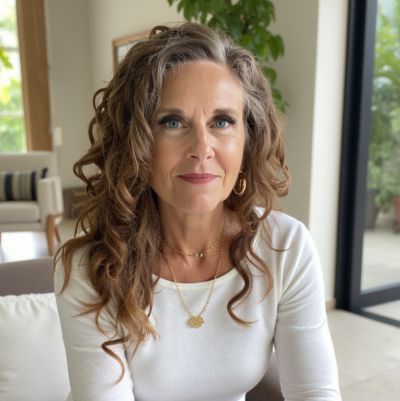
Elizabeth is a Master Certified Life and Health Coach with over 20 years of experience, dedicated to helping women in midlife thrive through holistic health and wellness. Her personal journey began with a desire to reduce her own breast cancer risk, which evolved into a mission to guide women through the complexities of midlife health, from hormonal changes to mental clarity and emotional resilience.
Elizabeth holds certifications from prestigious institutions such as The Life Coach School, Precision Nutrition, and the American Council on Exercise, as well as specialized training in Feminist Coaching and Women’s Hormonal Health. Her approach is deeply empathetic, blending her extensive knowledge with real-life experience to empower women in their 50s and 60s to build sustainable health habits that last a lifetime.
Recognized as a top voice in women’s health, Elizabeth speaks regularly on stages, podcasts, and webinars, inspiring women to embrace midlife with energy, confidence, and joy. Her passion is helping women regain control of their health, so they can fully engage in the things that matter most to them—whether that’s pursuing new passions, maintaining strong relationships, or simply feeling great in their own skin.