

In twenty years of working with women on their health, I've noticed something that doesn't get talked about enough. Some women come out of summer feeling really good. Lighter, more relaxed, like the season actually did something for them. And some women arrive at Labor Day feeling puffy, sluggish, and like they need a full reset before they can even think about their health again. The difference between those two women is not what you think it is.
Summer still carries that old nostalgia, even if you haven't been in school for decades. The looser schedule, the slower pace, the feeling that the rules are a little more relaxed. That pull is real. But summer has the ability to either support your health or quietly derail it, and most women never see it coming because the spiral doesn't start in July. It starts in May.
In this episode of Total Health in Midlife, Elizabeth breaks down why the summer health spiral is so predictable, why it has nothing to do with motivation or willpower, and what is actually driving the pattern for women who keep arriving at September swearing next year will be different.
If you are listening to this in June, you still have time to do this differently. But only if you understand what you're actually dealing with.
The Listener Takeaway: Why This Episode Matters
Most women treat the summer health spiral as a summer problem. They look for better strategies for navigating BBQs, vacations, and unstructured weekends. Those strategies have their place, but they don't get to the root of why the spiral keeps happening year after year.
The real issue is not what you're eating in July. It's how you've been living since September. When you understand that the summer blowout is a predictable response to nine months of running at full capacity without real rest or pleasure built in, you stop blaming yourself for lacking motivation and start seeing the actual structural problem. That shift alone changes how you approach not just this summer, but every season that follows. You do not have to earn your summer. You do not have to survive it. There is a version of this season where you are actually in it and still feel like yourself when September arrives.
Are you loving the podcast, but arent sure where to start? click here to get your copy of the Done with Dieting Podcast Roadmap (formerly Total Health in Midlife) Its a fantastic listining guide that pulls out the exact episodes that will get you moving towards optimal health.
Take the Quiz: Why Do Your Healthy Habits Keep Falling Apart? If you've ever wondered why you know exactly what to do but still can't seem to stick with it, this quiz was built for you. In about 3 minutes, it identifies your specific pattern: the real reason your follow-through keeps breaking down, and what to address first. Your results are delivered straight to your inbox.
I am so excited to hear what you all think about the podcast – if you have any feedback, please let me know! You can leave me a rating and review in Apple Podcasts, which helps me create an excellent show and helps other women who want to get off the diet roller coaster find it, too.
Watch or Listen to the Episode:
WHAT YOU'LL LEARN
- Why the summer eating spiral starts in May, not July, and what is already happening in your body and schedule before summer officially begins
- How the weekday/weekend eating pattern and the school year/summer pattern are the same all-or-nothing cycle running at two different scales, and why seeing that changes everything
- Why the fix for summer eating has nothing to do with a better summer plan, and what actually needs to change if you want to stop arriving at Labor Day feeling like you need a reset
RESOURCES
Full Episode Transcript:
275 - The Real Reason Summer Wrecks Your Eating Every Year
Elizabeth: [00:00:00] In 20 years of working with women on their health, I have noticed something that doesn't get talked about enough. Some women come out of summer feeling amazing, lighter, more relaxed, like the season actually did something for them. And then some women come out of summer feeling like they need an incredible reset before they can even think about their health again.
The difference between those two women is not what you think it is. It's not about having more time or less stress or better options. It's about one thing that most women never think to do before summer even starts, and that's what this episode is about, so stay-
Welcome to the Total Health in Midlife Podcast, the podcast for women over 40 who want peace with food, ease in their habits, and a body that they don't have to fight with.
Hey, everyone. Welcome back to the Total Health in Midlife podcast. I am your [00:01:00] host, Elizabeth Sherman, and I am really glad that you are here with me today. So I wanna talk about something that I have been noticing in my clients for years. Every September, without fail, I hear some version of the same thing.
They're tired, they feel puffy, their clothes are a little snugger than maybe they were in May, and they come to me ready to reset, ready to get back on track, swearing that next summer is going to be different. And every June, it starts again and again anyway. It doesn't matter if they have kids in school, or are school-aged, or are not.
It doesn't matter if they're working full-time, or running their own businesses, or somewhere in between. The pattern shows up across the board, and it is so consistent that I've stopped being surprised by it. What I want you to do today is notice it in yourself. This episode is coming out in June, which means that [00:02:00] you still have the entire summer in front of you, and that matters, because if you can see the pattern clearly right now before it's already taken over your life, you have a real shot at getting into Labor Day feeling like yourself, not wiped out and not starting over, but actually feeling good.
And so that's what today is about, not recovering from summer, but getting ahead of it.
So here's the thing about summer. It doesn't actually start on Memorial Day. For most of the women that I work with, the wheels start coming off months beforehand, and I mean that in a very specific way. I think about what May... Think about what May looks like. If you have kids in school, or you used to, or you have grandkids, or you're just white- wired and-
Think about what May looks like. Now, if you have kids in school or grandkids in school, or you're just wired to operate on an academic calendar the way that a lot of us are, May tends to be a lot. It's the end of year for everything. It's graduation parties, and prom, and finals, and kids [00:03:00] moving home from college, or moving out of their dorms and into their first apartments.
It's the last push at work before summer hits. It's your social calendar suddenly filling up with events that you said yes to in February when they felt very far away. And even if none of that applies to you directly, you probably feel it anyway. The energy of this season shifts. Things speed up, and everyone around you is in sprint mode.
So what happens to you in the middle of all that? You go into get through it mode. You stop thinking about what you're eating, and you start thinking about what's next on your list. You grab whatever's fastest. You skip the things that usually keep you steady, like your walk, or the decent lunch, or the 8:00 cutoff for eating because right now there are more important things to deal with, and you will get back to it [00:04:00] when things calm down.
And the whole time that you're doing this, you're telling yourself the same thing, "I just need to get on the other side of this. Once summer hits, then I can breathe." And that's the part that I want you to pay attention to. Because by the time summer actually arrives, by then you are already exhausted and depleted.
You have been running on fumes since the first week of May or before. Your body is tired. Your nervous system is fried. And if you've been quietly promising yourself a break for six weeks, then of course it makes sense. Summer doesn't cause the spiral. It just gives you permission to finally stop holding it all together.
And that permission, when it comes from a place that-
And that permission, when it comes from a place that much accumulated exhaustion rarely looks like [00:05:00] balance. It looks like an explosion or a release. So let me show you the pattern. You probably already know the weekday/weekend version of this thing, even if you've never put a name to it.
So like Monday through Friday, you are on. You're eating well, you're moving your body, you're making really good choices. You have a routine, and the routine holds you. And then Friday night arrives, and something in you just like exhales. The structure loosens. You have a glass of wine with dinner, which turns into two, which turns into standing at the kitchen counter late at night eating whatever is in the pantry.
And then Saturday, you sleep in, you skip the walk, you have a bigger breakfast than usual because maybe Saturday morning is your brunch time. And Sunday, you're back on track, sort of, but also already eating a little bit more than you need to because Monday is coming up, and you'd [00:06:00] better enjoy this while it lasts. Does that sound familiar? Now, let's zoom out for a second. What I just described is the exact same pattern as the school year and summer, just at a much larger scale. The school year is kind of like your structure, your Monday through Friday. Summer is your weekend.
The container is larger, so the release is larger. And instead of two days of loosening, you actually get three months. And here's what makes it worse. The bigger the buildup, the bigger the explosion. Now, if you've been white-knuckling it since January, summer doesn't just feel like a break. It feels like you have been holding your breath underwater and someone finally let you up for air.
That's not balance. That's a pressure valve. Now, layer in what actually changes in [00:07:00] summer, because it's not just psychological. The environment changes, too. The schedules get looser. There are more dinners out, more backyard gatherings, more weekend trips. You're on a boat that someone hands... You're on a boat, and someone hands you a bag of Cheetos, and it just feels, like, so right in a way that it never does on a Tuesday.
You're driving through a little town on vacation, and there's an ice cream place that's been there since the early '50s. And of course, you're gonna go in. You're at a 4th of July party, and the food is just there all afternoon, and you're grazing in a way that you never do at home on a regular day.
And none of that is a problem on its own.
The problem is that all of it is happening at once for weeks on end, while your nervous system is already reading the whole season as permission. And then there's what's called the health halo. This is the [00:08:00] part that sneaks up. Summer means more produce, more salads, more fruit, more garden tomatoes from the garden or the farmer's market.
Maybe you're eating better in some ways genuinely, and your brain notices, and then your brain uses that against you. You've had nothing but vegetables and grilled fish today, so the second margarita is totally fine. You've had a huge salad for lunch, so the chips at the party don't really count. That's math The math feels balanced, but it rarely is.
And none of this is happening consciously. You're not sitting down and calculating it all out. Your nervous system is just doing what nervous systems do when they've been under pressure for a really long time and the pressure finally lifts. It takes what it was never allowed to have before,
so [00:09:00] let's talk about what's actually happening underneath all of this. The school year gives you a container. The calendar is full, the routine is set, and your habits have something to attach to. You eat at roughly the same times. You move your body at roughly the same times. You go to bed at roughly the same time, and not because you're disciplined, but because the structure of your life is just holding that all in place without you even realizing it.
And then summer comes, and that container, that structure, it just disappears. The kids are home, or maybe they're not, but either way, the rhythm is gone. The calendar empties out or fills up with different things. The routine that was quietly doing so much of the work just completely evaporates, and your habits, which were never really freestanding to [00:10:00] begin with, have nothing to attach to anymore.
That's the logistical piece, and it is real when we're talking about habit formation, but it's not the whole story. The deeper thing, the thing I really want you to hear, is that you have been running at full capacity for, like, nine months, and you've been doing it without giving yourself real rest along the way
Real rest, the kind that actually fills you back up. Think about your average week from September through May. You're going... You are going from the moment that you wake up. You have work obligations, family obligations, friend obligations, the mental load of keeping everyone's lives running smoothly on top of your own.
You are super productive. You are reliable. You show up for everyone who needs you, and somewhere in [00:11:00] the middle of that, you are not taking breaks, at least not real ones. Because somewhere along the way, you learned very thoroughly that rest is something that we have to earn. You rest when the work is done.
You take a break when the list is finished. But the list is never finished. There is always something else on the list. There's always another email, another errand, another person who needs something from you, and because the list never ends, you never quite get to the part where you've earned the rest.
So you never take it. You just keep going. You tell yourself you'll slow down when things calm down, and things never calm down, so you never slow down. See how that works? Now, this is not your fault. This is not a personal failing. This is [00:12:00] something that was built into all of us, that was socialized into all of us a long time ago.
The idea that being productive is what makes you worthy, and that stopping and that- And that stopping before the work is done makes you lazy. And lazy, in the culture most of us grew up in, is one of the worst things that you can be. It doesn't matter if you don't consciously believe that. It is baked into how we operate.
You feel it every time you sit down to relax and immediately think of four things that you should be doing instead. So you hold it together month after month. You keep the habits in place. You keep the routine running. You keep showing up. And then summer arrives, and your nervous system finally gets the signal that it's okay to take a break because it's summer, and it takes everything.
The [00:13:00] food, the wine, the late nights, the skipped workouts, all of it comes flooding in because all of it was being held back. Food in particular, because food is immediate and available and pleasurable in a way that very few things in your day are. It's not about hunger. It's about finally, finally getting something that belongs entirely to you.
And again, that doesn't mean that there's something wrong with you. It's a completely predictable outcome of how you've been living. And here's what that means for the summer eating spiral. You cannot fix it with a better summer plan because the summer is not where it breaks.
The school year is where it breaks. Summer is just where you find out So what do you actually do about this? I wanna be honest with you here, because I think [00:14:00] that you deserve a straight answer more than you deserve a tidy solution. The real fix is not a summer eating plan. It's not a set of rules for navigating the barbecue season or a strategy for what to order at the Fourth of July party.
Those things definitely have their place, and I will get to them in a minute. But if you only fix the summer, you will be back here next June having this same conversation with yourself. What actually needs to change is the school year, the other nine months of the year. Specifically, what needs to change is the idea that rest and pleasure are things that you get to have after everything else is handled.
Because as long as you are running that program, summer will always be the pressure valve. It will always be the place where everything that you held back comes flooding out. Here's what that looks like when you change it. It looks like having a margarita on a Tuesday in March [00:15:00] because you wanted it and it sounded good, not because you've been white-knuckling it for three months and you finally caved.
It looks like taking a real break on a Wednesday afternoon, stepping away from your desk and going outside and doing something that has nothing to do with productivity. It looks like ordering what you actually want at the work lunch instead of the thing that feels most defensible. They're small moments on regular days.
It's nothing dramatic. It's taking a break. But when those moments are available to you throughout the year, summer stops carrying all of them. The margarita at the backyard party in July is just a margarita. It's not three months of deprivation finally getting its due. The ice cream in the little vacation town is just good ice cream, and the [00:16:00] chips on the boat are just part of a fun day on the water.
That's the middle lane, not restricting through July and feeling resentful about it, not white-knuckling your way through every summer gathering, watching everyone else eat and drink while you calculate, but actually being in the season. The late dinners, the spontaneous plans, the food that belongs to a specific place and moment, all of it, and still feeling like yourself at the end of it.
Not because you followed all the rules, but because you weren't depleted going into this That's what's available to you when you stop saving all the pleasure for summer and start letting some of it into your regular days. Summer becomes something that you actually enjoy instead of something that you recover from.
And that shift, that one thing, is worth more than any eating plan I [00:17:00] could ever hand you. Now, I know what you might be thinking. You're thinking, "That's great, Elizabeth, but summer is already here. I can't exactly go back and redo the school year, right?" Yes, you are right, and I'm not gonna ask you to do that.
The school year shift is the longer game, and we can talk about that another time. What I wanna give you right now is something that you can actually use this summer, starting this week. Because even if the deeper pattern takes time to change, you still need a realistic way to navigate the unstructured days that are already in front of you, like the long weekends, the weeks when the schedule completely falls apart, the evenings that go later than usual and somehow end at the kitchen counter.
That's exactly what my playbooks are built for. I have three that are directly relevant to where you are right now with this situation. [00:18:00] The Weekend Eating Playbook, which is built for exactly the kind of unstructured days that summer is full of, and then there's the Nighttime Eating Playbook, because later nights mean more opportunity for the kitchen to start calling your name when the lights are out.
And then finally, the Feel Good Holiday Playbook, which I originally built for the winter holidays, but it totally applies just as directly to summer because the dynamic is exactly the same. There's parties and food everywhere, there's a looser schedule, and the pressure to either restrict or give up entirely.
All three of them are available at elizabethsherman.com. Just go to the Work With Me in the menu, and you'll see a sub-menu called Digital Products, and everything's listed there. I'll also put direct links to all three in the show notes so that you can go straight there.
And if you wanna start with just one, I'd [00:19:00] probably suggest that the Weekend Eating Playbook is the most relevant right now. So you can get that directly at elizabethsherman.com/weekend-eating-playbook. Now, here's what I wanna leave you with. You do not have to earn your summer. You do not have to survive it.
There's a version of this season where you are actually in it, in the backyard dinners, the long weekends, the spontaneous plans, the food that belongs to a specific place and moment, and you still feel like yourself when September arrives. That version is available to you, and it starts now. So thank you for being with me today, have an amazing week, and I will see you next time.
Bye-bye
Hey there. Thanks for listening to today's episode. If weekends are the time where everything seems to unravel, where dinner turns into an entire weekend of, "I'll start [00:20:00] over on Monday," I created something especially for you. It's called The Weekend Eating Playbook, and it's a simple, judgment-free guide to help you understand why weekends feel so incredibly hard, identify your personal patterns, and make small shifts that actually stick in real life.
There's no tracking. There's no food rules. There's no perfection required. You can grab your copy through the link in the show notes, and next weekend, maybe it gets to feel a little bit different
Enjoy the Show?
- Don’t miss an episode, follow the podcast on Spotify and subscribe via Apple Podcasts or RSS.
- Leave me a review in Apple Podcasts.
- Join the conversation by connecting with me on Social!


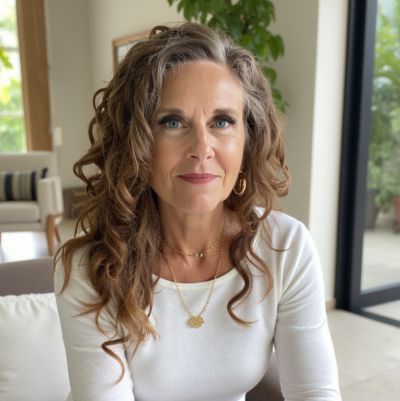
Elizabeth is a Master Certified Life and Health Coach with over 20 years of experience, dedicated to helping women in midlife thrive through holistic health and wellness. Her personal journey began with a desire to reduce her own breast cancer risk, which evolved into a mission to guide women through the complexities of midlife health, from hormonal changes to mental clarity and emotional resilience.
Elizabeth holds certifications from prestigious institutions such as The Life Coach School, Precision Nutrition, and the American Council on Exercise, as well as specialized training in Feminist Coaching and Women’s Hormonal Health. Her approach is deeply empathetic, blending her extensive knowledge with real-life experience to empower women in their 50s and 60s to build sustainable health habits that last a lifetime.
Recognized as a top voice in women’s health, Elizabeth speaks regularly on stages, podcasts, and webinars, inspiring women to embrace midlife with energy, confidence, and joy. Her passion is helping women regain control of their health, so they can fully engage in the things that matter most to them—whether that’s pursuing new passions, maintaining strong relationships, or simply feeling great in their own skin.