
Waist weight gain in perimenopause happens because falling estrogen redirects fat storage from your hips and thighs to your abdomen, a shift genetics partly determine and stress, food quality, and alcohol partly influence, but that no amount of targeted exercise can undo.
TL;DR
- Spot reduction isn't real. You cannot choose where your body loses fat through exercise, no matter how good your form is.
- Falling estrogen in perimenopause redirects fat storage from your hips and thighs to your abdomen. This is biology, not a motivation problem.
- Genetics play a real role in your body shape. Your mother, your aunts, and your grandmothers are a clue, not a life sentence.
- Cortisol, your stress hormone, has a documented preference for storing fat around your middle.
- What you eat and drink, specifically processed carbohydrates and alcohol, influences where and how your body stores fat. None of this is about willpower.
You've probably noticed the shift. The place where your body has always carried a little extra, your hips, your thighs, maybe your backside, isn't where it's showing up anymore. Instead, it's collecting around your middle, and none of the exercises that used to work seem to touch it. Your jeans sit differently. The number on the scale might not have even moved much, but your shape has.

If your first move was more core work, more restriction, a new plan that finally promises to target that spot, you're not alone, and you're not doing anything wrong by trying. But here's what almost nobody tells you before you spend months on planks and side bends: you cannot choose where your body stores or releases fat. Not through exercise. Not through diet. Not through any device or supplement marketed to you at 11pm. Spot reduction has never been physiologically possible, for anyone, at any age.
That doesn't mean nothing real is happening here, or that you're supposed to accept a body that feels unfamiliar with no explanation at all. Something genuinely changed. It's worth understanding exactly what, even though understanding it is not the same as knowing what to do with it inside your own life.
The Myth You Can Finally Retire: Spot Reduction
When you do a crunch, your body burns fuel to power that movement. It does not reach into the fat cells sitting directly over your abdominal muscles and empty those first. Where your body pulls stored fat from is determined by hormonal signaling across your entire system, not by which muscle you just worked. That's true no matter how many reps you do or how good your form is.
That's a genuinely frustrating thing to hear if you've put real time and effort into targeting this specific area. It's not a reflection of your effort or your consistency. It was never something you, or anyone else attempting it, could have actually succeeded at.
You cannot target where your body stores or releases fat. Not through exercise, not through diet, not through anything marketed to you at 11pm. That was never how bodies work.
What's Actually Happening: Estrogen and Where Fat Goes
Before perimenopause, most women store fat in what researchers call a gynoid pattern: hips, thighs, backside. That distribution is driven largely by estrogen. As estrogen declines through perimenopause and into menopause, fat storage shifts toward an android pattern, the term for the more central, abdominal distribution more typically associated with male fat storage. DEXA-scan research comparing premenopausal and postmenopausal women found android fat mass rose from roughly 38 percent to 42 percent of total fat after menopause, while the reverse happened for hip and thigh fat.
If you listened to Episode 270: Cortisol, Insulin, and Why the Scale Won't Move in Midlife, you already know estrogen does a lot of quiet work in the background of your metabolism. This is one more piece of that picture. It isn't only influencing your cortisol response, it's also been directing where your body has stored fat for your entire reproductive life. When it drops, that direction changes.
The Part You Didn't Choose: Genetics
Here's something worth sitting with: twin and family studies estimate that genetics account for somewhere between 50 and 85 percent of the variation in abdominal and visceral fat distribution between people. That range is wide because measurement methods differ across studies, but the consistent finding is that where your body tends to store fat is substantially inherited.
Practically, that means looking at the women in your family tree, your mother, your aunts, your grandmothers, can tell you something real about your own natural shape. Not a guarantee. Not a life sentence. A data point. If waist weight gain in midlife runs in your family, you inherited a tendency, not a failure.
Your genetics set the stage, but they don't run the whole show. The 8 Habits guide helps you to make the best of what you were given.

Your Stress Hormone Has an Address Preference
Cortisol doesn't distribute its effects evenly across your body. Abdominal fat, particularly the visceral fat that sits around your organs, has a higher concentration of glucocorticoid receptors and greater blood flow than fat stored elsewhere, which means it responds more strongly to cortisol than other fat depots do. Research on the body's stress-response system has repeatedly linked sustained cortisol elevation specifically to increased abdominal fat accumulation, separate from any change in total calories or total weight.
This matters more right now because perimenopause changes your relationship with cortisol too. Estrogen normally helps buffer your stress response. As it declines, your body becomes more reactive to the same stressors that used to roll off you. A hard week hits differently now, and your midsection is one of the places that shows it.
Your body isn't betraying you. It's responding to a hormonal shift that changes the rules for every woman in this phase of life.
What's on Your Plate and In Your Glass
Two things worth naming honestly: processed carbohydrates and alcohol.
Research following adults over time has found that higher intake of ultra-processed food is associated with greater accumulation of visceral fat specifically, independent of total calorie intake. And a large imaging study of more than 5,700 adults, using DEXA scans rather than estimated waist measurements, found that higher alcohol consumption was linked to meaningfully higher visceral fat levels in both men and women, with the effect most pronounced among heavier drinkers.
Neither of those facts is a verdict on your character or your choices. They're information about how your body currently processes what it takes in, which is genuinely useful to know. What you do with that information is a separate conversation, and not one a blog post is equipped to have with you.
If you're curious what your own daily patterns are actually doing, without turning this into one more diet, the 8 Habits guide is a good next look.
Where Strength Training Actually Fits
You've probably heard that strength training helps with a changing midsection, and there's a real mechanism behind that, just not the one most people assume. Skeletal muscle is more metabolically active than fat tissue at rest, burning several times more energy per pound. Building and maintaining muscle mass supports your resting metabolic rate as a whole.
What strength training doesn't do is let you choose your waist as the specific place that muscle gets built from underneath your stored fat. The benefit is systemic: more lean mass, a more metabolically active body overall, and, per Episode 6: Do We Need to Move More and Eat Less?, a body that's working with you rather than one you're trying to out-exercise. It's not a spot treatment. It's a different kind of investment.
Genetics decided your starting shape. Stress, sleep, and what's in your glass influence what happens from here. Neither one is a referendum on your discipline.
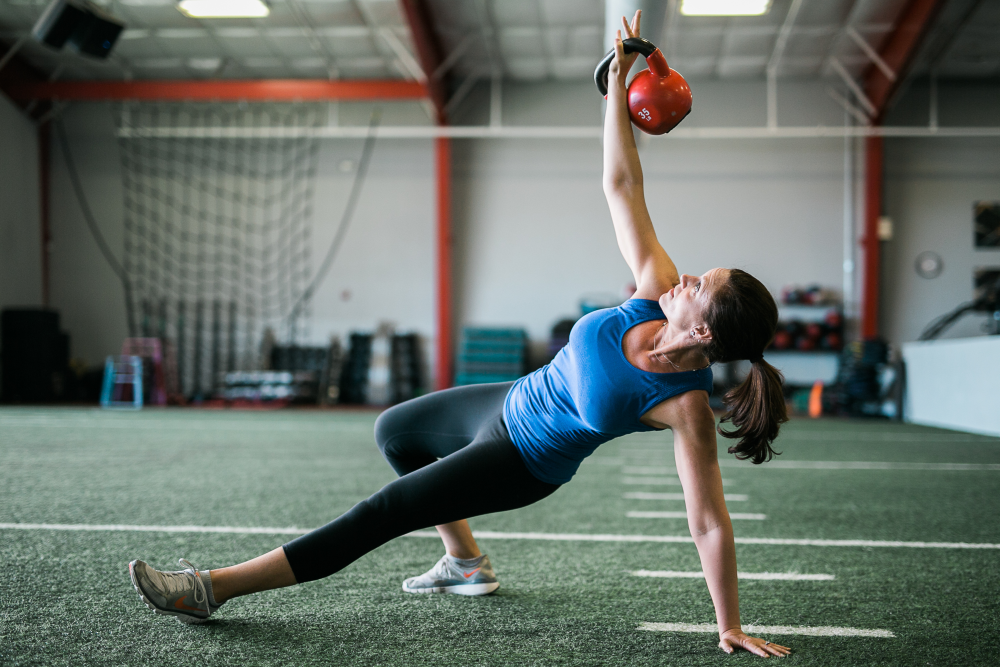
Building lean, metabolically active muscle doesn't require an hour at the gym four days a week. The 20 Minute Weight Loss Workouts series is built for exactly that: real strength and cardio work, done in 20 minutes, that actually fits into a midlife week.
What's In Your Control, and What Isn't
This isn't a task list. It's a map of where the real levers are, and where they aren't.
| Not In Your Control | Worth Understanding |
| Your genetic blueprint for fat distribution | Where your female relatives carried weight can tell you something about your own natural shape. |
| That estrogen drops in perimenopause | This hormonal shift is universal, not a personal failure. |
| That fat storage shifts toward your middle as a result | This is physiology working exactly as it's designed to at this life stage. |
| Within Your Awareness | Worth Understanding |
| Your stress load and how your body is processing it | Cortisol has a documented preference for abdominal fat, and perimenopause makes you more reactive to stress than you used to be. |
| What's regularly on your plate and in your glass | Processed carbohydrates and alcohol are linked to increased visceral fat, independent of weight. |
Frequently Asked Questions
As estrogen declines during perimenopause, fat storage shifts from a hip-and-thigh-dominant pattern to a more abdominal one. This is a well-documented hormonal shift that affects most women at this life stage, not a sign that something specific changed in your habits.
No. Spot reduction, the idea that exercising a specific area burns fat from that area, isn't physiologically possible. Your body draws on stored fat based on hormonal signals throughout your whole system, not based on which muscles you just worked.
Largely, yes. Twin and family studies estimate genetics account for roughly half to over three-quarters of the variation in abdominal fat distribution between people. Looking at your mother, aunts, and grandmothers can offer a real clue to your own natural shape.
Cortisol, your primary stress hormone, has a stronger effect on abdominal fat than on fat stored elsewhere, due to a higher concentration of receptors in that tissue. Chronic stress has been repeatedly linked to increased abdominal fat accumulation independent of overall weight change.
Weight and fat distribution are influenced by more than intake and output. Hormonal shifts in perimenopause, chronic stress, sleep, and other physiological factors all play a role that a scale alone doesn't capture.
Research links higher intake of processed carbohydrates and alcohol specifically to increased visceral fat, the fat stored around your abdominal organs, separate from total calorie intake. What and how much you eat and drink is one factor among several.
The hormonal shift itself is universal and not something to fight against. But understanding why it's happening is different from having no say in your health going forward. Those are two separate questions.
Strength training builds metabolically active muscle tissue, which supports your resting metabolism overall. It does not let you selectively build muscle under stored belly fat to shrink it specifically. The benefit is body-wide, not localized.
Where This Leaves You
None of this was ever about willpower, and it was never something a better plan could have prevented. Your body is following rules that changed the day your hormones started shifting, rules that apply to every woman moving through this stage of life, including the ones who look like they have it all figured out.
What you do with that information from here, whether that's making peace with a body that's telling you something true, or figuring out what's actually within your reach to influence, isn't something a blog post can hand you. That's the work, and it's real work.
Understanding why this is happening is not the same as knowing what to do about it inside your actual life.

If you're ready to understand your own patterns instead of guessing at another new plan, 8 Habits That Healthy Women in Midlife Actually Do is a good place to start.
P.S.
If this post pulled at a thread, there are six more just like it already on the blog:
- Why Dieting Doesn't Work
- Calories In, Calories Out (CICO)
- Why Mainstream Diets Don't Work for Women in Midlife
- Reducing Belly Fat in Midlife
- Midlife Weight Gain: Myths & Facts
- How Body Image Changes in Midlife
Same throughline in all of them: less "eat less, move more," more "here's what's actually happening in your body."
Elizabeth is a Master Certified Life and Health Coach with over 20 years of experience, dedicated to helping women in midlife thrive through holistic health and wellness. Her personal journey began with a desire to reduce her own breast cancer risk, which evolved into a mission to guide women through the complexities of midlife health, from hormonal changes to mental clarity and emotional resilience.
Elizabeth holds certifications from prestigious institutions such as The Life Coach School, Precision Nutrition, and the American Council on Exercise, as well as specialized training in Feminist Coaching and Women’s Hormonal Health. Her approach is deeply empathetic, blending her extensive knowledge with real-life experience to empower women in their 50s and 60s to build sustainable health habits that last a lifetime.
Recognized as a top voice in women’s health, Elizabeth speaks regularly on stages, podcasts, and webinars, inspiring women to embrace midlife with energy, confidence, and joy. Her passion is helping women regain control of their health, so they can fully engage in the things that matter most to them—whether that’s pursuing new passions, maintaining strong relationships, or simply feeling great in their own skin.