
You're showing up. You're doing the workouts, sending the emails, reaching out to friends, eating the way you're supposed to eat. And yet something feels off. The results aren't coming. The friendships aren't deepening. The business isn't growing. And underneath all of it is a quiet, low-grade resentment you can't quite name.
This episode is about what's actually driving that feeling. Not a lack of effort. Not bad luck. A belief most of us have been carrying since childhood that doing the right things automatically earns us what we want. And the way that belief quietly runs your health, your relationships, and your life without you realizing it.
Elizabeth shares a personal story from a recent night in Mexico that stopped her cold: catching herself judging her husband, then recognizing the exact same pattern in herself. What followed was an honest look at where this expectation comes from, what it costs midlife women specifically, and what it actually takes to start getting the results you want.
This one will make you uncomfortable in the best possible way.
The Listener Takeaway: Why This Episode Matters
If you've been doing the things and still not getting the results, this episode will give you a completely different explanation for why. Not a discipline problem. Not a willpower problem. A conditioned belief that was installed in you long before you had any say in it, and that has been quietly running in the background ever since. Understanding that is the first step toward something actually changing.
Most women who listen to this episode will recognize themselves in it immediately. The waiting. The quiet resentment. The sense that something is unfair but you can't quite put your finger on what. This episode names that clearly and honestly, and points you toward the one shift that makes everything else possible: recognizing that the life you want is not going to arrive on its own. You are the one who has to build it. And that is not a punishment. It's just how it works.
Are you loving the podcast, but arent sure where to start? click here to get your copy of the Done with Dieting Podcast Roadmap (formerly Total Health in Midlife) Its a fantastic listining guide that pulls out the exact episodes that will get you moving towards optimal health.
Take the Quiz: Why Do Your Healthy Habits Keep Falling Apart? If you've ever wondered why you know exactly what to do but still can't seem to stick with it, this quiz was built for you. In about 3 minutes, it identifies your specific pattern: the real reason your follow-through keeps breaking down, and what to address first. Your results are delivered straight to your inbox.
I am so excited to hear what you all think about the podcast – if you have any feedback, please let me know! You can leave me a rating and review in Apple Podcasts, which helps me create an excellent show and helps other women who want to get off the diet roller coaster find it, too.
Watch or Listen to the Episode:
WHAT YOU'LL LEARN
- Why doing everything "right" can still leave you stuck, and what's actually missing
- Where the belief that effort automatically earns results comes from, and why midlife is when it stops working
- What self-pity actually looks like from the inside (hint: it doesn't feel like self-pity at all)
- The real reason women in midlife struggle to build friendships, grow their businesses, and make their health habits stick
- Why seeing a pattern in yourself is not the same as being able to move through it alone
RESOURCES
- Episode 160: Ex-Good Girl with Sara Fisk
- Take the free quiz to find out what's really getting in your way
- Episode 245: Self-Pity, Sabotage & Self-Soothing
- Episode 159: Fault vs Responsibility
Full Episode Transcript:
282:Why You Resent Your Health Routine Even When You're Showing Up
Elizabeth: [00:00:00] So I wanna ask you something, and I want you to sit with it for a, just a second before you answer. Is there something that you want in your health, in your friendships, in your relationship, in your work, that you have been waiting for someone to give you? Not necessarily procrastinating, just waiting patiently, doing your part, and then expecting it to show up.
Because I figured something out recently that genuinely changed the way that I see my own life, and once I say it, once I explain what's going on, you're going to hear it everywhere, in your own head, in your own patterns, in the places that you've been stuck for longer than you probably want to admit. So stay with me today.
This one is worth your time
Welcome to the Done with Dieting Total Health for Women over 40 podcast, the podcast for women who are done with the start over cycle and ready for a way of taking care of themselves that actually works.
Hey, everyone. [00:01:00] Welcome back to the Done with Dieting podcast. I am your host, Elizabeth Sherman, and I am so glad that you are here with me today. So I wanna start out today with telling you a story. Now, a few weeks ago, Gary and I were sitting on the couch watching TV, and the sound just stopped. It does that sometimes here in our sound system in Mexico.
We don't always know why, and the fix is simple. You just turn everything off, wait a minute, and turn it back on. But it's annoying, and it's not really a crisis. But Gary got frustrated, and I remember sitting there watching him get irritated over this thing that was, honestly, in my opinion, a minor inconvenience at best, and I thought, "He is being so entitled right now.
He just expects everything to work perfectly all of the time, and that is just not how things work." And then I stopped, because quite [00:02:00] honestly, I saw that in myself. I do it, too. Not the way he does it. I don't get visibly frustrated and have a tantrum. What I do is very much quieter. I do the things that I'm supposed to do.
I show up, I check the boxes, I send the emails. I do all of the things that I'm supposed to, and then I wait. And when what I was expecting doesn't show up, I don't say anything about it. I just quietly give up, and then I get resentful. And I realized, sitting on that couch, that I have been walking around with this low-grade belief that if I do my part, if I check the boxes that I'm supposed to check, life is going to meet me halfway, that the things that I want, the friendships, the business growth, the [00:03:00] relationships that I desire will arrive because I did what was supposed to do, right?
That is what this episode is all about. And I think this applies not just to business or in friendships, but also to health, because I see this exact pattern in the women that I work with all the time. They do the things, the diet, the workout program, the weighted vest, the supplements. They try the things.
They spend the money. And when the results don't show up on the timeline they expected, they give up. They don't blow up. They just quietly stop, and then have this kind of pity party, like, "Oh, there's just something wrong with me. My body is broken." and they feel like something is wrong with them. Nothing is wrong with them, and nothing is wrong with you either.
But there is something worth looking at here
Now, let me be [00:04:00] specific about what checking the boxes actually looks like, because I think that you might recognize it. Now, in my business, checking the boxes looks like posting on social media consistently, sending emails to my list, recording this podcast every single week, and then sitting back and waiting for my clients to see my brilliance and, like Ralphie's fantasies in A Christmas Story, rush to sign up to work with me.
And when they don't, not doing anything completely differently, but feeling victimized because things aren't working out like they are supposed to. Still waiting longer, still doing all the things, and then getting quietly, privately resentful that it isn't working. Not angry enough to blow anything up, just that low-level hum of, [00:05:00] "I'm doing everything right, and I should get what I deserve.
Why isn't this working?" In my friendships, it looks like meeting someone at a dinner party or a local event and genuinely liking and connecting with her and saying, "We should get coffee sometime," and meaning it, and then never following up. Or following up once and, when she doesn't respond immediately, deciding that, oh, she's too busy or she's not interested, and letting it drop Or initiating plans and then getting resentful when she never initiates back.
And so I wanna be really clear about something here. This is not laziness, and it's not flakiness. This is a very specific belief that most of us have been carrying around so long that [00:06:00] we don't even know that it's there. The belief is this: if I do my part, I will get what I'm supposed to get. We were taught this as women.
Good things will come to those who wait. Patience is a virtue. If you're a good employee, you will get recognized. If you're a good mother, your kids will turn out okay and love you and take care of you as you age. If you're a good wife, your marriage will be solid. If you're a good friend, you'll have good friendships.
If you eat right and exercise, your body will look the way that it's supposed to look. Do the right things, wait, and receive. And for a while, some of that worked, or at least it seemed to, so the program kept running. But here's where it breaks down. Doing your part does not automatically presu- [00:07:00] Doing your part does not automatically produce the result.
Sending emails does not automatically produce clients. Saying, "We should get coffee," does not automatically create a friendship. Eating salads and going to the gym three times a week does not automatically produce the body or the energy or the health that you're after, especially not in midlife when everything is shifting underneath you.
And when the result doesn't show up, the women I work with, and honestly me as well, we don't go back and ask, "What went wrong here? What needs to change?" We just feel cheated. We feel like we held up our end of the bargain and something failed to hold up its end. We feel, and I'm gonna use this word really carefully, entitled.
Not entitled the way that we [00:08:00] usually mean it, not spoiled or selfish or demanding, but entitled in the sense that we genuinely believe a certain fairness, a certain outcome is owed to us because we did what we were supposed to do. That belief was handed to us. We didn't make it up. It was in the air that we grew up breathing in, what we watched our mothers do, in what we were praised for as little girls.
Be good, do the right things, and wait for your reward. The problem is that the life you actually want, the health you actually want, the friendships you want, the business results that you want, those don't work on that system. They require something completely different. They require you to stop waiting for what you're owed and start building [00:09:00] what you want, and that is genuinely an uncomfortable shift to make because it means taking responsibility for creating things even when you didn't get to opt into the conditions- Even when you didn't get to opt into the conditions that made them hard in the first place. So where does this come from? Because I don't think that any of us woke up one day and decided that we were gonna outsource our results to the universe and then get mad when the universe didn't deliver.
This didn't come from nowhere. It was taught to us slowly over a long time by people who were also taught this same thing. Think about what we absorbed when we were growing up. The girls who were praised, the ones who were helpful, patient, and agreeable, and quiet, the ones who waited their turn, the ones who didn't ask for too much or take up too much space, the ones who [00:10:00] did what was expected and didn't make a fuss about it, those were the girls that got rewarded with praise.
They got gold stars. They got told that they were so mature, so responsible, so good. They got the approval of adults who had no idea they were installing a program that would run for the next 40 years plus. I was one of those girls, and I bet you were, too. The program sounds like this: "Be good. Do the right things.
Don't complain. Be patient, and eventually you will get what you deserve, and it will find you." You won't have to fight for it or ask for it or make yourself uncomfortable to get it, and in fact, if you pursue it, you are being greedy. We don't like, as a society, women who ask for what [00:11:00] they want, but we expect it to just arrive because we've earned it.
And for a while, parts of that hold up when we're young. You studied hard, and you got into a good school. You worked hard, and maybe you got promoted, although you probably saw the men in your company get promoted more quickly. You were a good partner, and your relationship felt stable. The program kept producing results, so you kept running it.
And then in midlife, something changes because midlife is when the program starts to break. We start to look around, and we think, "Hey, I have been doing everything that has been asked of me. Where is mine?" The effort doesn't produce the same results that it used to. Your body doesn't respond the same way that it did at 35.
The career path that was supposed to reward [00:12:00] loyalty doesn't always do that anymore. The friendships that used to be easy because you were all in the same life stage aren't fulfilling anymore because everyone is scattered, and now you start to question who you really want in your inner circle, and the resentment starts to build.
The resentment is not a character flaw. There's nothing wrong with you for that, and I wanna be really clear. The resentment is actually a signal. It's telling you that you are expecting something that the current system is not set up to deliver. It's not telling you that you are ungrateful or difficult or something is wrong with you.
It's telling you that you are still waiting for a reward that is not coming the way that you expected it to come. The women I work with carry a lot of that resentment around their health specifically. They have been good. They [00:13:00] have tried the things. They've done the programs, tracked the food, signed up for the classes, bought the equipment, bought the supplements, and they are frustrated and exhausted and quietly convinced that their body is not just going to cooperate, that this is just how it is now, that maybe they are the one person for whom none of this is actually going to work.
And if you wanna learn more about this, there is an episode that I recorded years ago called Fault and Responsibility. I will put it in the show notes. This is all not the truth, but it is what happens when you've been doing the same things for decades, the things that were supposed to work, and nobody ever taught you that the rules were going to change in midlife That the body that you're living in now has different needs than the one that you had when you were 35.
That the strategies that got you here are not automatically the [00:14:00] ones that will get you to where you want to go. You are not broken. Your body is not broken. There is nothing wrong with you. You are running instructions that made sense for a version of your life that no longer exists. And the first step, the thing that actually moves the needle, is not finding a better plan.
It's recognizing that the plan that you have been running was never designed to get you to where you actually want to go. It was designed to keep you safe, agreeable, nice, and waiting, and you have been waiting long enough. So I wanna tell you about something that happened to me recently, because I think it's the clearest example of...
It's the clearest example that I have of everything that I have been talking about. Now, if you don't know, I live in a small [00:15:00] beach town on the coast of Mexico, about 20 minutes south of Cancun, and I've lived here for about nine years, and we love it here.
But low season is a lot quieter. A lot of the expats and seasonal residents just clear out. The town gets smaller. And I've talked about it before, that during the summer I get restless. I have since I was a kid. And I noticed a few weeks ago that I was spending most of my days working from home, talking to my computer, recording podcasts, and not seeing many people outside of my partner, and I wanted connection.
Specifically, I wanted to meet some of the women who were still around and just talk like actual humans in person over coffee. But here's the thing: I did not wanna have to be the one to organize it. I did not want to reach out to [00:16:00] strangers and say, "Hey, does anyone wanna have coffee?" There is a local women's Facebook group, and I've done it before where I've arranged meetups.
It's kinda my thing. I could have said, "Hey, does anyone wanna have coffee on Sunday, get together, just chat?" But I didn't wanna be the one to have to do it. I kept waiting for someone else to post it. I wanted someone else to post it so that I could just show up. I kept thinking someone else should organize something, and I would talk to people that I knew, and they would be like, "Yeah, someone should do that," and no one was doing it Someone else will host it.
Why do I have to be the one? And when I got honest with myself about why I didn't wanna be the one, it wasn't really about logistics, it was about not wanting to be responsible for the outcome. [00:17:00] It was about not wanting to put myself out there. I mean, what if I posted and showed up and no one came? Like, what if it got awkward?
What if I put myself out there and it just didn't work? So I waited. No one posted, of course, and I kept sitting at my computer talking to nobody, feeling this just irritation and restlessness. And then one day I was thinking about what I'd been talking about with a client, this idea that we withhold action because we don't wanna be the ones responsible for the results, and I realized that I was doing the same exact thing with putting myself out there to create new friendships.
I wanted the connection. I just didn't want to own what would happen if it didn't work out. Because when I don't take action, I can just sit in [00:18:00] poor me. There's no one around. And I know that there are women around who are lovely I could just keep telling myself that friendships in low season are hard, that people are busy, and that it probably wouldn't have worked anyway.
Now, that is a very comfortable place to live because it doesn't ask anything of us, and it produces absolutely nothing. So I put on my big girl britches and I wrote the post to the local Facebook group. I said, "Hey, I work from home and I spend most of my day talking to my computer instead of actual humans, and I wanted to get out and meet some of the women who are here right now.
Does anyone wanna join me Sunday at 11?" Now, here's the thing: 13 women said that they were interested. Nine actually confirmed. Five showed up And it was a real, [00:19:00] genuine, lovely morning. Six of us sitting around a table at a cafe in a small Mexican beach town on a Sunday, talking about our lives, talking about our experiences, connecting.
I had only met one of the women once previously. The others I had never met before. And we sat and we chatted for almost two hours. No one was checking their phone. No one wanted to leave. I walked away thinking two things. The first was people love to be invited. Most of us are sitting around wanting connection, waiting for someone else to create the opportunity.
All it took was one post, one person willing to say, "I want this, and I'm going to be the one to make it happen." The second thing I thought was, "I almost didn't do that. I almost kept waiting." Now, if I [00:20:00] had, I would still be sitting at my desk alone, quietly resentful that the friendships I wanted weren't showing up, never once connecting the dots between what I wanted and what I was actually doing to create it.
I realized I was denying myself the one thing that I wanted because I wanted someone else to do it. I was outsourcing my responsibility to some magical person. I didn't wanna take responsibility for making it happen. And I wanna say that again because I think a lot of us do this constantly, and we don't realize it.
I realized I was denying myself the thing that I wanted because I didn't want to be the one to do it. I wanted someone else to do it. We want the friendships, [00:21:00] but we don't wanna be the one to reach out. We want the health results, but we don't want to overhaul the conditions that are making it hard. We want the promotion, but we don't wanna ask for it.
We don't wanna flaunt our accomplishments because that feels uncomfortable. We want the business to grow, but we don't wanna do the uncomfortable things that growth actually requires. And when we sit in the gap between what we want and what we have, and we call it bad luck or bad timing or just the way things are, it's not bad luck.
It's an unfilled invitation. And the only person who can send it is you. Now here's the harder part to talk about. Everything that I just described, the waiting, the resentment, the expecting things to arrive [00:22:00] because I did my part, that is self-pity. And I say that not to be harsh, but because I spent a long time not being able to see it myself, and I think that that's worth being honest about.
Because self-pity does not feel like self-pity from the inside. From the inside, it feels like facts. It feels like clarity. It feels like being realistic. It sounds like, "I'm just not good at this. This is my cross to bear. My body has always been difficult. I've never been someone who finds it easy to make friends.
I've tried everything and nothing works for me. I'm just wired differently." That's not realism. That's actually a story, and it's a story that keeps you exactly where you are. I [00:23:00] used to judge people who lived in self-pity. Not out loud, but in my head. I had a very clear picture of what self-pity looked like, and it was not me because I was doing things.
It was other people, people who complained without doing anything, people who made excuses, people who wallowed. I was not that person. I was doing the things. I was trying. And then I sat on my couch watching Gary get frustrated about the TV and I saw myself clearly for probably the very first time in a long time.
I was doing the things, yes, but I was doing them inside a story that said the outcome was out of my hands. And how do you think that that created in a result? I was thinking that I had done my part, that my results were determined by factors that I just couldn't control. [00:24:00] And that story let me stay comfortable and stuck at the same time.
That is self-pity. It's just a quieter, more respectable version of it. And I wanna be careful here, because I am not talking about real hardship. I'm not talking about grief or illness or circumstances that are genuinely outside of your control. Those are real, and they deserve true compassion. What I am talking about is the specific pattern of wanting something, doing the bare minimum required to feel like you tried, dipping your toe in the water, and then settling into a story about why it was never gonna work out for you anyway. And the reason I'm bringing this up is not to make you feel bad or judge me. It's because I know from my own experience and from working with women that I coach that [00:25:00] this pattern is invisible until it isn't.
And once you see it, you can't unsee it. But seeing it is not the same as being free from it. Because here's what I know. If you want different health, if you want better friendships, if you want your business to grow, if you want a different relationship, you are the only person who can create those things.
Nobody is coming to hand them to you. No plan, no program, no amount of waiting is going to produce a life that you yourself did not build. And that is not punishment, and it's not unfair. It's just how it works. And I know that might land hard, especially if you've spent years doing what you were supposed to do and not getting what you expected in return.
The anger about that is legitimate. The [00:26:00] exhaustion is real. But staying in the story that it's not gonna work for you, that you're just not built for this, that your cross is heavier than everyone else's, that story is costing you the life that you actually want. You are capable of more than that story is giving you credit for.
The question is, what are you willing to do about it? And so I wanna be honest with you about something before I close this episode out. I did not get to this clarity on my own. I have been a coach for almost 20 years now. I teach this stuff. I help other women see these patterns in themselves every single week, and I still could not see this in myself without support.
It took doing my own work, being in my own coaching, having someone help me look at the self-pity without immediately judging it [00:27:00] or defending against it to actually understand what it was doing there. Because that is the thing about these patterns. They are not obvious from the inside.
They feel like the truth. They feel like just the way you are. And you cannot think your way out of a story that you can't see yet. That is the gap I want to name for you Reading this or listening to this and recognizing yourself in it, that is real. That recognition matters. But recognition is not the same as movement or action.
I can see the self-pity pattern clearly now, and I still catch myself sliding back into it. I still catch myself feeling, "Oh, poor me." I still catch myself doing the things and waiting and getting [00:28:00] quietly resentful. The difference is I can see it faster now. I know what to do with it. And I got there because I had help, not because I figured it out alone.
Now, if you're sitting with some recognition right now, if some part of this episode landed and you're thinking, "Yes, that is me. I do that," I wanna point you somewhere specific. I have a free quiz at elizabethsherman.com/quiz. Takes a few minutes, and it shows you exactly what is getting in your way.
In a very specific this is what's actually happening for you kind of way. Because that's the thing. Most of the women that I work with, they know something is off. They can feel it. What they can't see clearly is what's underneath it, what's driving the waiting, the resentment, the quiet giving up.
The quiz helps to name that, and it's free. So [00:29:00] you can find it at elizabethsherman.com/quiz. You will also find it in the show notes. And if you've been listening to this episode nodding along, it's probably the most useful thing that you can do in the next five minutes. You are capable of creating the life that you want, but you have to be willing to look honestly at what's making it difficult.
The quiz is a really good place to start that conversation. And thank you for being here today. I will see you next time. Bye-bye.
Hey, before you go, if you are someone who says, "I know exactly what I should be doing, I just don't do it," hey, if that's you, I made something for you. It's a free three-minute quiz that gets underneath that exact problem. Not to give you more information, but to show you the specific reasons your follow-through keeps breaking down, because it's not the same for everyone.
And once you can see your pattern clearly, everything else seems to change. Head to [00:30:00] elizabethsherman.com/quiz. It's free, it's fast, and it's honest
Enjoy the Show?
- Don’t miss an episode, follow the podcast on Spotify and subscribe via Apple Podcasts or RSS.
- Leave me a review in Apple Podcasts.
- Join the conversation by connecting with me on Social!


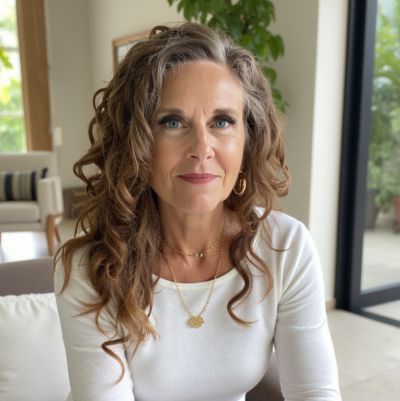
Elizabeth is a Master Certified Life and Health Coach with over 20 years of experience, dedicated to helping women in midlife thrive through holistic health and wellness. Her personal journey began with a desire to reduce her own breast cancer risk, which evolved into a mission to guide women through the complexities of midlife health, from hormonal changes to mental clarity and emotional resilience.
Elizabeth holds certifications from prestigious institutions such as The Life Coach School, Precision Nutrition, and the American Council on Exercise, as well as specialized training in Feminist Coaching and Women’s Hormonal Health. Her approach is deeply empathetic, blending her extensive knowledge with real-life experience to empower women in their 50s and 60s to build sustainable health habits that last a lifetime.
Recognized as a top voice in women’s health, Elizabeth speaks regularly on stages, podcasts, and webinars, inspiring women to embrace midlife with energy, confidence, and joy. Her passion is helping women regain control of their health, so they can fully engage in the things that matter most to them—whether that’s pursuing new passions, maintaining strong relationships, or simply feeling great in their own skin.