

If you have done the diets, followed the programs, worked with trainers, and still find yourself starting over every few months, this episode is going to reframe something important. The problem was probably never you. It was the model. And once you understand why the standard approach to health fails most women in midlife, the start-over cycle starts to make a lot more sense.
In this episode, Elizabeth breaks down exactly why prescriptive plans and diets don't work for women over 40, and it has everything to do with what those plans don't know about your body, your hormones, your stress load, and your life. She also gets into something that doesn't get talked about enough: how decades of following other people's rules has quietly disconnected most women from the one tool that would actually help them. Their own body's signals.
This is also an episode about what actually works instead. Not another plan. Not more rules. A completely different way of approaching your health that is built around your real life, your real body, and what's actually possible for you right now.
And if weight loss is part of what you're after, Elizabeth addresses that directly too, including why the methods most women have been handed to get there are the very thing making it harder.
The Listener Takeaway: Why This Episode Matters
If you have spent years wondering why you can't make healthy habits stick despite knowing exactly what you're supposed to do, this episode answers that question directly. Not with more advice. With an accurate explanation of what's actually been happening, and why it has never been a you problem.
By the time you finish listening, you will have a clearer picture of what your body has been trying to tell you, why the standard model keeps failing women in midlife specifically, and what a different approach actually looks like in practice. That shift in understanding is where real change starts.
Are you loving the podcast, but arent sure where to start? click here to get your copy of the Total Health in Midlife Podcast Roadmap (formerly Done with Dieting) Its a fantastic listining guide that pulls out the exact episodes that will get you moving towards optimal health.
Take the Quiz: Why Do Your Healthy Habits Keep Falling Apart? If you've ever wondered why you know exactly what to do but still can't seem to stick with it, this quiz was built for you. In about 3 minutes, it identifies your specific pattern: the real reason your follow-through keeps breaking down, and what to address first. Your results are delivered straight to your inbox.
I am so excited to hear what you all think about the podcast – if you have any feedback, please let me know! You can leave me a rating and review in Apple Podcasts, which helps me create an excellent show and helps other women who want to get off the diet roller coaster find it, too.
Watch or Listen to the Episode:
WHAT YOU'LL LEARN
- Why the diet and program model was not designed for a midlife woman's body, and what it was actually built on
- How years of following external rules quietly erodes your ability to hear and trust your own body's signals
- What it looks like to make health decisions from the inside out, using a real-life example that connects food, alcohol, sleep, hormones, and next-day cravings in a way that finally makes sense
- Why optimal health is not an absolute standard and what it actually means for your specific life right now
- How one coach can replace what most women are trying to piece together across a nutritionist, a personal trainer, and a therapist, without the cost or the gaps
RESOURCES
- Take the Free Quiz that shows you exactly where your health habits are getting derailed
- Free Guide: 8 Habits That Healthy People Do and Why They Don't Stick
Full Episode Transcript:
272: Why Every Diet You've Tried Has Failed You
Elizabeth: [00:00:00] So I have been coaching women for 20 years now, and for the first chunk of that career I was doing what? Everyone else was doing, I was giving meal plans. I was giving calorie targets, exercise programs, telling women what to do, and assuming that if they just followed the instructions, they would get the result that they were after, and some of them did for a while, and then life happened and the whole thing would unravel and we would start again.
I told myself that they just needed more accountability. More specific guidance.
What I didn't understand yet was that I was just handing them a more polished version of the same thing that had already failed them before they ever found me in the first place. And so today I wanna talk about what I figured out. After all that, what actually works, why it works, and why everything that you've tried before probably wasn't a you problem. Now, if you've [00:01:00] ever felt like you know exactly what you're supposed to do, and it still can make it stick, this episode is specifically for you, so stay with me.
Welcome to the Total Health and Midlife Podcast, the podcast for women over 40 who want peace with food, ease in their habits, and a body that they don't have to fight with.
Hey everyone. Welcome back to the Total Health and Midlife Podcast. I am your host, Elizabeth Sherman, and I am so glad that you are here with me today. And I wanna start by telling you something that quite honestly, I am not entirely proud of. So early on in my career, I was doing what everyone else was doing.
I had my clients tracking their food, counting their calories, following meal plans because that's what I knew. That's what we all did. I was giving them exercise programs to follow, telling them how many days a week to work out and for how long. I was the [00:02:00] one with the answers, and their job was to follow my instructions, and some of them did for a while, but then life got in the way.
They had a stressful week at work, a vacation, a kid got sick and then the whole thing would just fall apart. They would come back to our next session feeling guilty, frustrated, and a little embarrassed, and I would help them get back on track, hand them another plan. Then the cycle would continue. Again, I told myself that they just needed more accountability, better planning, more specific instructions.
What I didn't see yet, because no one had taught me to see it, was that I was handing them a better version of the same thing that had already failed them a dozen times before I even showed up a plan that lived outside of them, a set of rules that. Someone else had made me a [00:03:00] system that had no idea who they actually were or what their actual life looked like on a busy week when they were exhausted and hadn't slept and had three back-to-back meetings and forgot to eat lunch.
I didn't have. A sudden wake up moment though there was no single instance or client or anything where everything just shifted overnight and I was like, oh, we need to do something different. What happened for me as a health coach was something slower than that. I started to notice patterns. The women who struggled most weren't the ones who lacked information.
They knew plenty of things. They could tell me exactly what they were supposed to be eating, and they knew that they should be moving more, sleeping more, stressing less. They just couldn't make it stick when. They needed it to. So I started looking for answers somewhere [00:04:00] other than nutrition certifications and exercise science, and I got trained in habit formation, human behavior, cognitive behavior tools, and the psychology of how women specifically relate to their bodies, their food, and their sense of self.
And so I started understanding why the standard approach wasn't just ineffective for some women, it was designed in a way that was almost guaranteed to fail most of us. And once I was able to see that. I couldn't go back doing what I was doing before. And so today I wanna talk about what I do now, how I actually work with clients, and why it's so different from what most women have experienced when they've tried to get help with their health.
Because if you or someone who has tried the programs, followed the plans, done the diets, worked with the trainers, and still you find yourself stuck, I [00:05:00] want you to understand something. The problem has never been you. And so let me be direct about something that the diet industry has never been particularly honest about.
Every plan, every program, every diet that you have ever followed was built on a set of assumptions about your body and your life, and most of those assumptions were wrong before you even picked up the plan. The standard model works like this. Someone somewhere figured out a set of rules. Eat this, don't eat that.
Stay under this many calories. Work out this many days a week for this amount of time. Follow these rules and you will get the results that you want. And on paper it made sense except. Your body is doing a spreadsheet. The rules don't know that you are 52, and that your hormones have shifted in ways that mean your [00:06:00] body processes. Food stores fat and recovers from exercise completely differently than it did at age 35. The rules don't know that you are running a department of 40 people and your cortisol has been elevated for so long that your body is holding onto every single calorie, like it's preparing for something.
The rules don't know that you haven't slept more than five hours in two weeks because your brain turns on at 3:00 AM and will not quit the rules. Don't know any of that. They just say Eat less, move more, and if it's not working, try harder. That's the model. And it was built largely on research, done on men.
Younger men, in fact, men without the hormonal complexity that comes with perimenopause and menopause. Men who were also not managing households, caring for aging parents, holding [00:07:00] together careers and families and everything else that lands on the shoulders of women at this age. So you followed a plan that wasn't designed for your body in a life it never accounted for, and when it didn't work.
You were told the variable that needed adjusting was you, your commitment, your follow through, your seriousness about wanting to change. And that's a big lie, a well-meaning one in some cases, but it's still a lie. And I wanna be clear here about something because I know where your brain just went. Yes. I work with women who want to lose weight that is real and legitimate, and it's a goal that many women want, and I am not gonna pretend that it isn't, but the methods that most women have been handed in order to get there, the restricting the tracking, the cutting the rules are [00:08:00] actually the thing that makes it all more difficult. And so when your body is well rested, well fed, and not running on stress and cortisol. What I've noticed is it tends to find its own equilibrium, and not because of a diet, but because you stopped fighting it, here's what's actually true. Prescriptive plans fail. Most women in midlife, not because those women are weak or inconsistent, or not trying hard enough, they fail because the plan has no idea. Who it's talking to, it's generic. It doesn't know your schedule, your stress load, your sleep quality, your history with food, your relationship with your body, or what you're actually enjoying eating and doing.
It's a generic solution applied to a specific, complicated real life human being and generic solutions applied to specific people have about the track record that you would [00:09:00] expect. The other thing the standard model does, and this one is a little bit sneakier, is it teaches you to override your own body's signals.
You're hungry, but the plant says that you've hit your calories, so you're supposed to drink water and distract yourself. You're exhausted, but it's a workout day, so you're supposed to push through anyway and do the workout. You're at dinner and you want a glass of wine, but the program says, uh, no alcohol.
So you white knuckle it until you don't, and then you feel like you've blown the whole entire thing. And so after years of this, something happens, you stop. Being able to hear your body when it's talking to you, you stop trusting what your body is telling you because you have spent so long being told that your body signals are the enemy, that hunger is the problem to be managed, that cravings are a weakness to [00:10:00] overcome, and that is where most of the women that I work with are when they find me.
They're not lazy, they're not undisciplined, they're not lacking information. They are just completely disconnected from the one tool that would actually help them, which is their body's own intelligence. And so that disconnection is what I primarily work on, and it's absolutely fixable. So this didn't start with your first diet.
It started much earlier than that. For most of us it started in childhood. So I want you to think about how you were raised around food. Was there a clean plate club at your house? Were you told that you couldn't have dessert unless you completely finished your dinner or ate your spinach? Were you handed food when you were upset or told that you weren't hungry when you said that you were?
Were you [00:11:00] put on your first diet by a well-meaning parent before you were old enough to drive. None of that was malicious. Most of it came from love, but what it taught you very early was that other people knew more about your body than you did, and then culture picked up where your family left off.
Magazine covers that told you exactly what to eat to get a flat stomach by summer. Diet programs with point systems and calorie caps and color coded food lists, wellness trends that told you your cravings were toxins and your hunger was just dehydration. Every single one of them with the same underlying message.
Don't trust what your body is telling you. Trust us instead. So you learned to override your body. You learned to push through hunger because the plan said that you weren't supposed to eat [00:12:00] yet you learned to ignore fatigue because the rest felt like giving up. You learned to dismiss the headache, the irritability, the afternoon crash, the 3:00 AM wake up, because those were inconveniences, not information, which is actually how I look at it.
You learned to be suspicious of your own appetite, your own cravings, your own sense of what felt good and what didn't. And here's what decades of that does to a woman. It severs the connection between her brain and her body, not permanently, not irreversibly, but genuinely she stops being able to read her own signals acutely.
She stops being able to read her own signals accurately because she has spent so long being told that those signals are wrong. She walks around in a state that I can only describe as living from the neck up completely in her head, thinking about what she should be [00:13:00] eating, what she ate yesterday, what she's going to do differently next week, but not actually feeling what her body is telling her right now in this moment.
I see this constantly. Women who don't notice that they're hungry until they're ravenous and already reaching for whatever is closest, whatever is easiest. Women who can't tell the difference between tired and depleted, so they just keep going until something forces them to stop. Women who eat past fullness, not because they're out of control, but because they genuinely lost the signal somewhere between the appetizer and the entree and didn't even notice. This is all very human behavior. This is the entirely predictable result of spending 30 or 40 years being trained to look outside of yourself for the answers that your body was trying to give you all along.
And here is why midlife makes this so much more urgent. [00:14:00] Your body is louder now than it has ever been. Perimenopause and menopause bring a whole new level of physical signal disrupted sleep, changes in how your body responds to food, shifts in energy, mood and recovery.
Your body is essentially turning up the volume and asking you pay attention to me. If you never learn to listen a louder signal is just more noise and inconvenience. What I do with my clients is to teach them to hear it again, not by following new rules, not by tracking different numbers, but by actually rebuilding the connection between what their body is communicating and what they do in response to it.
That is the work, and it is slower than a meal plan. But it is also the only thing that actually lasts. So let me give you a concrete [00:15:00] example of what I mean, because I think this is where it gets real. So let's say that you're at dinner with friends. It's been a long week. Someone orders a bottle of wine and pours you a glass, and it sounds really good.
So you have it. Maybe you hope too. There's bread on the table and you're relaxed and you're having a good time, and so you eat some of that too. You get home later than you meant to, and you fall asleep pretty quickly because you're pretty tired. But then you wake up at 2:00 AM or three, whatever it is, wide awake, heart beating, a little bit faster than it should be, and maybe you are a little warm, if not having a a night sweat, you lie there for an hour, maybe two before you fall back asleep, your alarm goes off and you feel like you've been hit by a truck. You drag yourself through the morning and then by 2:00 PM you are absolutely ravens and you're eating everything that isn't nailed down, and you don't know why, because quite honestly, you [00:16:00] had a normal lunch.
It doesn't make sense. Under the standard model. Here's what that story sounds like. You broke the rules. No alcohol. Remember, you weren't supposed to have the bread. You needed more self-control, so you'll get back on track tomorrow. Now, under the model I use, here's what that story actually is, alcohol.
Even one or two glasses raises your body's temperature and disrupts the sleep architecture that your perimenopausal or menopausal body is already working harder to maintain. When your sleep is disrupted, your body does not complete the cellular repair it does overnight. You wake up with higher cortisol than normal because your nervous system registered the disruption as a mild stress event.
Now high cortisol in the morning drives up your appetite later in the day, specifically your appetite for fast energy, which [00:17:00] means refined carbs and sugar. So that 2:00 PM snack attack isn't a lack of control. It is a completely predictable physiological response to what happened 18 hours earlier. None of that is actually a moral failing.
It's just information. Now, here's what changes. When you understand that chain of events, you might still have the wine. That is entirely your call, and I as your coach, am not here to tell you what to do. But you know, going into it, you know that two glasses might mean that you have a rough night's sleep.
You know that a rough night. Might mean a harder next day. So maybe you drink a full glass of water for every glass of wine. Maybe you decide one glass is the right amount for you tonight because you have an early meeting tomorrow and you [00:18:00] need to be sharp. Maybe you decide the dinner is worth it and you plan a lighter day the next day because you know what's coming and you have a plan.
That's what it looks like to make a decision from the inside out. You're not following a rule. You are using information about your own body to make a choice that fits your actual life. And this is just one example. This same kind of connected understanding applies to how your stress levels affect your appetite to, to how undereating during the day leads to overeating at night.
To how the type of exercise that you're doing might be adding to your exhaustion instead of relieving it to how Skipping meals because you're busy is affecting your blood sugar in ways that show up hours later in your mood, in your cravings as poor sleep.
[00:19:00] Everything is connected. Your food affects your sleep. Your sleep affects your energy. Your energy affects your stress. Your stress affects your hormones. Your hormones affect your appetite, your mood, your motivation, and your recovery. It is one system. Not four separate problems that you need four separate experts to solve.
Which brings me to something that I wanna say plainly. A lot of women come to me after spending real money seeing no. A lot of women come to me after spending real money, seeing a nutritionist for the food piece, a personal trainer for the movement piece, and maybe a therapist for the emotional piece, and none of those providers are actually talking to each other, so neither were the solutions. What I do is collapse all of that into one place, and not because I'm trying to be everything, but because your health is actually one thing and treating it like separate compartments is a part of why the standard model keeps failing you.[00:20:00]
So lemme tell you about what I actually do because I think it's easier to understand now that you've seen the example. I am a master certified life and health coach. I am also a certified nutritionist, a certified personal trainer, and I have specialized certifications in sleep, stress, and recovery.
I also have an extensive training on how nutrition specifically affects hormones in perimenopausal and menopausal women, which is in its own area of knowledge that most general nutritionists don't go deep on and layered underneath. All of that is my life coaching training and my feminist coaching framework, which addresses why so many women struggle to prioritize their own health in the first place. Now, that last piece is one that doesn't get talked about enough.
The reason so many high achieving women are the last person on their own list is not a scheduling problem. [00:21:00] It's part of our conditioning. Women are raised to take care of everyone else first, to be good, to be helpful, to be accommodating, to shrink. To not take up too much space or to ask for too much or put their own needs ahead of the people around them.
That conditioning doesn't disappear because you read a self-help book, it shows up every single time you skip your workout because someone else needs something every time you eat standing over the sink because sitting down for a meal feels indulgent. Every time you put your health goals on hold because it's not the right time.
Understanding where that comes from, doesn't fix it automatically, but it makes it visible and visible. Problems are workable problems. So when I work with a client, I am looking at all of it. What she's [00:22:00] eating and how it's affecting her energy, her sleep, and her hormones, how she's moving, and whether that movement is actually serving her at this stage of her life or working against her.
How she's sleeping and what's actually getting in the way, how she's managing stress, and whether her nervous system is getting enough recovery time. What she believes about herself and her body and where those beliefs came from, what's going on in her life and what's making it hard to take care of herself and what we can actually do about that given her real constraints.
I am not handing her a meal plan and sending her on her way. Every single client I work with gets a completely customized experience because no two women walk in with the same history, the same life, the same goals, or the same barriers. What works for one woman genuinely does not work for another. [00:23:00] And part of my job is figuring out which pieces to apply to her specifically, not just give her the standard protocol and hope that it lands.
Now, you could get pieces of this from different providers, a nutritionist for the food, a personal trainer for the movement, a therapist for the emotional and psychology. Psychological piece, but you would be spending significantly more money seeing three different people on three different schedules, and none of them would have the full picture.
Your nutritionist wouldn't know what your trainer is doing to your cortisol. Your trainer wouldn't know that your sleep has been terrible for six weeks, and that's why your recovery is so slow. Your therapist wouldn't know that your eating patterns are directly connected to your hormonal shifts this week.
I know all of it because I work with all of it. It's not me trying to oversell what I do. This is just an accurate description of what it takes to actually help a [00:24:00] woman in midlife get her health back in a way that stays one person, one conversation, one place where everything is connected. I wanna talk about what we're actually aiming for, because I think a lot of women come to me with a picture in their head of what healthy looks like and that picture is working against them before we even start.
When most women say that they wanna be healthy, what they're describing is a version of themselves from like 20 years ago. Or a body that they saw in a magazine or a standard that was set by someone else, for someone else at a completely different stage of life who has different circumstances. And they are measuring every effort, every choice, every result against that standard.
And we always come up short. That's not a goal, that's a setup. Now here's how I think about it instead. [00:25:00] There's this concept called optimal health. I have another podcast about it and I will link to it in the show notes. Optimal Health is the best health available to you, given the actual circumstances of your life right now, not your life 20 years ago, not someone else's life, but yours now.
That means optimal health looks different for every single woman that I work with. For a woman who is running a company and traveling every other week, optimal health might mean that she has reliable energy through a full day, that she's sleeping well most of the time, and that she has a way of eating that doesn't require a perfect kitchen.
And four hours of Sunday to prep. For a woman who's caring for an aging parent on top of her own job and family, optimal health might mean that she has enough in her tank to show up for the people who need her without completely emptying herself out. [00:26:00] For a woman in cancer recovery, optimal health is something completely different again, and it is no less valid and no less worth working towards. The point is that optimal health is relative. It's not an absolute, and it is not fixed. What's available to you right now may expand as your circumstances change, as your sleep improves, as your stress comes down, as your relationship with food gets easier and less loaded, you will have more capacity, you'll have more energy, more consistency.
But we start where you actually are, not where you think you should be. And this is one of the things that makes working with me different from following a generic program. A program has a finish line that works the same for everyone, no matter what your goals are. What I do with my clients doesn't have a finish line that looks the same for [00:27:00] anyone because .
Everyone is starting from a different place and working and working toward a life that is specific to her. You don't need to earn the right to feel good in your body. You don't need to hit some external standard before your health counts. Where you are right now is a completely legitimate place to start, and for some women that includes losing weight, but when it happens through this approach.
It happens as a byproduct of taking care of yourself, not as the result of punishing yourself into a smaller size. And that distinction matters more than it might sound, and it's enough. So here's what I want you to take away from today's episode. You have not been failing at health. You have been following a model that was never built for you in a body it didn't account for in a life that it never considered.
And the fact that it didn't work is not evidence that [00:28:00] you cannot do this. It's evidence that you needed something different. What works is understanding you own body, learning to hear it, trust it, and make decisions based on what it's actually telling you rather than. What a set of external rules says you should do, and that is not a quick fix, but it's the only thing that actually holds up over time in a real life with real constraints on the weeks that don't go according to plan, which let's be honest, is most of them.
If you are new here and today resonated with you, I want to give you something concrete to start with. I put together a guide called Eight Habits That Healthy People Do and Why They Don't Stick. These are eight foundational habits that I work with on for every client, not because they're complicated, but because when you can actually do these eight things consistently, you [00:29:00] will never need another diet ever again.
You just don't. The guide is free and it's waiting for you@elizabethsherman.com slash habits. I'll also put that link in the show notes, and if you're sitting here thinking about someone in your life right now, a friend that you've watched, start over every single January, someone that you can see is exhausted by this whole thing, but you don't know how to bring it up because women don't give each other unsolicited advice.
Send her this episode. You don't have to say anything. Just forward it. Let this be the thing that you couldn't quite find the words for. Thank you for spending this time with me today. I will see you next week. Bye-bye.
Thank you for joining us on today's episode. If you're feeling overwhelmed by all the health advice out there and looking for something that's straightforward, my Eight Basic Habits That Healthy People Do guide and checklist is just what you need. It breaks down essential habits into simple, [00:30:00] actionable steps that you already know how to do.
By following these habits, you'll set yourself on a path to better health, surpassing most people that you know. To get your free copy, just click the link in the show notes or go to elizabethsherman.com/habits. It's an easy start, but it could make all the difference in your health journey. Grab your guide today and take the first step towards a healthier you
Enjoy the Show?
- Don’t miss an episode, follow the podcast on Spotify and subscribe via Apple Podcasts or RSS.
- Leave me a review in Apple Podcasts.
- Join the conversation by connecting with me on Social!


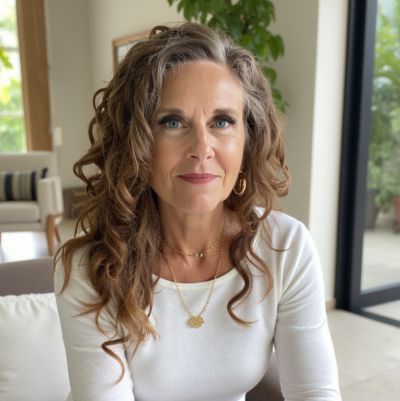
Elizabeth is a Master Certified Life and Health Coach with over 20 years of experience, dedicated to helping women in midlife thrive through holistic health and wellness. Her personal journey began with a desire to reduce her own breast cancer risk, which evolved into a mission to guide women through the complexities of midlife health, from hormonal changes to mental clarity and emotional resilience.
Elizabeth holds certifications from prestigious institutions such as The Life Coach School, Precision Nutrition, and the American Council on Exercise, as well as specialized training in Feminist Coaching and Women’s Hormonal Health. Her approach is deeply empathetic, blending her extensive knowledge with real-life experience to empower women in their 50s and 60s to build sustainable health habits that last a lifetime.
Recognized as a top voice in women’s health, Elizabeth speaks regularly on stages, podcasts, and webinars, inspiring women to embrace midlife with energy, confidence, and joy. Her passion is helping women regain control of their health, so they can fully engage in the things that matter most to them—whether that’s pursuing new passions, maintaining strong relationships, or simply feeling great in their own skin.