
You already know what to do. Eat better. Move your body. Go to bed earlier. So why does it keep falling apart by Tuesday? If you've ever ended the week feeling like you failed at something embarrassingly simple, this episode is going to stop that story in its tracks.
In this episode of Total Health in Midlife, health coach Elizabeth Sherman takes on the 'Just Do It' mentality head-on — and makes the case that the real barriers to follow-through for women in midlife have nothing to do with laziness, willpower, or discipline. They have everything to do with the specific conditions women are operating in: changing hormones, years of diet history, chronic capacity depletion, unsupportive environments, and a cultural script that trains women to deny themselves rest until they've earned it.
This episode introduces a completely different lens for understanding why health habits break down — one that stops treating the problem as a character flaw and starts asking the right questions. What is actually getting in the way? And what does a system of health that works in your real life — not a calmer, cleaner, more cooperative version of it — actually look like?
If you've been stuck in the cycle of knowing what to do and still not doing it, the answer you've been missing might not be more information. It might be a clearer picture of what's actually interfering.
The Biggest Problem Midlife Women Face Regarding Health Follow-Through
The most persistent and damaging obstacle to health follow-through in midlife women is the false belief that the problem is personal. When a smart, motivated woman knows exactly what would help her feel better and still can't make herself do it, the default conclusion — reinforced by diet culture, productivity culture, and decades of "Just Do It" messaging — is that she lacks discipline. This conclusion is not only incorrect, it actively makes the problem worse. It redirects her energy toward self-blame and harder rules instead of toward understanding and addressing the real conditions that are breaking her system down.
The five most common forces that interfere with health follow-through in midlife women are: hormonal changes (which alter sleep, hunger, mood, and recovery in ways that make old habits obsolete), chronic depletion and poor recovery (where women are trying to build health habits on top of a nervous system that's already running on empty), diet history (years of restrictive eating that trained women to mistrust their bodies and created powerful psychological triggers around food), environment (including both the physical setup of a woman's home and schedule, and the emotional environment she lives in), and capacity (the mental and emotional bandwidth required to execute follow-through, which gets systematically drained by the invisible labor most midlife women carry).
Compounding all of this is a deeply ingrained cultural standard: the "good woman" ideal, which teaches women to be endlessly responsible, capable, and self-denying. This standard makes rest feel selfish, pleasure feel indulgent, and asking for support feel like weakness. When women are conditioned to deny themselves real recovery, their nervous systems will eventually seek relief through whatever is available in the moment — often overeating, late-night scrolling, or numbing out. These behaviors are then misread as further evidence of a discipline problem, when in fact they are symptoms of chronic depletion and insufficient recovery. Solving this requires understanding it as a system problem, not a personal failure.
Are you loving the podcast, but arent sure where to start? click here to get your copy of the Done with Dieting Podcast Roadmap (formerly Done with Dieting) Its a fantastic listining guide that pulls out the exact episodes that will get you moving towards optimal health.
Take the Quiz: Why Do Your Healthy Habits Keep Falling Apart? If you've ever wondered why you know exactly what to do but still can't seem to stick with it, this quiz was built for you. In about 3 minutes, it identifies your specific pattern: the real reason your follow-through keeps breaking down, and what to address first. Your results are delivered straight to your inbox.
I am so excited to hear what you all think about the podcast – if you have any feedback, please let me know! You can leave me a rating and review in Apple Podcasts, which helps me create an excellent show and helps other women who want to get off the diet roller coaster find it, too.
Watch or Listen to the Episode:
WHAT YOU'LL LEARN
- Why "Just Do It" backfires for midlife women — and what the real gap is between knowing what to do and actually doing it
- The five specific forces that actively work against follow-through in midlife — even in women who are motivated, informed, and genuinely want to feel better
- Why the "good woman" script may be the hidden reason your health keeps falling to the bottom of your list
- What decision fatigue and capacity depletion actually look like in daily life — and why they're so easy to misread as laziness
- The surprising reason overeating at night, late-night scrolling, and revenge bedtime procrastination are not discipline problems — and what they actually are
- How to stop solving the wrong problem — and what it looks like to build a health system that works in your actual life, not a calmer, cleaner version of it
RESOURCES
- Free Guide: 8 Habits That Healthy People Do and Why They Don't Stick
- Total Health Systems Audit
- Take the Quiz: Why Do Your Healthy Habits Keep Falling Apart? If you've ever wondered why you know exactly what to do but still can't seem to stick with it, this quiz was built for you. In about 3 minutes, it identifies your specific pattern: the real reason your follow-through keeps breaking down, and what to address first. Your results are delivered straight to your inbox.
Full Episode Transcript:
265 - Just Do It & Why We Don't
Elizabeth: [00:00:00] Have you ever looked at your life and thought, I know exactly what I should be doing, and then you haven't done any of it. You know that you would feel better if you went to bed earlier. You know that you would feel better if you actually ate dinner instead of. Picking it, whatever is in the kitchen, and you know that you would feel better if you actually moved your body, so why aren't you?
That is what we're gonna talk about in today's podcast because I don't think that the problem is discipline. Your discipline. I think that there are real specific reasons that women in midlife struggle to follow through, and most of them have nothing to do with laziness, willpower, or not wanting it bad enough, let alone excuses.
So stay with me because if you have been blaming yourself for something that you don't fully understand yet, this episode is gonna feel like relief.
Welcome to the Total Health and Midlife Podcast, the podcast for women over 40 who want peace [00:01:00] with food, ease in their habits, and a body that they don't have to fight with.
Hey everyone. Welcome to the Total Health and Midlife Podcast. I am your host, Elizabeth. And I am really glad that you're here with me today. So a few days ago I was out for a run and this guy ran past me and he was wearing this black t-shirt that said, just do it across the front. And I had one of those moments where your brain just grabs onto something and cannot let it go, because the second I saw that, that sign, I did not feel inspired.
I actually felt the weight of it. Now we all know that slogan. You can picture the font without even seeing it. You can hear the tone that it comes in. Just do it. Now. I think that that slogan is meant to be motivating. No excuses, get up and make it happen. And I think for some people it does in fact land that way.
But for a lot of women in midlife, it lands very [00:02:00] differently. It lands like, what is it? That's wrong with you, that you can't just do it. Like if it's so simple to go to bed earlier, why aren't you in bed instead of in the kitchen eating chocolate at night? If it's so simple to exercise, why are you hitting snooze and already negotiating with yourself before your feet even hit the floor?
If it's so simple to eat, well plan your meal. Stop snacking. Then why does making dinner feel like it requires something more? That's what I wanna talk about today, because I don't think that the reason that you are not just doing it is that you're lazy. I don't think it's because you don't care.
I don't think you're making excuses, and I don't think you need to be yelled at by a slogan from the late eighties. I think that there are real reasons that this feels hard right now, and once you understand what those reasons actually [00:03:00] are, you can actually. Make it stop being so personal. Now, here's what happens.
Health advice gets handed to women like it's a simple household task list. Eat vegetables, drink more water, go to bed earlier, move your body, stop overeating, meal prep, get your steps in. Don't eat too late. Don't drink so much. Don't make it complicated. And on paper, none of that actually sounds difficult.
That's actually the part of the problem on paper. Eating a vegetable is simple. Going to bed 30 minutes earlier seems easy. Taking a walk after dinner cakewalk, right? But you are not living on paper. You are living in a body, in a family, in a schedule, in a season of life where a lot of women feel like they are being pulled in 12 different directions at once, including.
[00:04:00] By their own brain. And so because of this advice sounding so simple, the conclusion becomes if I'm not doing it well, the problem must be me. That right there is the lie. That's the one thing I want to spend this whole episode unpacking because when a woman, a smart, capable, genuinely motivated woman cannot follow through on something that looks simple on paper, she doesn't usually think, Hmm, maybe the conditions I'm operating in are really hard right now.
She thinks. I must be lazy. There's something wrong with me. I must not want it bad enough. I must be letting myself go, and that conclusion is wrapped up in something bigger. The pressure that we all face of being the good woman. A good woman is responsible. She keeps the wheels on. She remembers [00:05:00] everyone's appointments and the dry cleaning and the who needs to be texted back.
She's the good wife, the good mother, the good daughter, the good employee, all at once. All the time. And while she's doing all of that, she's also supposed to stay calm, look pulled together, manage her emotions, not ask for too much and make it all look completely effortless. So when her health starts slipping, she doesn't think, maybe I've got too much on my plate, maybe my life is asking more of me than it's giving back.
Maybe my body has genuinely changed and what used to work for me doesn't work anymore. No, she thinks I'm dropping the ball and here's where it gets even harder. Our culture still has this baked in assumption that discipline and body size are somehow connected. If a woman gains weight [00:06:00] or struggles with food or can't get traction with exercise, she's not just dealing with the practical frustration of all that she's dealing with, what she thinks it means about her.
She worries that other people see her as being out of control, being messy like she let herself go, and even women who know better intellectually. Still absorb this messaging. So now she's not just trying to eat better, she's trying to protect her identity, she's trying to prove that she is still a capable person, and that is a very heavy thing to carry into a Thursday night when you're just trying to figure out dinner.
So let's talk about what's actually interfering here, because midlife women are not starting from a blank slate. You have a history, you have responsibilities, [00:07:00] you have a body that has changed, and people that are depending on you, you have stress coming from multiple directions before breakfast. When I look at the women that I work with, there are five things that I see again and again that actively work against their follow through.
Even in women who are smart, motivated, and genuinely want to feel better, those five things are changing hormones. Rest and recovery are history with diets, our environment and our capacity. So let's go through each one. First up is changing hormones. Your body in midlife is not the same body that you were working with 10 or 20 years ago.
You might be sleeping differently. You might be running hotter at two o'clock in the morning. You may feel more anxious, more irritable, hungrier, less hungry sometimes, all of that within the same week. [00:08:00] Stay, or even hour, your body may respond completely differently now to alcohol, to sugar, to skipping meals, to stress, to the workout that used to make you feel great and now just leaves you feeling sore and unable to move throughout your day, and that's not a weakness.
That's just biology. And if you're trying to take care of yourself using the same approach that worked a decade ago, of course it's not gonna work. Next up is rest and recovery. Now a lot of women are trying to build health habits on top of a body that's already running on empty, and I'm not talking about.
I need to go on a vacation. Tired. I'm talking about the kind of tired where you have nothing left in you at seven o'clock at night, where making one more decision feels nearly impossible, where you meant to make a real dinner and instead you're eating crackers standing over the sink because [00:09:00] the effort of cooking feels like too much to bear.
And so we're gonna come back to this one because I think it's one of the most misunderstood pieces of the entire puzzle. The third is diet history. You don't come to food with a clean slate either. If you've spent years dieting, starting over on Monday, cutting carbs, tracking points, doing whole 30 being all good all day so that you could be bad later, that history is still with you.
It shapes how you think about food today. What feels safe? What feels forbidden? What triggers an all or nothing spiral? What makes you say. Ugh, I blew it. I may as well just eat it. All years of dieting teaches you to mistrust your own body, and that doesn't just disappear. Fourth is environment. Now, this one includes the obvious stuff, what food is in your house, whether your schedule has any [00:10:00] breathing room, whether your neighborhood makes walking easy or really difficult, but.
It also includes your emotional environment. Is your home peaceful? Are you the person that everyone comes to to solve problems? Do you have any space to hear yourself think your environment is either making your health easier or harder? And most women have very little control over most of that. Then finally is capacity.
This is the one I think women miss the most. Not because they don't know that they're stressed, they do, but they don't always connect that stress to why they can't follow through on their health. Capacity is your bandwidth, your mental, emotional decision making. A woman can know exactly what would help her to feel better.
She can know that she would. Probably benefit from a walk, making a real lunch, putting her phone down [00:11:00] and going to bed and still not do it. Not because she doesn't care, but because she is full maxed out. She is carrying the invisible load. She is managing appointments, emotions, logistics, family dynamics, work, pressure, aging, parents relationship, tension, and the constant low level hum of, what am I forgetting?
Then she looks at herself at the end of the day and says, why can't I make myself do something as simple as go for that walk after dinner? That is not a discipline problem, that is a capacity problem, and they require completely different solutions.
So I wanna spend a little bit more time on capacity and rest because I think that these are the two that women feel every single day without recognizing what they actually are. And so here's what I see all the time. A woman will say to me, Elizabeth, I know what I should be doing. She [00:12:00] means it. She does know everything.
She knows what dinner would feel better in her body. She knows the calorie counts of all the foods. She knows vegetables are something that she should include. She knows that ordering takeout again or eating crackers over the sink isn't gonna make her feel great, but by evening, she cannot make herself eat the vegetables or make the dinner that she had planned yesterday and not because it's a bad idea.
Not because she's suddenly become a person who doesn't care. Her brain is just cooked. She has made too many decisions. She's been needed too many times today. She pivoted all day, managing not just tasks, but moods, expectations, logistics, and all the invisible moving parts that hold a life together. So now it's 6 45.
Everyone's hungry and the thought of browning meat and washing one more pan feels like way too [00:13:00] much trouble. And then she makes that mean something. I have no discipline. I always do this. Why can't I get it together? Why isn't this easier for me? Everyone else can do it or take the walk. She meant to go for the walk.
She even wanted to, she knows that she usually feels better when she gets outside, and yet she's sitting here staring at her shoes, like they contain the answers to a math problem that she is not qualified to figure out. Because it's not always a motivation problem. Sometimes what we call laziness is really just depletion and depletion has a terrible publicist.
Same thing at night. You meant to go to bed earlier. You even told yourself, tonight is the night. Yet, somehow it's 1130 at night. You're scrolling through things that you don't care about, too tired to function, and yet [00:14:00] weirdly unable to put yourself to bed. That particular experience is such a specific midlife misery, exhausted, but not peacefully, sleepy, wired, but tired, wired, and checked out at the same time.
And what most women do in that moment is give themselves a lecture, more information, more rules, a better plan. That's not what's needed. What's needed is more support than your Current life is giving you. Now, here's the part that I really wanna get into because I think this is where the conversation usually gets it wrong.
When women are depleted, they go looking for relief. And that relief often shows up as overeating at night or doing something destructive like scrolling until midnight or staying up too late, not because they're having a really good time, but because it's the. Only part of the day that feels like they have some peace and no one is touching [00:15:00] them or checking out on the couch, telling themselves that they are relaxing when they're not actually feeling restored.
Now a lot of people look at the pattern and say she might want too much comfort, too much food, too much checking out now. I disagree. I don't think the problem is that women want too much pleasure. I think the problem is almost the exact opposite. Women have been so well-trained to be the responsible one, the capable one, the one who keeps the wheels on that actually giving themselves real rest permission to give themselves real rest, real pleasure.
Real recovery feels really super uncomfortable. It feels selfish. It feels indulgent, like something has to be earned first. Our culture has a very particular thing to say about women who prioritize their own pleasure. [00:16:00] We call it hedonism, self-indulgence, being out of control. So many women have quietly internalized that messaging and become experts at self-denial, at putting everyone else first, at powering through, at saving the rest for when everything is done.
The problem is it's never, ever all done. There's always one more thing to handle, one more thing to answer, organize, clean or fix, which means if your rule is I rest when everything is taken care of. You have built a life where rest is always delayed, and then because you haven't allowed yourself real rest, real pleasure, real recovery, real spaciousness, your nervous system goes looking for it anyway.
Always. That is not a character flaw. That's just how human bodies work. Human brains work. But here's the [00:17:00] thing, the relief that you find when you're depleted and grabbing for something, anything. Tends to be fast relief, numbing, relief, the kind that doesn't actually restore you. You eat, but you don't feel nourished.
You scroll, but you don't feel rested. You stay up late, but you feel worse in the morning. So when I work with women who are overeating at night or can't stop scrolling or can't put themselves to bed, I'm not asking how do we get more discipline around this. I'm asking what kind of rest has she been refusing herself?
What is she so hungry for at the end of the day, besides food? Because until we answer that, honestly, we're going to keep trying to solve exhaustion with stricter rules. And as you may have noticed, that's not going especially well. So let me make this concrete with a client [00:18:00] example. Sarah, and I'm changing her name in this example, is a terrific example of exactly what I'm describing because on paper she looked like someone who should have figured all of this out.
She knew exactly what to do. She understood nutrition. She was not new to exercise. She had thought about her health. Four years before and yet she kept running into the same wall. She would start the week feeling clear, organized, hopeful, groceries in the fridge, a loose plan for dinner, a real intention to get back into her walks and stop the nighttime snacking.
And during the day, she often did really, really well. When life was calm and manageable, she could make thoughtful choices and follow through. Then as the day wore on and in evenings, she just did not have the capacity. She was tired. Her decision making was lower. Her bandwidth was lower, and she'd end [00:19:00] up eating in a way that didn't feel good or grazing after dinner or staying up later than she wanted because the day didn't feel like it had anything for her in it.
Then because she's smart, self-aware, and a woman with high standards, she'd wake up the next morning and feel like it was her fault. I need more discipline. Why do I keep doing this? What is wrong with me? When I looked at her situation, that was not what I saw at all, what I saw. Was that her whole approach to health only worked in her best case self.
It worked when life was calm, when she had energy, when there were fewer demands on her attention. It worked under ideal conditions, but it had no support built in for the real conditions. No plan for low energy, no plan for decision fatigue, no [00:20:00] plan for the nights when she had nothing left and couldn't make herself cook.
The dinner that she had planned at 9:00 AM she was not inconsistent. Her system was incomplete, and because she didn't see that she kept turning inward, trying to create more effort, more discipline. She had more self blame, but nothing was wrong with her. Her approach to health just wasn't built for the life that she was actually living.
And once we could see that clearly everything changed. The question stopped being, how do I get Sarah to try harder? And it became what does Sarah actually need in order to follow through on the life she has? And that is a much better question.
Now, here's something I've noticed after years of working with women in midlife, most of them do not have a what problem, meaning what do I need to do? [00:21:00] Google solves for what? Instagram solves for what every diet program ever created solves for the what? What should I eat? What workout should I do? What's the best approach for hormones and metabolism and belly fat and sleep?
There is no shortage of what the real question, the one that actually matters is why does this keep breaking down for me? What specifically is getting in the way? How do I make this actually work in my real life with my real schedule, my real body, my energy level, my stress, my history? That is a totally different question, and it doesn't require more instructions.
It requires insight. That's actually why I created the Total Health Systems Audit. Now, this audit is designed to help you identify the specific forces in your life that are getting in the way of your follow through so that you stop guessing [00:22:00] and you stop blaming yourself for something that you haven't actually been able to see clearly yet.
Because once you can see that your struggle is being shaped by the things like capacity recovery, diet, history, environment, and hormones. All of which are very real and none of which are moral failings or excuses. The conversation changes entirely. Now we're not asking, what's the matter with me? We're asking what is actually getting in the way here?
And that's where real change starts. So if you take one thing from this episode, I hope that it's this. The solution is not to shame yourself harder. It's not to tighten the rules to start fresh on Monday or swear that this time you are really gonna get your act together. The solution starts with seeing clearly what's actually interfering, because once you can see that.
You stop [00:23:00] solving the wrong problem. You stop treating capacity issues like they are a discipline issue. You stop treating depletion like it's laziness. You stop expecting a life that is overloaded and undersupported to run on willpower indefinitely.
You are not alone in this. You are not the only woman who knows exactly what to do and still struggles to do it. You are not lazy. You are not failing at something easy. You are trying to take care of yourself in the middle of a complicated life, in a changing body with a lot of invisible weight on your plate, and that deserves a more honest conversation than just do it. If you wanna start figuring out where your breaking points actually are, download my free guide, the Eight Habits That Healthy People Do and Why They Don't Stick, not just so that you can read the habits and not along, but so that you can start to see why they've been so hard for you [00:24:00] specifically in your actual life.
You can find the guide@elizabethsherman.com slash habits. I'll also put the link in the show notes. Thank you for being here with me today. That's all I have for you. Have a great day, and I'll see you next time. Bye-bye.
Hey, before you go, if you are someone who says, I know exactly what I should be doing, I just don't do it. Hey, if that's you, I made something for you. It's a free three minute quiz that gets underneath that exact problem. Not to give you more information, but to show you the specific reasons, your follow through keeps breaking down because it's not the same for everyone. And once you can see your pattern clearly, everything else seems to change. Head to elizabeth sherman.com/quiz. It's free, it's fast, and it's honest.
Enjoy the Show?
- Don’t miss an episode, follow the podcast on Spotify and subscribe via Apple Podcasts or RSS.
- Leave me a review in Apple Podcasts.
- Join the conversation by connecting with me on Social!


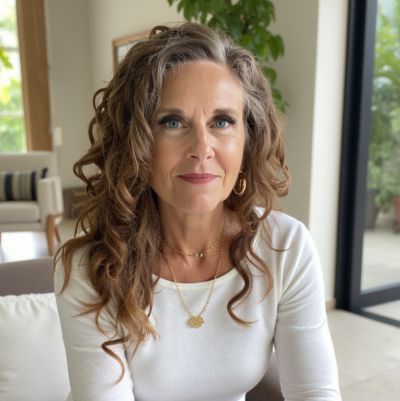
Elizabeth is a Master Certified Life and Health Coach with over 20 years of experience, dedicated to helping women in midlife thrive through holistic health and wellness. Her personal journey began with a desire to reduce her own breast cancer risk, which evolved into a mission to guide women through the complexities of midlife health, from hormonal changes to mental clarity and emotional resilience.
Elizabeth holds certifications from prestigious institutions such as The Life Coach School, Precision Nutrition, and the American Council on Exercise, as well as specialized training in Feminist Coaching and Women’s Hormonal Health. Her approach is deeply empathetic, blending her extensive knowledge with real-life experience to empower women in their 50s and 60s to build sustainable health habits that last a lifetime.
Recognized as a top voice in women’s health, Elizabeth speaks regularly on stages, podcasts, and webinars, inspiring women to embrace midlife with energy, confidence, and joy. Her passion is helping women regain control of their health, so they can fully engage in the things that matter most to them—whether that’s pursuing new passions, maintaining strong relationships, or simply feeling great in their own skin.