
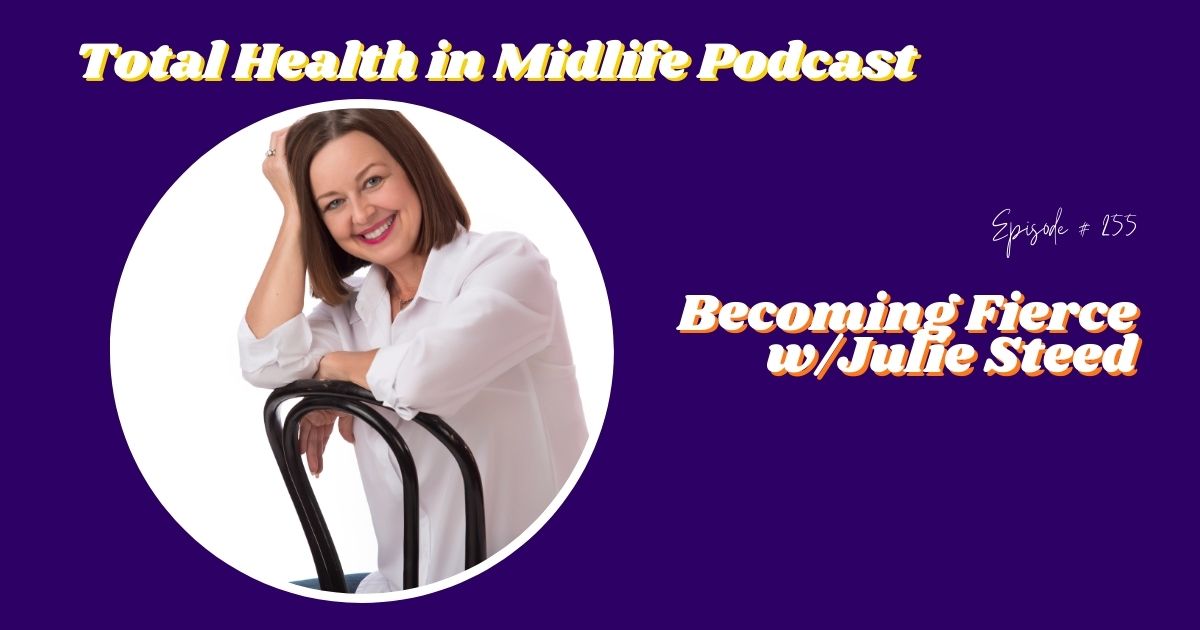
Divorce and empty nest can feel like an emotional earthquake… and then your body starts acting weird on top of it. Sleep gets choppy. Appetite is all over the place. Your energy tanks. And suddenly your “midlife health issues” feel even more confusing because you can’t tell what’s hormones, what’s stress, and what’s just sheer life overload.
In this episode, I’m joined by Julie Steed—certified life coach and National Board Certified Health & Wellness Coach—who helps divorced empty nesters rebuild their lives (and themselves) without treating divorce like a life sentence.

We talk about why this season hits your body so hard, what women often get wrong about “being strong,” and how Julie’s FIERCE framework helps women move from survival mode to a real, exciting next chapter.
If you’re trying to get your health, weight, and energy back on track while your life is changing fast… this conversation will help you feel less crazy—and a lot more capable.
The Biggest Problem Midlife Women Face Regarding Divorce Stress and Midlife Health
For midlife women, divorce and empty nest aren’t just “sad” or “hard”—they’re a full-body stress event. And when your nervous system is on high alert, your health habits don’t fail because you’re lazy or unmotivated… they fail because your capacity is shot. That can look like insomnia, fatigue, brain fog, low motivation to move your body, and cravings that feel out of nowhere.
A lot of women try to “power through” with more discipline: stricter eating, more cardio, fewer carbs, more willpower. But during a major life transition, that approach often backfires—because the real issue is stress load, emotional resilience, and feeling alone inside your own life. Your body isn’t betraying you. It’s responding to the environment you’re living in.
Julie also names a sneaky part of this season: when your role changes (wife, mom-on-duty, family glue), your identity gets shaky. And identity stress creates health stress. If you don’t know who you are or what you’re building next, it’s hard to make consistent choices around food, movement, and self-care—because everything feels pointless or overwhelming.
What You Can Do Right Now
Start by treating this season like a stabilization phase, not a self-improvement project. Pick 1–2 “non-negotiable basics” that protect your energy: a simple breakfast you can repeat, a minimum movement plan you can actually do, and a sleep routine that’s realistic—even if it’s imperfect. The goal is to reduce decision fatigue and give your body consistency when everything else feels uncertain.
Next, add support on purpose. Julie shares why “doing it alone” is one of the biggest reasons women stay stuck—emotionally and physically. Even one strong resource (a community, a coach, a structured program, a challenge) can change your momentum because it gives you perspective, tools, and a place to land when the day goes sideways.
The Listener Takeaway: Why This Episode Matters
If you’re in midlife and wondering why your health feels harder than it used to—this episode connects the dots between life transition stress and the symptoms you’re dealing with: weight changes, low energy, cravings, poor sleep, and feeling like you can’t get it together.
More importantly, it gives you a way to move forward that doesn’t require you to “be fine” first. You’ll hear why “hard” isn’t an indicator of failure—it’s often the doorway to growth. And you’ll walk away with a clearer, kinder strategy for rebuilding your health while you rebuild your life.
Are you loving the podcast, but arent sure where to start? click here to get your copy of the Done with Dieting Podcast Roadmap (formerly Total Health in Midlife) Its a fantastic listining guide that pulls out the exact episodes that will get you moving towards optimal health.
Take the Quiz: Why Do Your Healthy Habits Keep Falling Apart? If you've ever wondered why you know exactly what to do but still can't seem to stick with it, this quiz was built for you. In about 3 minutes, it identifies your specific pattern: the real reason your follow-through keeps breaking down, and what to address first. Your results are delivered straight to your inbox.
I am so excited to hear what you all think about the podcast – if you have any feedback, please let me know! You can leave me a rating and review in Apple Podcasts, which helps me create an excellent show and helps other women who want to get off the diet roller coaster find it, too.
Watch or Listen to the Episode:
WHAT YOU'LL LEARN
- Why divorce + empty nest can trigger “random” weight gain, cravings, and fatigue
- What emotional resilience actually looks like (and why it matters for health)
- How to rebuild your next chapter without forcing “perfect” habits
RESOURCES
- Better Because of Divorce Challenge
- The FIERCE Sisterhood (apply/learn more)
- Facebook group: Create Your New Life After Divorce and Empty Nest
- Julie on Instagram
- George Strait: She Let Herself Go
Full Episode Transcript:
255: Becoming Fierce with Julie Steed
Elizabeth: [00:00:00]I have a visual of a flame in our and that flame during a divorce can get very, very dim and it flickers and it can threaten to go out.
>It never goes out. And a fierce woman rekindles that flame. She pumps oxygen back into it. And so women in the Sisterhood make that flame come back to life and back to full force,
and it's a representation
of life that they do live and that they can
Speaker 2: Welcome to the Total Health and Midlife Podcast, the podcast for women over 40 who want peace with food, ease in their habits, and a body that they don't have to fight with.
Elizabeth: Have you ever looked at your life and realized that every decision you make is maybe for someone else? Maybe you spent years supporting your partner's career or driving kids to soccer practice, and now suddenly the house is [00:01:00] quiet, the marriage is ending, the kids are gone,
you are standing in a black hole of just blankness, wondering who you even are when no one's asking. Hey, mom, what's for dinner? Welcome. I'm your host, Elizabeth Sherman, and this is the Total Health and Midlife Podcast. Today I am talking with Julie Steed. Julie is a certified life coach and a national board health and wellness coach who specializes in helping women navigate the double whammy of divorce and the empty nest.
We are talking about how to stop feeling like a victim of your circumstances and how to start a forced transformation into the person that you have always wanted to be. By the end of this episode, you are gonna learn a non-linear way to find your true identity and build emotional resilience so that your ex can't control your mood anymore.
How? Use your decades of experience as fuel rather than feeling like you're back at square [00:02:00] one and. How to turn a scary void into an adventure where you actually get to decide what you like to do on Saturday nights.
So welcome Julie to the show.
so welcome Julie to the podcast. Julie, I am so excited that you are here. So let's start off with, telling the listeners who you are, what you do, and a little bit about yourself. Absolutely. I am so excited to be here with you, Elizabeth.
My name is Julie I am a certified life coach, a national board certified health and wellness coach, and the founder of the Fierce Sisterhood. But what I consider in all of this, my most important credential, if you will, is that I am also a divorced empty nester, and I started this coaching journey. As a result of the very hard won lessons that I found in my own divorce.
So [00:03:00] I am really curious, so you are a national board certified health and wellness coach, but now you work with, women who are going through divorce, maybe divorced, and also going through the, the. Change of empty nest as well. how did that transition happen? Tell me all about that.
Absolutely. So when I found coaching, I reached in the middle of my divorce and Elizabeth, I literally typed in on Google, how do I feel better during Mm-hmm. And this is when I started to discover that there was even a coaching world. Out there. I had no idea about it. So I started doing research, reaching out to people I knew, and I first found out about health and wellness coaching, and there was a program at a university in their continuing ed department that was kind of one of those situations where [00:04:00] it was low risk as far as investment goes, and really high payoff in the The solidity, the solidness of the program. I knew it would be a good program. And so that is where I started and by the end of that program, I had found the life and I recognized that there was that I to know. And so the more is how I. Went right on through the health and wellness part into divorced from more of a life Interesting. Okay. And so, and you were interested in that because you were going through your own journey, is that right? So tell me a little bit about that. Like. What was that like to be, and I'm assuming that you were in life coaching [00:05:00] training or life coaching at the time that you were going through your divorce.
Tell me about that. I was in the training program and I wound up getting a lot of fantastic coaching, about my divorce because of course that was at the forefront of my mind and we had. So many practice sessions with each other that, that kept bubbling back up, even in the health and wellness part of it.
And, as you know, it's all And that is, yeah, that was my first entry point and I realized, wow. There is a lot of benefit in being able to talk through what is happening to me with other people who are trained to listen, to what I'm saying, not to listen and try to fix me, judge me, give me, unsolicited advice, but just That was so valuable for [00:06:00] me that And then I decided to do it for others. Yeah, I can imagine that that would be really super helpful because when you're going through a divorce, so many people are telling you what you should do. Like, and that is one of my pet peeves, is like when people say, you know, what you should do is because they don't have any skin in the game and they don't have any.
Knowledge really. They might have some tangential knowledge of what's going on in your life, but they are not the ones that have to live with the And so to be able to come to your own conclusions through the whole talk coaching process, because as a coach you don't have anything.
You don't have any skin in the game. Right? You don't care. Not that you don't care what your client does, but Yeah. Talk a little bit about that. It's always a choice. The client always has [00:07:00] the autonomy of choice, and what coaching does in this situation is it reveals choices to them that they didn't had.
And then when you have choices in front of you, it's a light bulb situation where it's like, oh, that is not the only for me. I also have this path and this path and this path, and I can choose which path is going to be the best for me Okay. So, Let's go back a little bit to your, your health, transition into divorce.
What was kind of like your moment that brought you into, and how did you change, who you were serving? Like was that a gradual thing or was it just like, you know what, I really need to go and I have always been focused even from the. Even from the health and wellness perspective, [00:08:00] although I never truly said, Hey, I'm a health and wellness coach.
Come to me if you're divorced and we'll talk about your health and wellness. I never went down that path. I knew from very early that it was divorced, empty nesters that I would be helping. That's who I was drawn to. Got it. And honestly, when I found Brooke and the life coach school and the model.
Just hearing her explain the model and podcast number two, I think changed my whole world. And that is when I knew that I would, I would be a student of the life coach school and be able to help other people change their worlds as well. Okay. So, so it was like a morph it wasn't segmented, it just was an ongoing thing.
Sure, sure. and so do you use. Health in your, your work with your clients? [00:09:00] Not specifically, no. Okay. Okay. 'cause I know that a lot of health, you know, we, we work with our nervous systems, right? You know, when you're in divorce, which is a very high stress time in your life As well as empty nest, then, you know.
There are things that are happening in your body. And so being able to work through that, through the health aspect, it was just Yeah, absolutely. The nervous system component Was not something that was addressed in the health and wellness coaching coursework at all, and that has been such an eye-opening component of all of this.
For me. And that is one driving force behind the Sisterhood because there are, there are coaches who excel at that one specific skill. And I knew for my private clients, I hadn't [00:10:00] quite caught up yet to that level of expertise. yeah, it's like. Thinking about women who are going through not only divorce, but there's so much changing in our lives during this time in our life, right?
not only are we changing. Our body is changing, but also our relationships are changing and our relationships with our kids as they're becoming adults and moving off, and our relationships with our partners are obviously changing and our relationships with ourselves and we're starting to think about that next phase of life.
What do we want that to look like? So everything that you're doing here is so phenomenal because it's really, serving women in this, this stuff that comes up for us. And I'm [00:11:00] sure for almost all of the women, I can't say that for sure, but for many of the women that they didn't have divorce on their bingo card for life, right?
I certainly didn't. Yeah, yeah, yeah. Okay. So going back, I was looking at your website and on your website you have, something that says, you support women who worked hard to support their spouse's careers and their children. And so in your experience, what happens to women? As they do that. So let's talk a little bit about how women are, what's the mindset of women when they're, when they're supporting their partners and they're supporting their kids?
And then we'll talk about what happens [00:12:00] when they enter your program. Sure. the when you are married and you feel that you are supporting your partner and you are supporting your, your children. I won't speak for all women either, but my experience personally and from the clients who've spoken about this, is it's for the greater good.
It's the team, it's the team effort, and the one spouse is the primary breadwinner and the other spouse is the primary caretaker. And when those two things come together, they tend to work really well for a lot of people. But when that marriage dissolves, the woman's role is undervalued drastically in all of that.
And that creates a tough place for so many Yeah. Because I think that societally, we see women [00:13:00] as stay-at-home moms as. Not earning their keep, right? They are. When they go to the grocery store or when they buy things for their family or they buy things for themselves, they're using their partner's money, right?
Because that person goes out and And so for a lot of women, we have this weird relationship with money and survival and what's our place in the world? Our sense of self. Yeah. Our lack of confidence in being able to financially care for ourselves. The massive shock of lifestyle change that can come from that, from that loss of your spouse's income.
It is. So [00:14:00] terribly, unfair is the word that pops into my mind. And that story is the story that so many women bring with them into private coaching, into the Sisterhood, and they're justified in that they're, they're not wrong. Yeah. So how do you work through that? We look at it as a story. This is not fair, is one version of a story about their divorce.
And so then what else can be true at the same time? Because, believing that something is unfair is, it's like an, it's almost like an argument with reality, even though that unfairness is an opinion, a thought, right? But it is what it is. And so if we just keep focusing on, it's unfair. It's unfair, it's unfair.
Our beautiful brains are gonna take us and show us [00:15:00] all the ways that it's unfair and it isn't serving It, it puts us firmly into the victim role. And when we are in the victim role, we have no control. Whatsoever. So the women who come to the Sisterhood are ready to regain control. They're just not sure how to do it at this moment in time because what has happened to them feels so overwhelming and so often unfair that it's like there's, where do I even start?
And so we start by shifting some of the. Stories that are justified and validated, but are not the only story, and this is not fair as one of those stories. Yeah. I have a, a number of podcasts that I've produced most recently about, self pity. It's something that I have only recently started to recognize in myself that, [00:16:00] that story, and it's the, the story that I have isn't, that, it's unfair, but it's.
I have no choice. Like it's, and so it yeah. Puts you in the victim role. and one thing that I've really been trying to recognize about self-pity is how it feels in my body. and it's a very subtle emotion because it doesn't really feel that different than sadness and it, It also feels you said, very justified.
but also it doesn't require us to change and it keeps us disempowered. And so being able to see, okay, what is in my control allows us to then do something about that. Yes. It might be unfair. Let's just assume that that's true, but what can we do about it now? and when you are in the thick of things, [00:17:00] Elizabeth, you know that that's so hard to ask ourselves that question.
Absolutely. So hard. We need somebody else to say, it is unfair, and now what do we want to do about it? Yeah. Well, yeah, because if, yeah, you're not gonna ask yourself that same question I have, but it's, it's pretty rare that I have that awakening and I'm like, oh, I'm in self pity. Okay, now that I know that I'm in self pity, what can I do to get out of it?
yeah. Yeah, that's, that's the power of coaching and if I wasn't a coach, I wouldn't have been able to do that to myself. Absolutely. so you created the Sisterhood from a wellness perspective and so. Let's talk a little bit about community and why this community is [00:18:00] so needed for these women.
Well, maybe first start talking about what is the Fierce Sisterhood and then Absolutely. So The Sisterhood is a complete support system for women who are ready to heal. And move forward after divorce and empty And at the heart of that support system is the And around the community component, there is work, there's nervous system regulation, there is coaching, there is a yoga. All of these things are inside of the Sisterhood, but that community is the core and. So, so, so many women that I meet are embarrassed. Ashamed, devastated, and have completely isolated themselves, which is what I did as well.
And their, married their friends that they had when they were part of a married couple have taken [00:19:00] sides are floated away completely. Oftentimes their children don't wanna hear about the divorce. there's estrangement with adult children at times. Family members take sides. It's a very, very hard time to find community that you can really Yeah. And the community inside the Sisterhood is a community that you can trust because every single woman is walking her own divorce and journey. And so we do that together. No judgment only support. love and that walk and the community aspect is just, it's so amazing. Yeah. Yeah. When you were talking about, how your, the women are supporting their partners and taking care of their kids, I imagine that, you know, it's, [00:20:00] it's very different for each woman clearly, but that.
Friendships in that time are probably before the divorce, are probably very difficult or they're couple centric. And then as you said, that when the divorce happens, either they pick sides or they, you know, you just split apart. Because now you're a single woman, you're a divorcee, and the the social stigma that goes along with that and you don't get invited to as many, you know, dinner parties or whatever because you're a single woman now.
And that would be an odd number. So why would she wanna hang out with a bunch of, you know, couples, right? And so like these, I would have to imagine that a lot of friendships just kind of. I don't wanna say disappear, but maybe they don't have the stamina withstand [00:21:00] Absolutely. and then also, you know, given that we're talking about women in, empty Nest, I think that, you know, empty Nest brings up this.
Other scenario where you had friendships of convenience, right? The friendships of parents, kids that play soccer. Do you see that a lot? That those Absolutely. Yes. Especially with the women who were the at home moms and did all of the sports, you know, did all of the driving to the sports, did that was their.
That was their contribution and all of a sudden it's all gone. The, the kids have gone to college and now they don't have that part of their lives. Their marriage is over. They don't have that part of their lives. It's just can be this black hole of blankness, where do I go now? Yeah. [00:22:00] That all of this that I have been accustomed to for decades has just.
Not faded away, but abruptly ended and it was not ever anticipated in so many cases. It's, it's a scary precipice. Yeah. For so many people thinking about that. Yeah, I can totally see that. And so, you know, I love the, uh, phrase that nature abhors a vacuum. And so like that's all a vacuum. What I love about what you're doing then is you're putting intentionality back into that space where there is the void.
A hundred yes. Intentionality Imagine learning again, to have an imagination and imagining a whole different future than what you have been planning for 20 or 30 years. learning who you are [00:23:00] when there's not someone asking what's for dinner. Yeah. Learning who you are when there's a weekend stretching out in front of you and it's like, I don't even know what I like to I have no idea when I don't have a spouse or kids making those decisions for me either, either on purpose or by way of activities, I don't even know what I like to And so we do put the intention back in that. Let's find out and let's make it fun. Let's make this an adventure instead of a miserable slug up the mountain.
Yeah, exactly. Because you know, so many women walk into perimenopause, menopause, feeling like it's their death march. And so it doesn't have to be we can create whatever we want to within this, this phase. And so I love that you're doing. You know, that made me think of [00:24:00] something that I hear a lot is I'm starting over.
I'm starting over. I'm starting over. I didn't think I would be starting over at this age. I'm like, whoa, whoa, whoa, whoa, whoa. You have decades of knowledge and experience under your belt. There is no way that you are starting over. And the beauty of taking that knowledge and that experience and choosing what you want to keep and use as you move forward, that cannot be undervalued as I'm starting I don't, I don't let that happen. Well, yeah, it's kind of like a reinvention and I know that, you know, the women who are going through divorce and empty nest aren't the only ones who are doing this. Many women like myself. I have been trying to reimagine what I want this future to be. it's not [00:25:00] just, I mean, for all of us, we grew up serving other people and there's something that happens in this stage of life where we're like, Hey, wait a minute, what about and what do I want?
And so for so many women, we are rediscovering, what do I like? What books do I wanna read? What movies, where do I wanna go in the world? What do I want my experience Yes, you do not have to have a catalyst divorce to desire to reimagine, reinvent, redo, and you said, what about me?
But divorce is what I call a force transformation. You are going to transform no matter what you choose to do. you're either going to be miserable and kind of take the default autopilot route, or you can transform this into something for yourself and there is a ripple effect of [00:26:00] that that ripples out to everyone important in your life, whichever way that So why not have fun with it? Create some adventure and reinvention with it while simultaneously acknowledging and processing that acknowledging the grief. It's not just, okay, I'm gonna have fun now. It's processing moving through it, enjoying every day, no matter where you are in the process.
Finding about your day, and then. forward to however, for an individual, whatever that means for the place where you are right Because we only have one life. And if we keep looking towards a destination, even if that destination is the day the divorce papers are gonna be signed, you are gonna sign 'em.
And then you're gonna think, wait, I thought I would feel free. I thought I would feel liberated. I thought I would know who I, who I am now or what I'm gonna do [00:27:00] next. And there, there are. Intention is required. Yeah. To do that and do it really well so that your transformation goes the direction You know, as you were talking, the thing that kept looping through my mind was, you're from Georgia, so you probably know, country music, right? Somewhat. Yes. There's that. Not my number one genre, but Yes. Well, there's that George Strait song called She Let Herself Go. Are you familiar with that? I'm reaching into the depths of my brain.
I feel like. Well, I've heard it, but historically, well, like when we were growing up, we heard about women who were in their midlife who would quote unquote, let themselves go, and that was a bad thing, right? They didn't pay attention to their health, and they didn't pay attention to their looks and you know, they just became frumpy.
And in the course of this song, he talks about a woman who went [00:28:00] through divorce and she let herself go on a date and she let herself go to a lake with her girlfriends. And in this letting herself go process, she became alive. And I'm getting goosebumps thinking about it right now. I just got goosebumps too.
Ooh. Okay. So I'll be looking that song up and listening to it on purpose. It's, I love that song. It's a great song. And yeah, it, whenever I think about women going through divorce and what the potential is for them, I think about that song because it can be such an awakening. So the fierce Sisterhood, fierce is quite a strong word.
Tell me how you came up with that, what it means, because I know that it's an acronym. yeah, talk about that a little bit. It is an acronym, but the word surfaced for the work that I was [00:29:00] doing long before the, the framework fell So my definition of fierce is I have a visual of a flame in our and that flame during a divorce can get very, very dim and it flickers and it can threaten to go out.
It never goes out. And a fierce woman rekindles that flame. She pumps oxygen back into it. And so women in the Sisterhood make that flame come back to life and back to full force, and it's a representation of life that they do live and that they can So that is where I love that. Very cool. And so talk about the acronym, the framework. Okay. So the framework moves, moves the sisters [00:30:00] from where they are. To where they want to be in a very non-linear way. So these six components are the components that I see women needing to spend some time with. During and after the divorce and process.
So finding your true identity. Imagining your future. We talked about that. Need to relearn how to dream. That's imagining your future. Establishing emotional resilience, which means all the things about emotions. Right. becoming an emotional adult, not letting your ex. Control your emotions. Not letting a child's, off the cuff remark about your divorce, control your entire day, sink your entire day.
There's so much work we can do with emotions. Oh my gosh. Like, [00:31:00] just thinking about that right now is just overwhelming to me. Like, how do you go through a divorce and not say, well, he causes this to happen to me. Yeah. Absolutely. Well, you do. We all do. And I think we all need a little bit of time in that space.
We don't try to rush from it. But also there comes a time where it's like, I can't, like I gotta get him out of my life and Right? And so establishing that it just works wonders for all of us, but especially for women and their relationships whatever that So, um, let's see. The next letter is R and that is revitalize your body. Because of all of the changes that are happening, because of the ways that we often manage our emotions when because of the ways that Zaps. Our energy, and in order [00:32:00] to feel vital, And so how do you create that energy when you don't have any energy to create it? Yeah. How do we fall in love with our all, all of those so important and. I think about it, just if you think about it from a dating hate your body, you don't feel at home in it. You're miserable.
How are you supposed enjoy meeting new so that's just one example of why it's so important to revitalize your relationship creating create transformation is the next one. And. You can make a conscious decision to create transformation in your life and to keep it going.
It's not a destination, it is a journey. It's a way of being. It's a way of And then the last E in fierce. Is embrace your [00:33:00] new because the more we fight. The more we push it away, the harder it's So if we can learn to just pull it in and hug it and give in a warm embrace and then see where it takes it becomes Everything becomes so So that is the acronym, and it grew from that vision I had of that inside Amazing, so you often do challenges in your, you have a private Facebook group, is that right? And in addition, Facebook to the paid group?
Correct. Okay. And so, for the women who are listening who might be thinking about divorce, who are actually going through divorce, they can join your group. Is that right? Absolutely. We would absolutely love to have them inside the Sisterhood on the group page in the [00:34:00] challenge, wherever they're comfortable starting out.
So the private Facebook group is Create Your New Life After Empty Nest has a little bit of a different name. So create your new life after divorce and empty nest. And for people listening, there are three very simple questions to join the group. You have to answer the the group.
And then, that is just one community of women where you are not and you can stay up to date on things the better because of Divorce Challenge, which right now I run every month.
So the next better because of divorce challenge will be held at the end of February. And the best way to stay updated about when and where that starts and get all of the details is to be on that private Terrific. Terrific. is there anything else that people need to know about you? About what they're going [00:35:00] through? Yeah. Yes. I want women to That they are not They, you are not alone. If you are experiencing divorce and empty nest and that very big collision of those two major life events, and you are feeling lost and alone and not sure where to go from here, you are not alone.
We have got you. And we would love to just surround you with community so that you don't feel isolated. You don't feel like you're in this all by yourself, so please reach out, join that Facebook page. totally and you'll be able to enjoy the community and find out what else is available and you know, even if you're listening to this podcast and you are not going through divorce, but maybe your sister is, or you have a friend who is and. [00:36:00] They're feeling kind of alone. Maybe pass this podcast on along to them so that they know that there's someplace that they can turn to.
Alright, Julie, thank you for being here today. This was just so terrific and I appreciate you taking the time and talking to my Thank you so much for having It was really fun for me as
Alright. I wanna thank you so much for spending your time with Julie and me today. I know how heavy these seasons of life can feel, and the fact that you are here investing in yourself is the very first step towards transformation that we talked about. Julie gave us so much to think about today. If you take nothing else away, remember these three things.
First community is the antidote to shame. Isolation makes divorce harder. Surround yourself with other women who get it. Second. You have more choices than you think. If you feel like it's unfair, acknowledge [00:37:00] that, but then ask yourself, what do I wanna do about it now? And then rekindle your flame. You still have that spark inside of you.
It might be dim right now, but it hasn't gone out. It's time to pump some oxygen back into it. Now, if you know a woman right now who is struggling her sense of self because she's navigating a divorce or an empty nest, please share this episode with her.
Sometimes just knowing that you are not alone is the lifeline that someone needs and listen. If you are ready to get your health under control so that it stops getting in the way of the things that you wanna do in your future, I am here to help reach out to me to inquire about how coaching can help you reclaim your health and your life.
You can find all the details in the show notes, including that George Strait song.
Elizabeth: Hey, so if you've been nodding along and thinking, okay, I know what to do, Elizabeth, I'm just not doing it. I have got something for you. It's my free podcast listeners guide. [00:38:00] It's a curated roadmap to help you get started with the most helpful episodes based on exactly what you need right now. Go to elizabeth sherman.com/roadmap and take the guesswork out of where to begin with the Total Health and Midlife podcast.
Enjoy the Show?
- Don’t miss an episode, follow the podcast on Spotify and subscribe via Apple Podcasts or RSS.
- Leave me a review in Apple Podcasts.
- Join the conversation by connecting with me on Social!


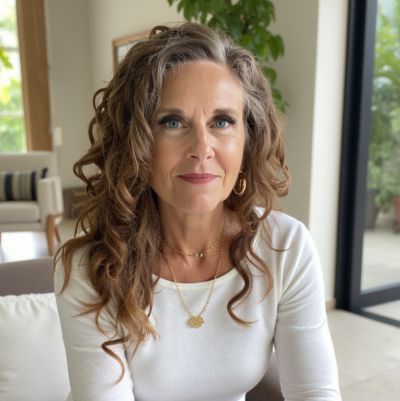
Elizabeth is a Master Certified Life and Health Coach with over 20 years of experience, dedicated to helping women in midlife thrive through holistic health and wellness. Her personal journey began with a desire to reduce her own breast cancer risk, which evolved into a mission to guide women through the complexities of midlife health, from hormonal changes to mental clarity and emotional resilience.
Elizabeth holds certifications from prestigious institutions such as The Life Coach School, Precision Nutrition, and the American Council on Exercise, as well as specialized training in Feminist Coaching and Women’s Hormonal Health. Her approach is deeply empathetic, blending her extensive knowledge with real-life experience to empower women in their 50s and 60s to build sustainable health habits that last a lifetime.
Recognized as a top voice in women’s health, Elizabeth speaks regularly on stages, podcasts, and webinars, inspiring women to embrace midlife with energy, confidence, and joy. Her passion is helping women regain control of their health, so they can fully engage in the things that matter most to them—whether that’s pursuing new passions, maintaining strong relationships, or simply feeling great in their own skin.