

Ever catch yourself thinking, “I’ll do it later” only to realize later is even more chaotic than now?
In this episode of Total Health in Midlife, we’re unpacking the subtle, sneaky ways we make life harder for ourselves without even realizing it. From moldy broccoli to missed workouts and late-night wine that wrecks your sleep, these aren’t just random moments, they’re patterns. And those patterns can be shifted.

I’ll share the real story behind how one freezing night at a gas station changed the way I treat myself, and why learning to “have your own back” isn’t about doing more, but about making life easier for future-you.
This episode isn’t about being perfect. It’s about getting curious, noticing the friction, and choosing one small way to stop boobytrapping yourself.
Are you loving the podcast, but arent sure where to start? click here to get your copy of the Done with Dieting Podcast Roadmap (formerly Total Health in Midlife) Its a fantastic listining guide that pulls out the exact episodes that will get you moving towards optimal health.
Take the Quiz: Why Do Your Healthy Habits Keep Falling Apart? If you've ever wondered why you know exactly what to do but still can't seem to stick with it, this quiz was built for you. In about 3 minutes, it identifies your specific pattern: the real reason your follow-through keeps breaking down, and what to address first. Your results are delivered straight to your inbox.
I am so excited to hear what you all think about the podcast – if you have any feedback, please let me know! You can leave me a rating and review in Apple Podcasts, which helps me create an excellent show and helps other women who want to get off the diet roller coaster find it, too.
What You'll Learn from this Episode
- The one question that can help you build self-trust without shame or guilt
- Why “I’ll do it later” feels harmless — but quietly undermines your health and peace
- How to shift from chaos to ease with small, boring acts of self-respect
Listen to the Full Episode:
Featured on the Show:
- Download the 8 Basic Habits of Healthy People Guide & Checklist
- Podcast Listener’s Roadmap
- Episode 227: The Thing Before the Thing
Full Episode Transcript:
244 - Having Your Own Back
Elizabeth: [00:00:00] Have you ever been late to something, not because of traffic, but because you forgot you had to run an errand that you could have done yesterday, but you told yourself that you could do it today because you had plenty of time, or maybe you planned to make dinner, but then didn't realize until you took the broccoli out of the fridge that it had turned too mush and gotten slimy because you waited too long to use it.
Or you swore that you would work out in the morning but didn't go to bed on time, which then delayed you getting up on time again. We all have these moments where we know exactly what we should do, but we put it off and in the moment it feels harmless. Like, oh, it's fine. I'll handle it later. But when later finally comes, you are the one stuck picking up the pieces.
Today I am talking about the sneaky little ways we booby trap ourselves, and how to stop. I'll show you what it really means to have your own [00:01:00] back and why learning to care for the future version of yourself might be the thing that finally makes everything feel easier. Stick around.
Welcome to the Total Health and Midlife Podcast, the podcast for women over 40 who want peace with food, ease in their habits, and a body that they don't have to fight with.
Hey everyone. Welcome to the Total Health and Midlife Podcast. I am your host, Elizabeth Sherman, and I am so super glad that you're here because This topic that we are talking about today is something that I am so incredibly passionate about. It's something that I think women our age do not have our own back.
And so I really hope that you tune in today because it is going to be so incredible. So. I have to tell you about the inspiration of this episode. I was driving home from Costco last week or the [00:02:00] week before, and it was really super hot out and I had a trunk full of stuff that really needed to get into the fridge.
And as I pulled into the highway, I noticed that I only had a quarter tank of gas left. Immediately, I had this flashback to a younger version of myself, the one who would've said. Oh, I'll do it later. I'll get it tomorrow, and then tomorrow would come and I would be rushing running late and then mad at myself because I was stuck doing the thing that I could have easily done the day before.
But today I actually did the thing and I pulled into the gas station, not because I wanted to, I really, really did not, but because I knew I would feel better. By having taken care of it and it got me thinking, how many times do we do this? We skip the thing now even though we [00:03:00] know that we're just making it harder for ourselves later.
That moment at the gas pump, it was annoying, but it was also a tiny act of self care and to me that's what it means to have your own back. Now, when I talk about having your own back, I, there are two different scenarios. First. Taking care of the version of you who shows up tomorrow, next week, next month, looking out for her so that she's not always scrambling.
And then second, it's about not beating yourself up when you do mess up. It's having the same compassion for yourself that you would have for your best friend. So that's what we're talking about today, not gas. Not groceries, but all the ways we either support or sabotage ourselves in tiny daily decisions.
So. I'll [00:04:00] do it later. That sentence used to run my entire life. It sounds so reasonable, doesn't it? Harmless, like, of course, I'll fold the laundry later. I'll return the call, I'll move my body. I'll prep some vegetables. I'll pay that bill all later. But what I didn't realize for the longest time is that later.
Was just a soft little lie that I told myself a lie that let me off the hook right now while also quietly screwing over the future version of me. And the truth is I never wanted to do it later either. In fact, I almost always wanted to do it even less. I remember a season in my life where late fees were just normal, like part of my budget, not because I didn't have the money to pay [00:05:00] like my bills, but because I wasn't paying attention.
Same thing with groceries. I would plan meals. Go shopping and then totally forget the broccoli was shoved in the back of the fridge until I pulled out a week later, all slimy and smelling gross. And that's not just logistics. There was a time when I'd bail on plans. I would run late for everything and wonder why I felt like a flake.
I tried to blame other people. That friend who was being too sensitive, the system was rigged, the weak got away from me. But the real problem was, is that I had a pattern of booby trapping myself, not intentionally, not out of laziness or defiance, but out of avoidance, out of hoping that maybe I'd magically feel more motivated or organized or rested later.
And that version of me, the one I was [00:06:00] always pushing things off onto, she just never showed up. So now I'm a little bit more suspicious when I hear that voice in my head that says, it's fine. You can do it later because will I, will I want to. Because every time I didn't follow through, it chipped away at my peace, my self-confidence and my ability to trust myself.
And what I've learned over the years of trial and error and teaching my clients to do this too, is that the chaos that we feel, the spinning, the disorganization, and the overwhelm, a lot of it isn't life just happening to us. It's us making it harder than it actually needs to be. One delayed decision at a time.
I remember the exact moment that this all started to shift for me. So it was winter in [00:07:00] Austin, which if you've ever lived there, you know, it's not real winter, but it was cold enough that I did not wanna be outside longer than I had to be. I was driving home, it was late, I was tired, and the Gaslight came on.
Now, historically, I would have just gone home. I would've told myself that I would leave earlier in the morning and get gas on the way to my first client appointment, even though I knew that I was perpetually. Procrastinating and running late. I was always stressed. I was always setting little fires that I would have to put out the next day, but for whatever reason, that night I turned into the gas station.
I didn't want to. But I did it anyway and the next morning I cannot even tell you how good it felt to get in the [00:08:00] car and not have to stop that small five minute act. It made my entire day feel smoother. It was like discovering a secret that life gets easier when you stop screwing yourself over. That was the moment that I started asking what else could feel this simple.
So if having your own back is about caring for the version of you who shows up tomorrow, what does that actually look like in real life? It looks like putting away the laundry so that you're not frantically digging for a clean sports bra five minutes before your workout. It's throwing together a quick meal plan on Sunday and maybe partially prepping some stuff.
Not because you want to become some meal prepping robot, but because you know that by Wednesday night you are gonna be [00:09:00] too tired to think and DoorDash will start whispering sweet. Nothings in your ear. It's deciding to go to bed. Even though the next episode is auto-playing and you are dying to know what happens because you promised yourself that you would get up early to move your body and you wanna make it a little bit easier, it's skipping the wine on a Wednesday night because you know how it messes with your sleep and you're tired of pretending that it doesn't.
These aren't glamorous decisions. You don't get a gold star for chopping bell peppers or folding towels, but they are the moments that matter because they're the ones where you quietly say. I matter enough to make this easier for myself. That's what having your own back looks like in practice. And the more you do it, the more you show up for yourself in [00:10:00] those small boring ways, the more self-trust you build, not because you're perfect, but because you are reliable. You've proven to yourself over and over and over again that you're not going to leave yourself hanging and listen. This isn't about being rigid. You're allowed to leave the laundry. You are allowed to phone it in sometimes.
This isn't about pressure, it's about partnership. You and you are on the same team looking out for future. You not judging past you. Just creating a little bit more breathing room between the chaos and the calm. One quiet loving decision at a time. One of the tools that I use with my clients is called The Wheel of Life.
If you've never done it before, it's basically a pie chart with different slices representing [00:11:00] different areas of your life. There's health, there's relationships, there's career, finances, fun, personal growth, all the things. The idea is. That when life feels out of whack, it's usually because one of those areas is getting ignored, or maybe it's stretched so thin that it starts to impact the others.
But here's the part that I love. It helps you realize that you can't give every area 100% all the time. Life just doesn't work that way. Sometimes you're in a season where your job needs more of you. Or your family does, or your body does. So when things are flowing a little easier, when work is calm, when your energy is good, those are the moments to take.
Those are the moments to make deposits in those other slices of your life. It's like a savings account. When I started having my own back in little ways, [00:12:00] I realized I was building this reserve of resilience so that when things did go sideways, I didn't fall apart. If I had food in the fridge, clean clothes, and a bit of a plan, everything felt a little bit more manageable.
That's what health habits are for not to be perfect, not to be in control of every single outcome, but to make sure that you're not going into overdraft when life throws you a curve ball. You don't have to be amazing at everything all the time, but. When you've made those little deposits, when you've looked out for yourself, you are not running on fumes when it matters most.
That's the big picture, and that's why this stuff matters. Now I get it. You're tired. You've got a lot on your plate and you're juggling work and family and aging, parents [00:13:00] and dogs that need walking and groceries that somehow never stop running out. The idea of adding anything else, even if it's something small, feels like one more thing to do.
And honestly, most of the time the things we skip don't feel like a big deal. Leaving the dishes in the sink, skipping the workout, not putting away the laundry. It's just one thing, it's insignificant. Life will go on. You'll get to it later, and you probably will, but this is how the pattern builds. One little pass here, one shortcut there.
One. I don't feel like it. That snowballs into five more, and before you know it, you're overwhelmed. Not because life exploded, but because of all of those little things that you didn't do when they were easy. Have now become urgent. I'm not saying this to make you feel [00:14:00] bad, I'm saying it because I've lived it and I know how tempting it is to believe.
It doesn't matter that you'll catch up eventually, but what if catching up wasn't necessary? What if. Doing the small, boring thing now was the exact thing that would make your life feel so much lighter. Later these days, whenever something feels harder than it needs to be. When I'm rushing annoyed behind, I pause and ask myself one simple question, and that is, what could I have done in the past to make this easier for myself?
Now. And so it's not about beating myself up, it's about being honest, like compassionately honest. Like if dinner feels like a disaster, I don't spiral into, Ugh, I'm so bad at this. I just look [00:15:00] around and think, okay, so what could I have done yesterday or this morning to make this feel smoother? So maybe it's chopping the vegetables or writing down a plan or.
Just remembering to take the damn chicken out of the freezer. This question isn't about blame, it's about noticing patterns and tweaking them. With kindness because when you ask it enough, you start to see the little levers that you can pull. You start to see how many future fires you can prevent by just taking five minutes now to do the thing that makes leader you breathe easier.
That's not discipline, that's self-care. And once you see the payoff, the calm, the time, the ease, it gets easier to keep showing up for yourself. Not perfectly, [00:16:00] but consistently. And that's the shift that changes everything. The good news is you don't have to overhaul your life to start feeling better. You don't need some Pinterest perfect routine.
You don't need to be the kind of person who loves cleaning out her fridge on a Sunday afternoon. You just need to be willing to notice. Notice the places where you're making things harder than they need to be. Notice the voice that says, I'll do it later, and get curious about whether that's actually true.
Notice the small moments where future you is begging for a little support, and then choose one small thing this week that would make life easier for her. That's it. And if you're ready to start having your own back in a bigger way with more structure, with more intention, I've got a guide and [00:17:00] checklist that will help.
It's called the eight Basic Habits That Healthy People Do Guide and Checklist. And these are the exact habits that I teach my clients. And when you practice them all together, they work like a compound interest for your health. They are simple. They are powerful, but they will stretch you because doing them consistently, that's what truly having your own back looks like.
You can grab the guide at elizabethsherman.com/habits. It's totally free. That's all I have for you today. Have an amazing day, and I will see you next time. Bye bye.
Thank you for joining us on today's episode. If you're feeling overwhelmed by all the health advice out there and looking for something that's straightforward, my eight basic habits that healthy people do, guide and checklist is just what you need. It breaks down essential habits into simple, actionable steps that you already know how to do.
By following these [00:18:00] habits, you'll set yourself on a path to better health, surpassing most people that you know. To get your free copy, just click the link in the show notes or go to elizabeth sherman.com/habits. It's an easy start, but it could make all the difference in your health journey. Grab your guide today and take the first step towards a healthier you.
Enjoy the Show?
- Don’t miss an episode, follow the podcast on Spotify and subscribe via Apple Podcasts or RSS.
- Leave me a review in Apple Podcasts.
- Join the conversation by connecting with me on Social!


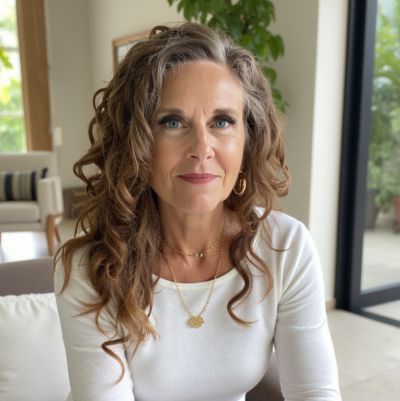
Elizabeth is a Master Certified Life and Health Coach with over 20 years of experience, dedicated to helping women in midlife thrive through holistic health and wellness. Her personal journey began with a desire to reduce her own breast cancer risk, which evolved into a mission to guide women through the complexities of midlife health, from hormonal changes to mental clarity and emotional resilience.
Elizabeth holds certifications from prestigious institutions such as The Life Coach School, Precision Nutrition, and the American Council on Exercise, as well as specialized training in Feminist Coaching and Women’s Hormonal Health. Her approach is deeply empathetic, blending her extensive knowledge with real-life experience to empower women in their 50s and 60s to build sustainable health habits that last a lifetime.
Recognized as a top voice in women’s health, Elizabeth speaks regularly on stages, podcasts, and webinars, inspiring women to embrace midlife with energy, confidence, and joy. Her passion is helping women regain control of their health, so they can fully engage in the things that matter most to them—whether that’s pursuing new passions, maintaining strong relationships, or simply feeling great in their own skin.