
When was the last time you ate something just because it was free?
A glass of wine at a work event.
A dessert “on the house.”
That second trip to the buffet—even though you were already full.
In this episode of Total Health in Midlife, we explore the subtle but powerful pull of free food and drink—why it’s so hard to say no, what it's really costing us, and how midlife women can start reclaiming their health by paying attention to the hidden trade-offs. If you’ve ever found yourself eating or drinking something you didn’t really want—just because it was included—you’re not alone.
We’ll unpack the mindset of getting your “money’s worth,” how it intersects with your identity as a smart, capable woman, and why the cost of “free” might show up in your sleep, energy, digestion, mood, or confidence. And most importantly? You’ll leave this episode with tools to pause, get curious, and choose what actually serves you—not just what’s being handed to you.
The Biggest Problem Midlife Women Face Regarding Free Food & Overeating
Many women in midlife unknowingly fall into a pattern of saying yes to food and drink not because of hunger—but because of emotional conditioning around value, scarcity, and politeness. Whether it’s buffet culture, open bars, grocery store samples, or work dinners, free food activates a deep-seated mindset of “don’t waste it” or “I deserve this,” even when our bodies are already full or fatigued.
The real problem? What feels like a harmless yes often snowballs into disrupted sleep, blood sugar crashes, sluggish mornings, joint pain, and growing resentment. These hidden consequences are especially intense during perimenopause and menopause, when your body is more sensitive to sugar, alcohol, and poor-quality food. What looks like a “free treat” may actually be costing you in ways you can’t afford to ignore anymore.
What You Can Do Right Now
Start by noticing the moments when food is offered to you “for free.” Before you say yes, pause. Ask yourself: Would I still want this if I had to pay for it? Not just with money—but with how I’ll feel later tonight or tomorrow morning.
You don’t have to say no to everything. You just have to ask yourself: Do I like my reason for saying yes? That simple shift—from autopilot to awareness—is the first step toward reclaiming control over your choices and your health.
The Listener Takeaway: Why This Episode Matters
This episode isn’t about guilt or willpower. It’s about freedom. When you understand why you’ve been saying yes to food you don’t even want, you can start choosing differently—not out of restriction, but from discernment.
Because you get to decide what goes in your body. You get to decide what’s worth it. And when you stop trading your energy, clarity, and confidence for someone else’s idea of “a good deal,” you start building a health routine that actually works—for your real life.
Are you loving the podcast, but arent sure where to start? click here to get your copy of the Done with Dieting Podcast Roadmap (formerly Total Health in Midlife) Its a fantastic listining guide that pulls out the exact episodes that will get you moving towards optimal health.
Take the Quiz: Why Do Your Healthy Habits Keep Falling Apart? If you've ever wondered why you know exactly what to do but still can't seem to stick with it, this quiz was built for you. In about 3 minutes, it identifies your specific pattern: the real reason your follow-through keeps breaking down, and what to address first. Your results are delivered straight to your inbox.
I am so excited to hear what you all think about the podcast – if you have any feedback, please let me know! You can leave me a rating and review in Apple Podcasts, which helps me create an excellent show and helps other women who want to get off the diet roller coaster find it, too.
Watch or Listen to the Episode:
WHAT YOU'LL LEARN
- Why smart, capable women often eat or drink things they don’t actually want
- The emotional and physical costs of saying yes to “free” food—and how they show up in midlife
- How to break the automatic “yes” reflex and start choosing what’s truly worth it
RESOURCES
- Connect with me on Instagram
- [Free Resource] 82 Reasons You Overeat That Have Nothing to Do with Food
Full Episode Transcript:
258 - Free Food
Elizabeth: [00:00:00] Have you ever eaten something just because it was free, like a drink at a party, a dessert on the house, that second plate at a buffet, not because you wanted it, but because you felt like you should, like you earned it like it was for you. We tell ourselves it's smart that we're getting our money's worth, that it doesn't count because we didn't pay for it.
But what if I told you that free food isn't actually free? Now in this episode, we are pulling back the curtain on one of the sneakiest ways we override our own needs and sabotage our health without even realizing it. We're gonna talk about free wine, headaches, buffet, regret grocery store samples and why the it was free reflex might actually be costing you more than you think.
And once you see it, you won't be able to unsee it. So before you say yes to something that you don't actually want, [00:01:00] listen to this episode. This one might change the way that you eat forever.
Welcome to the Total Health and Midlife Podcast, the podcast for women over 40 who want peace with food, ease in their habits, and a body that they don't have to fight with.
Hey there. Welcome to the Total Health and Midlife Podcast. I am your host, Elizabeth Sherman, and I am so glad that you are here today to talk about free food. So the other day I was on a call with a client and she mentioned that she was going to a sports game.
Her tickets included access to a buffet and unlimited alcohol, and she said, without hesitation, well, of course I'm gonna drink alcohol. I'm gonna drink the wine. It's free. And that stopped me in my tracks, not because I was judging her. I completely understood the mindset. I have been there. I have lived that mindset,
But I also realized that I don't understand it anymore. Like why do we do [00:02:00] that? Why do we eat food or drink wine or grab a dessert just because it was offered to us? Just because we don't have to pay for it. I'm not talking about true hunger. I'm talking about that automatic Yes. That happens when we hear the word free.
Even if we're already full, even if it's not that good, even if we know that we will regret it later. I've been thinking about this a lot lately because it doesn't just happen at sports games. It shows up at restaurants when a server brings a dessert on the house
Or when you're at the grocery store and there's a tray of samples by the deli or on vacation at a resort where everything is included, and suddenly your six pina coladas deep and wondering why your stomach feels just terrible. Here's the thing. This [00:03:00] isn't really about food. It's about our relationship to value, to enoughness, to what we believe we're allowed to say yes or no to.
So today I wanna explore that, not to shame it, but to gently ask, what are we really doing when we say yes to something that we don't actually want? Just because it didn't cost any money. Because it turns out free food often comes with a different kind of price tag.
So stick with me. We're gonna unpack something that might be quietly running the show behind your choices.
So, you know what I think is really interesting? We say yes to free food because it feels like we're winning. Like we're getting away with something like we beat the system, whether it's an open bar, an all you can eat buffet, or the little mini shampoo bottles that you get from a hotel. We [00:04:00] wanna get our money's worth, right?
Even when we didn't spend any money, it's like a scarcity reflex. If I don't take it now, I might not get another chance. I might need it. If I say no, I'm missing out. If I don't grab it, someone else will. And let's be honest, we all love a good deal. It's baked into American culture. More is better. Bonus is better.
Free is definitely better. But when it comes to food, that mindset doesn't serve us the way that we think it does because free wine might just give you a headache. The cruise buffet that you feel obligated to eat at every meal because you paid for it, might leave you bloated, sluggish, and uncomfortable in your clothes.
And I'm not saying don't enjoy yourself. I'm not saying don't eat the bread or drink the margarita. [00:05:00] I'm just wondering why does it feel like a waste to not eat something that you didn't even want? Where did we learn that? I think part of it comes from how we grew up. For some of us, food was love or safety, or maybe it was scarce, so wasting it was unacceptable.
Maybe we had parents or grandparents who prided themselves on stretching every penny, getting every deal, using every coupon, and those habits stick. Now we're at a company dinner and someone else is footing the bill. So we over order or we under order because we don't want to seem greedy either way. The food we choose has nothing to do with what we actually want.
It's about performance approval or playing the role. We think that we're being strategic, but in reality, we're outsourcing our power. We're making food decisions [00:06:00] based on what something costs, not how it makes us feel. And I don't know about you, but I've paid for plenty of free food with the cost of my sleep, my energy, and my digestion.
So if we're gonna talk about value, let's get honest about what we're really trading when we eat or drink something that we don't want just because we can.
Now, I used to be the person who took every sample at the grocery store. It didn't matter what it was. Tiny meatball on toothpick. Sure. Cheese cube with a cracker I didn't even like. Yep. Some sort of gluten-free banana chip thing. Why not? Same thing after a fun run or a race, I would grab the post-race snacks like it was my job.
Like I had earned it protein bars that I didn't like, sports drinks that turned my tongue blue. I would shove them in my bag, bring them home, and then they would sit in the pantry for months, but [00:07:00] I had to take them because they were free. I thought that was smart. I thought I was being resourceful, but at some point I started paying attention and I realized.
I was saying yes to things that I didn't even want. Not just food, but other parts of my life too. I would buy the buy one, get one free cheap clothes that didn't quite fit right and fell apart. After one wash, I had drawers full of $5 tank tops. That made me feel myth every time I wore them. And then one day it clicked.
Cheap. Things usually cost more in the long run. In time, in discomfort and in regret. So I started buying fewer things, but better things. A pair of shoes that actually supported my feet, a dress that I felt amazing in one glass of wine that I loved, instead of three that made me [00:08:00] feel blah. That same idea started to shape how I approached food.
I stopped finishing things just because they were on my plate. I stopped eating things just because they were free, and I started asking would I still eat this if I had to pay for it? Not with money, but with how I felt afterwards, when I became more discerning, everything else changed. I felt lighter. I didn't dread meals.
I didn't walk around with that dull, bloated, low energy feeling that I used to think was just normal. And here's what I've learned. Discernment isn't deprivation. It's actually self-respect.
Now, here's the thing I wish more of us talked about. Just because it's free doesn't mean that it's free.
We think we're being smart. Taking the free drink, taking the free [00:09:00] dessert, the free snack, but we're often paying in ways we don't realize until later. So let's talk about the actual cost free wine at the party. It might be cheap wine, which means a headache later. Maybe you don't sleep well, maybe your face gets puffy, your digestion gets wrecked, and the next day you're dragging and wondering why you feel like crap.
Was that free drink really free? Or maybe it's the free buffet at the hotel. You go back for another plate, even though you're already full because it's included. But the food, it's not high quality. It's heavy, salty, processed, sugary. Your body has to work harder to digest it, and you wake up with swollen fingers, joint pain, that foggy feeling behind your eyes.
Again, what was the price? And then there's the part that we don't really talk about. The emotional cost, like [00:10:00] when you eat something that you didn't want just because it was there, and then spend the rest of your night beating yourself up about it, or you tell yourself, I will be better tomorrow, and then start the cycle of guilt and shame all over again.
You start to feel like you can't trust yourself. Food is in charge like you're failing when really you were just following a script that's been running in the background of your whole entire life. That's not about willpower, that's about awareness. So yeah, the food might not cost any money, but it might cost you your energy, your clarity, your sleep.
Your peace of mind. And when you add all of that up, it's a pretty steep price for something that you didn't even want in the first place. So next time that you're offered a free treat, a drink, [00:11:00] a sample, I wanna invite you to pause, not to restrict, not to shame, but just check in with yourself and ask, is this worth what it might cost me later?
Because that's the real price tag.
So let's slow this down for just a second, because I want you to think about the last time you ate something just because it was free. Maybe it was a grocery store sample. Maybe it was that bowl of candy on the receptionist desk.
Maybe it was the tray of past hor d'oeuvres at a party.
Those tiny puff pastry things that you don't even like that much, but you ate three anyway, in that moment, did you actually want it? Would you have chosen it if they weren't free? If you had to pay for it, if it cost money, or even just a moment of decision. And maybe more importantly, are you okay with what you are trading for it?
Because that trade off is real. The [00:12:00] truth is, we've all been trained for this. It's not your fault. We grew up with messages like, don't waste food. Take what's offered. Be polite. Never turn down free stuff. Some of us watched our parents or grandparents stretch every single dollar. We learned that more was better.
That free was a blessing. That saying no to something meant being ungrateful or wasteful. And that wiring runs really deep within our bodies. And so of course we say yes even when we don't want to. But here's the shift. You get to want more now, more quality, more intention, more connection to what you actually want to eat and how you want to feel afterwards.
You are allowed to want better food, to want to feel good after a meal, to choose what's [00:13:00] right for you, even if it means saying no to something that's technically free. That's not wasteful. It's wise, you're not missing out. You're actually tuning in. This isn't about perfection, it's about awareness. It's about noticing the little moments where you've been trained to say yes automatically and giving yourself just a few seconds of pause and that pause that cause is power.
That's where you get to decide, do I like my reason for eating this? Will this move me closer to how I wanna feel in my body? What am I saying yes to and what am I saying no to? By default? This isn't about rules, it's about freedom, because freedom doesn't always mean saying yes sometimes freedom is knowing that you could say yes, but you don't have [00:14:00] to.
If you're starting to notice patterns like this, like, huh, I do grab the free snacks at the hotel just because it's there, or I don't even like this wine. Why am I drinking it? You are so not alone. These little moments happen all the time and we barely register them, but once you do start to see them, you can't unsee them.
And that's a good thing because that awareness, that's where your power begins. If this episode made you curious about what else might be quietly driving your eating habits. Stuff that has nothing to do with hunger or cravings. I have something that can help. It's a free resource called 82 Reasons You Overeat That Have nothing to do with food, and it's exactly what it sounds like.
It's a list of real, relatable, very human reasons, like stress, habit, reward, boredom, people pleasing, and The Clean Plate [00:15:00] Club and yes, free food that show up and make us reach for something to eat when we're not actually hungry. It's not a diet, it's not a challenge. It's just an honest starting point for noticing what's underneath the behavior so that you can start making choices that feel more like you.
You can grab it by tapping the link in the show notes or going to visit elizabeth sherman.com/ 82 dash reasons, and I wanna say this before we wrap up. There's no shame in having said yes to free food or ever doing it again in the future. There's no shame in having eaten something just because it was there.
We've all done it. Me too. But going forward, you get to choose with intention. You get to say, no thanks. If you really don't want it, or actually, I'll order what I want, or I'd rather feel good tomorrow. Maybe you don't wanna say that one out [00:16:00] loud, because you are not just feeding your body, you're building trust with yourself.
That is worth so much more than anything that you could get for free.
That's all I have for you today. Have an amazing day, and I will talk to you next time. Bye-bye.
Now before you go, if today's episode hit a little too close for home, or if you've ever wondered why did I eat that, I have something for you. It's called The 82 Reasons You Overeat that have nothing to do with food Now, it's not a guilt trip, and it's definitely not another diet plan. It's a free guide that will help you to finally understand why you keep eating, even though you swore you wouldn't.
Here's a secret. It's not about willpower, it's about everything else. You can grab your copy right now@elizabethsherman.com slash 82 reasons. Seriously, go download it. You'll feel seen, and it might just be the [00:17:00] start of something different.
Enjoy the Show?
- Don’t miss an episode, follow the podcast on Spotify and subscribe via Apple Podcasts or RSS.
- Leave me a review in Apple Podcasts.
- Join the conversation by connecting with me on Social!


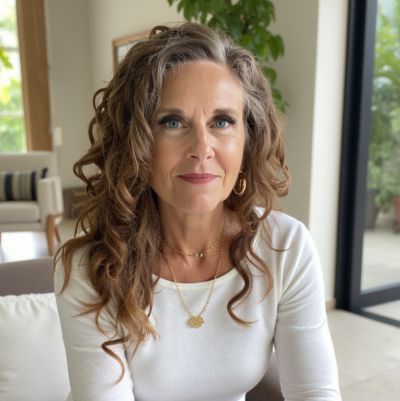
Elizabeth is a Master Certified Life and Health Coach with over 20 years of experience, dedicated to helping women in midlife thrive through holistic health and wellness. Her personal journey began with a desire to reduce her own breast cancer risk, which evolved into a mission to guide women through the complexities of midlife health, from hormonal changes to mental clarity and emotional resilience.
Elizabeth holds certifications from prestigious institutions such as The Life Coach School, Precision Nutrition, and the American Council on Exercise, as well as specialized training in Feminist Coaching and Women’s Hormonal Health. Her approach is deeply empathetic, blending her extensive knowledge with real-life experience to empower women in their 50s and 60s to build sustainable health habits that last a lifetime.
Recognized as a top voice in women’s health, Elizabeth speaks regularly on stages, podcasts, and webinars, inspiring women to embrace midlife with energy, confidence, and joy. Her passion is helping women regain control of their health, so they can fully engage in the things that matter most to them—whether that’s pursuing new passions, maintaining strong relationships, or simply feeling great in their own skin.