
The main benefit of hiring a wellness coach in midlife is getting to the cause of your symptoms faster: the same symptom can have several different causes, and generic advice can't tell which one is yours.
TL;DR
- Know: The same symptom can have several different causes, so what worked for your friend may miss you entirely.
- Know: A wellness coach (also called a health coach) doesn't diagnose or treat. She works on the daily patterns behind how you feel, alongside your doctor.
- Do: Pick the one symptom you keep circling back to and count its possible causes.
- Do: Put a price on figuring it out alone, in hours and energy.
- Avoid: Waiting for a calm stretch to start. The barriers have always been there.
You're doing what the articles say. Your body is doing whatever it wants anyway.
That's usually when a woman starts asking whether hiring a wellness coach is worth it for the health stuff that seems to happen mostly to women. Fair question. I've coached women in midlife (40's & 50's) for 20 years, and my honest answer is that sometimes you don't need one, and sometimes you're spending time on something that could be sorted out much faster with help.
Here's how to tell which it is for you.
What "female-specific issues" actually means in midlife
When women search for help with female-specific issues, they usually mean two things at once. The first is the symptoms of perimenopause and menopause: sleep that seems like a distant dream, cravings that feel out of character, brain fog, energy that crashes at odd hours. I'm not talking about anything medical. That's your doctor's territory.
The second is the invisible load, the running list of who needs what and when, which in my experience lands on women far more than men. The National Institute on Aging notes that the menopausal transition often overlaps with caring for aging parents or supporting kids into adulthood, on top of more responsibility at work. Same years, same brain, more to carry.
Under both sits a third layer: the relationship with food and movement, and with our own bodies, that most of us picked up decades ago. (For the menopause-and-eating side, Ep. 111 covers it.) It all tangles together, which is why it's hard to sort out alone.
Why the same symptom can have several different causes
Most of us know the headline symptoms, hot flashes and night sweats. Far fewer know how long the list runs. One research team asked women aged 35 to 55 about 61 symptoms sometimes associated with menopause. Sixty-one.
Their follow-up work found that the feelings women linked most strongly to not feeling like themselves came from groups like anxiety, fatigue and pain, brain fog, and volatile mood, which most people never connect with menopause. No wonder so many of us blame ourselves.
Now take a single symptom: waking up at 3 a.m. It could be a night sweat, stress or anxiety, what you ate or drank and when, or a habit your body has learned. The National Institute on Aging says hot flashes and mood changes can both contribute to poor sleep, and that waking up may itself trigger a hot flash, not just the other way around. (For how sleep, stress, and recovery pull on each other, see Ep. 113.)
The same symptom can have several different causes. Waking at 3 a.m. might be a hot flash, stress, what you ate or drank, or a habit, and generic advice can't tell you which one is yours.
That's why advice from a friend or an article so often misses. An NIH researcher put it plainly: no two women go through menopause in exactly the same way. In a study of 1,449 women who had them frequently, the median duration was 7.4 years, but depending on when symptoms began, it ranged from about 3.4 to more than 11.8 years.
Seeing all of this more clearly helps. It isn't the same as knowing which cause is yours.
What a wellness coach does that a doctor or an app can't
First, the boundary. A wellness coach, also called a health coach, doesn't diagnose or treat anything. Keep your doctor for anything medical. What a coach works on is the day-to-day: how you eat, move, sleep, and handle stress, and how each shows up in how you feel.
Your doctor is a real resource who's also on a clock. In one analysis of more than 21 million primary care visits, the average exam lasted about 18 minutes. That's enough to review labs and talk through a prescription, and it leaves little room to trace why your sleep changed. A menopause app can hand you general advice, but it was built for the average woman, and you may not be her.
A coach works differently. In the research literature, health and wellness coaching is mostly built around goals you set, centered on you rather than a script, and includes accountability. It's also a young field that hasn't always been defined consistently, so ask any coach how she works instead of trusting the title. (To see what that looks like, Ep. 131 walks through the process.)
WHO DOES WHAT
| Good for | Can't do | Time with you | |
| Your doctor | Diagnosing and prescribing | Spend sustained time on your daily patterns | Minutes per visit |
| A menopause app | General information | Tell you which cause is yours | Whenever you open it |
| A wellness coach | Tracing symptoms to daily patterns | Diagnose or treat | Ongoing sessions |
Can you figure this out on your own?
Maybe. Plenty of women do, and if you like research and have the bandwidth, you might get there. You try something, wait a few weeks, wonder if it worked, then try something else. Every round takes time.
What a coach adds is speed. After 20 years working with women in midlife, I've seen the same patterns show up in different bodies, so I can spot them faster than a woman seeing them for the first time. That collapses the timeline. It doesn't do the work for you.
So the real question is what your time and energy are worth. Think about cleaning your house. You can absolutely do it yourself, and at some point a lot of us decide our time is better spent elsewhere and hire it out. Some women want to become experts in their own hormones. Plenty just want it handled.
You can probably figure this out on your own. The real question is what your time and energy are worth, and whether you want to keep testing or have it solved.
Weighing doing this alone? Ep. 143, Doing It On Your Own, is worth a listen.
"But now isn't a good time"
This is the objection I hear most, and it's the adult conundrum: we always assume we'll have more time later than we do right now. Many women think they need an empty calendar first, so they can be perfect and on plan. Real life doesn't come with one. It's messy and busy, which is why I work with women over longer stretches.
The barriers you're waiting out, like the holidays and the travel, have always been there. You either worked around them or let them stop you. How do you do the holidays and still feel like yourself on January 2nd? How do you enjoy a vacation and pick right back up at home? Those are skills, and skills can be taught.
When the busy season hits and you want to quit, the goal isn't to stop or be perfect. It's to downshift and keep going. That's how you end up with a relationship with your health that lasts, instead of a plan you abandon.
There's no perfect time to start. The skill is learning to work with the barriers, and that's what a longer stretch of coaching is for.
Short on time? Ep. 124 is about making more time for your health.
How to decide if hiring a wellness coach is right for you
Here are five steps. They won't tell you what to do about any symptom. They'll tell you whether you want help doing it.
- Name the one symptom you keep circling back to. Today: write it in plain words and note when it started.
- Count the possible causes. Today: list every cause you can think of. If you can name several but can't tell which is yours, that's the gap.
- Tally what you've tried. This week: note how long you gave each thing and whether it fit your real calendar.
- Put a price on going alone. This week: estimate the hours you've spent so far, plus what the symptom costs you day to day.
- Decide: keep testing solo, or outsource it. Next week: if you outsource, look for a coach who works on causes, not one generic plan, and who stays long enough to see you through a busy stretch.
Frequently asked questions
She helps you connect what you do each day, like how you eat, move, sleep, and handle stress, to how you feel. She doesn't diagnose or treat, and she works alongside your doctor.
It depends on what your time and energy are worth. You may sort out your symptoms alone, but a coach who has seen many women in midlife spots patterns faster. You choose.
The terms overlap heavily and are often used interchangeably. Coaching hasn't always been defined consistently, so ask any coach how she works. I'm a Master Certified Life and Health Coach.
Your doctor reads labs, diagnoses, and prescribes. A coach does none of that, but can spend sustained time on your daily patterns, which is hard in an exam averaging about 18 minutes.
No two women go through menopause in exactly the same way, according to NIH researchers. Hormones, stress, mood, and daily habits all play a part, and the mix differs for each woman.
You might. Plenty of women do, with generic advice and trial and error. The catch is time: you have to work out which of several possible causes is yours. A coach can shorten that.
It varies by coach, so ask about session length and what happens between sessions. The bigger time cost is the research and trial and error you're already doing alone.
Prices vary widely by coach, format, and length. Compare what's included and how long support lasts, not just the hourly rate, and weigh it against what going alone is costing you.
The real question
You can probably figure this out on your own. So the question worth sitting with is whether you want to. Your time and energy are worth something, and so is not thinking about this anymore. Either answer is a good one.

NOT READY TO DECIDE ANYTHING YET?
Start with the free 8 Habits That Healthy People Do guide. It's a low-pressure place to begin.
Evidence & Attribution
- NIA: Sleep Problems and Menopause. Menopausal years often overlap with caregiving and heavier work demands; hot flashes and mood changes can contribute to poor sleep; waking may itself trigger hot flashes. Content reviewed September 2021.
- Cortes et al. 2023, Menopause. Women aged 35 to 55 were asked about 61 symptoms sometimes associated with menopause. This is the Spanish-language version of the Women Living Better survey; the Healio piece below reports the same 61-symptom set for the English survey. The 61 is the number of symptoms the researchers asked about, not a definitive count, and the post is worded that way.
- Healio summary of the "not feeling like myself" study. Symptom groups most linked to the feeling are ones not typically associated with menopause. [RESEARCH NEEDED] This is a news summary. The primary paper is Coslov, Richardson, and Woods, Menopause, 2024. Add its DOI or PubMed link before publishing.
- NIH News in Health, July 2018. An NIH researcher says no two women go through menopause in exactly the same way.
- Avis et al. 2015, JAMA Internal Medicine. Median total duration of frequent hot flashes or night sweats was 7.4 years across 1,449 women; medians ranged from about 3.4 to more than 11.8 years depending on when symptoms began.
- Neprash et al. 2021, Medical Care. Average primary care exam was 18.0 minutes across about 21 million visits in 2017. This is general primary care, not menopause visits, and the post says so.
- Wolever et al. 2013, Global Advances in Health and Medicine. Describes how coaching is defined in the literature (patient-centered, patient-determined goals, accountability) and notes it has been inconsistently defined with mixed results. The post describes what coaching is and makes no outcome claims.
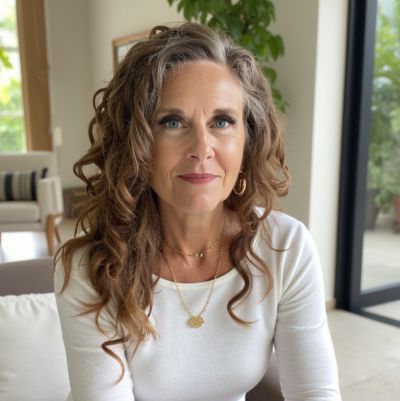
Elizabeth is a Master Certified Life and Health Coach with over 20 years of experience, dedicated to helping women in midlife thrive through holistic health and wellness. Her personal journey began with a desire to reduce her own breast cancer risk, which evolved into a mission to guide women through the complexities of midlife health, from hormonal changes to mental clarity and emotional resilience.
Elizabeth holds certifications from prestigious institutions such as The Life Coach School, Precision Nutrition, and the American Council on Exercise, as well as specialized training in Feminist Coaching and Women’s Hormonal Health. Her approach is deeply empathetic, blending her extensive knowledge with real-life experience to empower women in their 50s and 60s to build sustainable health habits that last a lifetime.
Recognized as a top voice in women’s health, Elizabeth speaks regularly on stages, podcasts, and webinars, inspiring women to embrace midlife with energy, confidence, and joy. Her passion is helping women regain control of their health, so they can fully engage in the things that matter most to them—whether that’s pursuing new passions, maintaining strong relationships, or simply feeling great in their own skin.