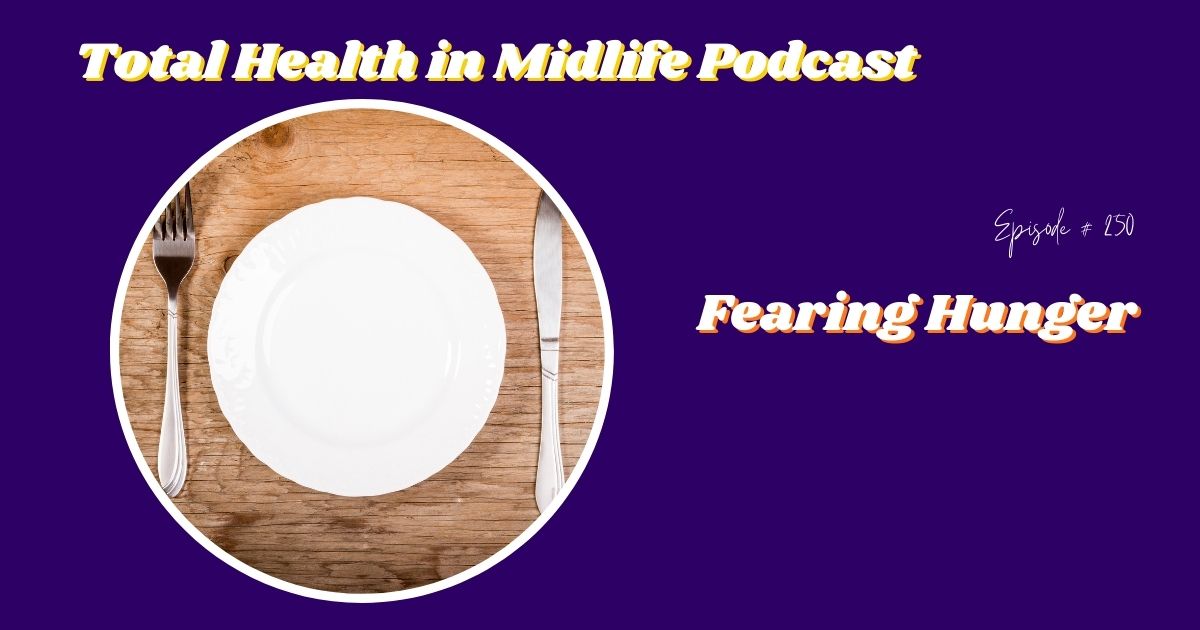
Fear of hunger doesn’t usually look like skipping meals or white-knuckling through starvation. For most midlife women, it shows up much earlier—eating “just in case,” snacking to prevent discomfort, or worrying that if you don’t eat now, you’ll lose control later. Over time, this pattern quietly fuels overeating, weight frustration, and constant mental noise around food.
In this episode of Total Health in Midlife, Elizabeth Sherman breaks down how dieting trained many women to fear hunger—and why that fear is often the real driver behind overeating, not lack of willpower. If you’ve ever wondered why you eat before you’re hungry, why snacks feel necessary even when meals are planned, or why food decisions feel harder than they should, this conversation will feel uncomfortably familiar—in the best way.
This episode isn’t about pushing through hunger or going back to restriction. It’s about understanding what hunger actually is, why it feels so loaded in midlife, and how learning to tolerate mild hunger can restore calm, trust, and choice around food—without dieting or rigid rules.
The Biggest Problem Midlife Women Face Regarding Fear of Hunger
For many women in midlife, fear of hunger is the hidden pattern driving overeating, constant snacking, and stalled weight loss. Years of dieting taught the body that hunger equals deprivation, loss of control, or eventual overeating. As a result, hunger stops feeling like a neutral body signal and starts feeling like something that must be prevented at all costs.
This fear is reinforced by well-meaning advice like “don’t let yourself get too hungry” and lived experience—when hunger has led to eating too fast, too much, and feeling physically uncomfortable later. Over time, women learn to eat pre-emptively: before meetings, before errands, before dinner, or anytime food might not be immediately available. The result is living in a constant cycle of eating early, feeling overly full, and judging yourself for eating when you “weren’t even hungry.”
In midlife—especially during perimenopause and menopause—this pattern becomes more noticeable. Appetite cues shift, energy fluctuates, and the old rules stop working. Fear of hunger keeps women stuck managing food all day long instead of responding to their bodies calmly and intentionally.
What You Can Do Right Now
Instead of immediately fixing hunger with food, this episode invites you to practice noticing hunger cues first. By pausing briefly—60 to 90 seconds—you can identify where you feel hunger in your body, how intense it is, and what emotions are attached to it. This small pause creates space between sensation and reaction.
From there, you choose intentionally: eat now, eat a planned snack, or wait until your next meal. The goal isn’t to ignore hunger—it’s to stop treating it like an emergency. Over time, this builds tolerance for mild hunger and reduces the urgency that often leads to overeating.
The Listener Takeaway: Why This Episode Matters
If you’ve felt like you can’t trust yourself around food, this episode offers a powerful reframe. Fear of hunger isn’t proof that something is wrong with you—it’s evidence of learning, conditioning, and self-protection. When hunger stops feeling dangerous, food decisions become calmer and more intentional.
By understanding hunger as a manageable body sensation rather than a problem to prevent, you can reduce overeating, quiet the inner critic, and rebuild confidence in your ability to care for your body in midlife—without returning to diets or rigid control.
Are you loving the podcast, but arent sure where to start? click here to get your copy of the Done with Dieting Podcast Roadmap (formerly Total Health in Midlife) Its a fantastic listining guide that pulls out the exact episodes that will get you moving towards optimal health.
Take the Quiz: Why Do Your Healthy Habits Keep Falling Apart? If you've ever wondered why you know exactly what to do but still can't seem to stick with it, this quiz was built for you. In about 3 minutes, it identifies your specific pattern: the real reason your follow-through keeps breaking down, and what to address first. Your results are delivered straight to your inbox.
I am so excited to hear what you all think about the podcast – if you have any feedback, please let me know! You can leave me a rating and review in Apple Podcasts, which helps me create an excellent show and helps other women who want to get off the diet roller coaster find it, too.
Watch or Listen to the Episode:
WHAT YOU'LL LEARN
- Why fear of hunger is learned—and why it makes sense based on your history
- How pre-emptive eating quietly fuels overeating and weight frustration
- The difference between mild hunger and being “too hungry”
- How hunger became a moral issue instead of a body signal
- A simple way to rebuild trust around food without dieting
RESOURCES
Full Episode Transcript:
256 - Fear of Hunger
Elizabeth: , [00:00:00] so if you've ever eaten, just in case you might get hungry later. This episode is for you and not eating because you were hungry, but because you were worried about. Getting hungry later. Like maybe you eat before you leave the house, before a meeting, before a drive, before dinner is even ready.
And it's not even that you really need the food, it's that you don't trust what will happen if you feel hunger and can't fix it fast enough. And if you're thinking, well, yeah, because if I get too hungry, I'll overeat. I want you to keep listening because that sentence right there might be the reason that you feel stuck.
Today, I'm gonna show you how fear of hunger gets built and why it makes perfect sense, why hunger isn't a moral verdict, and how to use one simple tool to rebuild self-trust around food without dieting, without restriction, and without turning your day [00:01:00] into a hunger monitoring project. Now if you've been snacking nonstop, overeating at night, or feeling like food is running the show, don't skip this one.
Speaker: Welcome to the Total Health and Midlife Podcast, the podcast for women over 40 who want peace with food, ease in their habits, and a body that they don't have to fight with.
Elizabeth: Hey everyone. Welcome to the Total Health and Midlife Podcast. Thank you for tuning in. I am your host, Elizabeth Sherman, and I am really glad that you're here today because today we are talking about the fear of hunger, but I wanna be very clear about what I mean by that, because it's not what most people think.
This isn't about being ravenous. It's not about skipping meals, and it's not about white knuckling your way through hunger. Fear of hunger usually shows up. Before you're actually hungry, and it sounds like this, I should eat now because what if I get hungry later? Like, what if there's nothing available [00:02:00] to eat later?
What if I wait too long and then overeat? And so we eat preemptively. And not because your body is asking for food in that moment, but because your brain is trying to prevent a future feeling that it doesn't trust us to handle. And so you might eat before a meeting, before a drive, before dinner is even ready and before you leave the house, just in case.
And if you're honest, sometimes the food doesn't even taste that good. You're not eating for pleasure or for nourishment. You're eating for insurance. Insurance against hunger, and this matters because that pattern, eating to prevent hunger quietly drives a lot of overeating, snacking, and weight frustration for women in midlife.
And when you never allow hunger to happen, you never get to [00:03:00] practice responding to it in a calm, clearheaded way. And so hunger stays unfamiliar and it stays scary. So the rule becomes don't let hunger happen. And over time, that rule creates a loop. And you eat early to avoid hunger, and you eat when your body doesn't really need food yet, and you feel uncomfortably full later, and you judge yourself for eating when you weren't even hungry.
And so then then you double down on the rule the next day. I really can't afford to get hungry today. What I want to offer you today is a different way of understanding what's going on. This episode is not about pushing hunger away or pushing through it. It's about learning to see hunger as a normal body sensation that you can experience.
You can tolerate [00:04:00] and that you can respond to intentionally. Because when hunger stops feeling dangerous, you don't need to manage it all day long. And that's where calm choice and self-trust start to come back to you and your relationship with food. So if you recognize in that preemptive eating pattern, this is a conversation for you.
Now, if fear of hunger is something that you deal with, I wanna slow this down and say this clearly. First of all. It makes total sense. You did not wake up one day and decide to be afraid of hunger. This fear was taught, it was reinforced and it was practiced for years.
For a lot of women, hunger isn't just a body signal, it's a flashback. It you grew up. Dieting or started to diet Young hunger was part of the punishment. It meant that you were quote unquote, being good, right? It meant that you were sticking to the plan. It also meant that [00:05:00] counting minutes until you were allowed to eat again, bargaining with yourself and drinking water to try to make it go away.
So when hunger shows up today, your body doesn't just register. Yeah, I could eat. Your nervous system remembers. This does not end well. And even if you're not consciously thinking about old diets, your body remembers what it was like to feel restricted, to be told that there was a right amount, a wrong amount, a number that you weren't supposed to go over.
And hunger becomes associated with scarcity and loss of control, not trust layer. On top of that, the advice that most of us have heard for decades, don't allow yourself to get too hungry. You'll overeat if you wait. Eat every few hours to keep your blood sugar stable. Now, that advice is usually well intentioned.
It's meant to protect you from exactly what you're afraid of. Overeating, binging, feeling out of [00:06:00] control around food. But over time, that message can quietly turn hunger into something that you're supposed to prevent. Not experience. And so you learn to stay ahead of it. You eat early, you eat just in case you eat because the clock says that you should not because your body is asking for it or needs food.
And I wanna be honest here, I have totally lived this experience. There was a long stretch of my life where the moment I noticed hunger, I felt like I had to fix it. Not later, not intentionally, but immediately hunger felt like a problem that I needed to solve, not a sensation that I needed to feel. And when you combine diet, history, cultural messaging, and all your own lived experience of if I wait, things will go sideways.
Fear of hunger becomes completely logical. And so this isn't about weakness. It's not about lack of discipline. It's learning plus repetition. Your [00:07:00] body learned that hunger leads to discomfort, overeating, or self-judgment, so it tries to protect you by avoiding it all together and understanding that is so super important because.
We can't change something that we keep judging. And the goal here isn't to force yourself to be hungry. It's to untangle the fear that hunger automatically means something bad is about to happen. And so one of the most important shifts that you can make with hunger is this.
Hunger is merely a sensation in your body. It's not a moral verdict, and it's not proof that you did something wrong. It's not a sign that you're out of control or that you're going to be out of control, and it's definitely not evidence that. You're unsafe. Hunger is a signal in your body, just like fatigue, thirst, or the feeling that you get when you really need to use the bathroom.
But unlike those other signals, hunger has been loaded [00:08:00] up with meaning from evidence that we've had as younger women. For many women, hunger doesn't just register as my body wants food. It registers as. Oh no. There's something that needs to be fixed, something's wrong, and part of that is because hunger doesn't feel the same for everyone.
For some people it's a growling in your stomach, and for others it's low energy or brain fog. Some women feel a headache coming on. Some feel shaky or lightheaded. Some just feel empty, flat, or irritable and can't quite put their finger on why. There isn't one way that hunger shows up for all of us, and it's important because if you're waiting for a dramatic stomach growl as proof that you're allowed to eat, you might miss your body's actual cues entirely.
And so here's the reframe that I wanna offer. Hunger simply means that your body would like to eat. That's it. It [00:09:00] does not mean that you've waited too long, that you're bad at this, that you're about to lose control, that you should have planned better. Those interpretations are learned. The sensation itself is completely neutral, and I think it helps to compare hunger to our emotions.
What if you could look at hunger the same way that you look at feelings like anxiety, sadness, disappointment, or grief? When something doesn't work out, an opportunity that you were really excited about, a plan that fell through, you feel disappointed. You don't rush to make that feeling disappear. You let it be there, and when someone you love moves away or you're grieving a loss, you don't try to solve that feeling.
You experience it because it feels appropriate. Those sensations can be uncomfortable, of course. Sometimes very uncomfortable, but they're [00:10:00] also part of being human. Hunger works the same way. It's a physical sensation that you can notice without immediately chasing it away. You can feel it in your body.
You can name it and then decide what to do next rather than reacting to it as if it's a crisis. And when hunger stops, meaning that I failed or I'm in danger, you get something incredibly valuable back. You get choice. You can eat because your body wants food, not because you're scared of what will happen if you don't.
Now let's talk about that part that makes a lot of women say, okay, Elizabeth, but this is exactly why I can't let myself get hungry. This is where the idea of being too hungry comes. Too hungry isn't a number or a qualitative value. It's a moment. It's a point where your decision making narrows where patience disappears, [00:11:00] where everything feels urgent.
You're not calmly thinking What will feel good in my body right now? You're thinking, I need to eat right now, and your head looks like a hamburger. When you hit that point, a few predictable things tend to happen. You eat faster than usual. You put more food on your plate than you can actually use. Your eyes are bigger than your stomach because your brain is focused on stopping the discomfort as quickly as possible.
And again, this isn't a character flaw, it's a nervous system response. Your body is saying, please make this stop. So you eat. And for a moment it works. But then comes the other side of the curve. Because you've over eaten. You feel heavy, you feel uncomfortably full, you feel bloated. You might even feel a little nauseous.
You definitely don't feel satisfied. You just feel done. And that's when your inner critic shows up. The why did I eat all that [00:12:00] I knew better. I always do this. That voice is mean and it hurts, and it matters because over time your brain connects the dots. Hunger leads to overeating. Overeating leads to shame.
So hunger is the problem. Here's the insight that I want you to really hear. Most women aren't actually afraid of hunger. They're afraid of the rebound that happens after hunger goes unchecked. They're afraid of that moment where they feel out of control. They eat past the comfortable fullness level, and then they beat themselves up for it,
So the solution becomes prevention. Don't let hunger happen. Eat early, eat often, stay ahead of it. The problem is when you never let yourself feel hunger, you never learn how to respond to it calmly, and it stays unfamiliar and [00:13:00] scary. It stays intense, and it feels risky. I saw this play out in my own life.
There was a time when, if I noticed hunger, I felt like I had to act immediately because I didn't trust what would happen if I waited.
Over time though, as I got more familiar with my own hunger cues and I planned my meals with intention, that lose control moment got smaller and smaller and less scary. Not because I was forcing myself to wait, but because hunger stopped being so scary, I knew what I was going to eat when I would get hungry.
I knew what I would eat, and I knew that I could tolerate a little discomfort without spiraling. And so that familiarity changed everything. And that's the difference between being hungry and being too hungry. One builds trust, the other breaks it. And one of the most useful tools that I've found for building self-trust around food [00:14:00] without rules, plans, or diet math is what I use with my clients, and it's called The Hunger Scale.
And before your brain jumps into, oh, great, another thing that I have to monitor, let's slow this down. This isn't about hitting a perfect number. It's not about eating at the right time, and it's definitely not about ignoring your body. So the way the hunger scale works is I use a 20 point scale on one end is a negative 10, and that's like extremely, extremely, extremely hungry.
It's shaky, hungry, lightheaded. That's the point where calm decisions are easy. Again, like. Everything looks like food around me. Now, on the other end is a positive 10. It's painfully full think Thanksgiving level full, where if you took one more bite or even a sip of water, you would feel like you wanted to barf.
Now, right in the middle [00:15:00] is zero neutral. It's not hungry and not full. And that's where most of us spend more time than we probably realize. Now, here's the pattern that I see over and over with. My clients and the other women that I work with, they live almost entirely in the upper register of the scale.
They hover between slightly full and very full, and they eat early. They eat just in case. They rarely dip into those lower numbers at all, and it's not because their bodies don't get hungry, it's because hunger feels unsafe. And so the lower half of the scale becomes something to avoid. And what's interesting here is that many of these same women have no problem experiencing the upper extremes.
They'll push through being overly full and uncomfortable, even in pain without thinking much of it. But mild hunger, that feels unacceptable. [00:16:00] And so the goal of this tool is not to make you hungry. It's not to sit at a negative five or more all day, and it's definitely not to override your body. The goal here is to expand your comfort range, to learn that you can feel mild hunger, maybe a negative two or a negative three, and still think clearly.
Still choose. Intentionally still trust yourself. And this is where language really starts to matter. So instead of, I can't let myself get hungry, the thought becomes, I can feel mild hunger and still make a calm decision. That might mean eating now, and it might mean waiting until the meal that you already planned.
It might mean choosing something simple instead of being reactive. But the key difference here is that you're choosing, you're not reacting. And when you start to get [00:17:00] familiar with your own hunger scale, not someone else's, not a chart on online, you start to rebuild trust with your body.
And hunger becomes information, not a threat. And once that happens, the whole system starts to settle down. So I wanna give you a simple experiment that you can try this week today. Not a rule, not a challenge, just a simple experiment. The goal is to not be hungry.
The goal is to notice hunger before you automatically feel like you need to fix it. Most of the time, hunger shows up and food follows immediately. I get hungry, I eat. There's no space between. This experiment is about creating just a little bit of space
on purpose. Now here's how you do it. When you notice a hunger cue, whatever that looks like for you. I wanna invite you to pause just for a moment. 60 to 90 seconds is enough. Now, [00:18:00] if that feels doable, you can stretch it one minute, two minute, five minutes.
And during that pause, don't distract yourself. Don't talk yourself out of eating. Just get curious. Ask yourself, where do I feel this in my body?
How strong is it on my own hunger scale? What emotion, if any, is here with it? Is it impatience, anxiety, urgency, or nothing at all? This isn't about pushing hunger away, it's about meeting it, and then you can come to a choice point. You decide on purpose. You might eat. Now you might grab a snack. That you actually planned for, or you might wait until the next meal when you're already know that you're going eat.
All three are valid choices. What matters is the decision is intentional, not reactive. One of the places I see this work beautifully is right before dinner.
I used to eat while I was cooking [00:19:00] because I didn't like feeling hungry. But now, if dinner is coming soon and I notice that I start to feel hungry. I let myself feel it, not because I'm trying to be disciplined or anything like that, but because I know something important. Dinner tastes better when I'm a little hungry.
I enjoy it more. I eat slower. I feel satisfied instead of stuffed. And that small pause does something really powerful. It teaches your body. I can feel hunger and nothing bad happens. It teaches your brain. I can be uncomfortable for a moment and still trust myself. And that's how tolerance builds. Not through force, but through familiarity.
Every single time you practice this hunger becomes less dramatic, less urgent, less scary. And the more you trust yourself to build there, the less overeating you'll need to recover from later. And so I wanna take just a minute here to name [00:20:00] something really super important without making this heavy or scary.
This conversation is not for everybody. At least right now, if you are actively dealing with an eating disorder or you know that conversations about hunger are very triggering for you, I want you to hear this. Clearly, you have permission to skip this work. There is nothing wrong with you for doing that.
Protecting your recovery matters more than any concept in a podcast. This same thing goes for if you have a medical consideration that changes how hunger works in your body. Things like blood sugar conditions, recent weight loss surgery, or medications that affect your appetite. This isn't about applying a one size fits all approach in those cases, this work needs to be personalized with a clinician who understands your health and history.
For everyone else, I wanna reiterate the heart of what we're doing here. This is not about chasing hunger. It's not [00:21:00] about ignoring your body, and it's not about creating deprivation in the name of health or weight loss. This is about easing the fear of hunger, because when hunger stops feeling dangerous, you don't need to over manage your food.
You don't need constant snacks just in case. You're less likely to rebound into overeating later. The goal is less drama around food, not more, more calm, more trust, and more choice. If at any point this work starts to feel edgy or overwhelming, that is information. It's not failure, and you get to move at a pace that feels supportive, not punishing.
And so as we wrap up, I wanna bring this back to the big picture. Fear of hunger is learned. It's not a flaw, and it's not a lack of discipline. Your body and brain learned that hunger leads to discomfort, loss of control, or self judgment. [00:22:00] So they tried to protect you by preventing it, and that makes total sense.
But hunger itself is manageable. It's a sensation that you can notice. It's something that you can tolerate for short periods of time, and when you stop treating it like an emergency, you get something incredibly important. Back self-trust. Not because you're forcing yourself to wait, but because you're showing yourself over and over that you can feel something uncomfortable.
Still make a calm decision. And here's the deeper truth that I wanna leave you with. Hunger is one reason that women overeat, but it's rarely the whole story. Most overeating has very little to do with food itself. It has to do with stress, habit, with emotional discomfort. With old rules, fear, exhaustion, people pleasing, and the constant pressure to get it right.
And that's why I created a free guide called [00:23:00] The 82 Reasons That You Overeat That Have nothing to do with food. That guide is not a diet and it's not a meal plan, and it's not about fixing yourself. It's a clear, compassionate way to see what's actually driving your eating so that you can stop guessing and start making changes that fit your real life.
You can download it right now at the link in the show notes. Go to elizabeth sherman.com/ 82 dash reasons, and if this episode resonated, that guide is the natural next step. It'll give you clarity, self-compassion, and a starting point that doesn't involve more rules or restriction. So thank you for spending time with me today.
That's all I have. Have an amazing day, and I will talk to you next time. Bye-bye.
Speaker 2: Now before you go, if today's episode hit a little too close for home, or if you've ever wondered why did I eat that, I have something for you. It's called The 82 Reasons You Overeat that have nothing to [00:24:00] do with food Now, it's not a guilt trip, and it's definitely not another diet plan. It's a free guide that will help you to finally understand why you keep eating, even though you swore you wouldn't.
Here's a secret. It's not about willpower, it's about everything else. You can grab your copy right now@elizabethsherman.com slash 82 reasons. Seriously, go download it. You'll feel seen, and it might just be the start of something different.
Enjoy the Show?
- Don’t miss an episode, follow the podcast on Spotify and subscribe via Apple Podcasts or RSS.
- Leave me a review in Apple Podcasts.
- Join the conversation by connecting with me on Social!


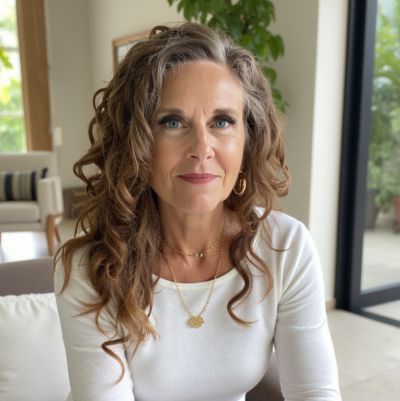
Elizabeth is a Master Certified Life and Health Coach with over 20 years of experience, dedicated to helping women in midlife thrive through holistic health and wellness. Her personal journey began with a desire to reduce her own breast cancer risk, which evolved into a mission to guide women through the complexities of midlife health, from hormonal changes to mental clarity and emotional resilience.
Elizabeth holds certifications from prestigious institutions such as The Life Coach School, Precision Nutrition, and the American Council on Exercise, as well as specialized training in Feminist Coaching and Women’s Hormonal Health. Her approach is deeply empathetic, blending her extensive knowledge with real-life experience to empower women in their 50s and 60s to build sustainable health habits that last a lifetime.
Recognized as a top voice in women’s health, Elizabeth speaks regularly on stages, podcasts, and webinars, inspiring women to embrace midlife with energy, confidence, and joy. Her passion is helping women regain control of their health, so they can fully engage in the things that matter most to them—whether that’s pursuing new passions, maintaining strong relationships, or simply feeling great in their own skin.