Walking really helps clear my head & centers me. Its my therapy. I do a fair amount of thinking when I walk.
As I was walking the other day, I was feeling rather anxious. I’ve recently taken on a few different continuing education courses for my professional life, with the hopes and expectations of being a better coach, and helping my clients more. And, I’ve probably over-committed myself a bit in the process. The skills that I am learning are extremely valuable, but change is difficult. I have relied on one way of doing things, and now that I’m learning about a better way of doing things, even though I can see the value in it, sometimes it seems easier to just revert to the old way.
I was thinking about how easy it would be to forget about the new techniques I was learning to help clients through stuck times. How uncomfortable it is to try a new way of doing things, and how icky it feels. I know the old way that I was doing it is broken, yet it’s the only way I feel safe. Just in writing that, I realize the absurdity of it all, yet when we’re in the middle of change it seems easier to revert back than go through the discomfort and be better in the end.
But regardless of whether we’re making changes to our diet, learning a new communication technique, sport, or skill, When we’re learning, we’re growing. And honestly, growing isn’t easy.
So, we become stuck. Stuck between what we want, and what is. Getting across that chasm can seem overwhelming. On one side, we know what we have. We’re comfortable here. On the other side, there’s change. And we really don’t know what the future will bring.
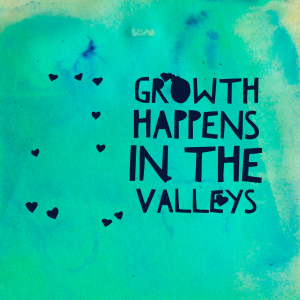
Growth Happens in the Valleys
We don’t want to be where we are, and we don’t want to go through the muck of getting through the change.
What we forget when we embark on a new way of doing things is the discomfort that we feel during the transformation. And while we’re in the middle of the transformation, in the thick of the discomfort, we wonder why we ever wanted to change in the first place? Weren’t things going along just fine as they were?Often the change is alluring. We see people who have made the transformation, and are living proof of how change can benefit us, but we don’t see them struggle. Or, if we did, the change didn’t seem that difficult because that other person was going through the change process. Not us.
We don’t seek change in our lives until the pain of staying the same outweighs the pain of change. No one LIKES change. But first, it’s a fallacy to think that we can stop change from happening. Every day change is already happening all around us: births, deaths, job changes, diseases and cures, aging.
It’s obvious that when we’re feeling stuck to ask ourselves the questions: What is good about changing? and What is bad about staying the same? The thing is that when we ask these questions, we immediately start defending our stance.
So instead, let’s also ask the questions, What is good about staying the same? and What is bad about change?
In these questions, we get to mourn the loss of the way things were.
I’ve been talking lately a lot about habits. And we have our habits and cravings because they served a purpose. Those habits may not be positively serving us any longer, but that doesn’t mean that we don’t have an emotional connection to them. It’s natural to mourn that loss.
One of the habits that I give my clients is to eat only to 80% full. This is one of the most difficult habits to practice. It sounds silly to write it, but many, myself included, need to mourn the idea that we’re never going to be able to overeat again. There’s an emotional connection there that will be lost. And like we mourn a loved one who has passed on, we are passing on from this phase of our life.
And only after we’re able to mourn the loss of our bad habit, can we embrace the change and growth that we desire and deserve.
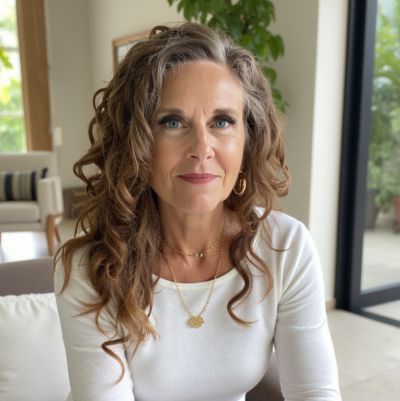
Elizabeth is a Master Certified Life and Health Coach with over 20 years of experience, dedicated to helping women in midlife thrive through holistic health and wellness. Her personal journey began with a desire to reduce her own breast cancer risk, which evolved into a mission to guide women through the complexities of midlife health, from hormonal changes to mental clarity and emotional resilience.
Elizabeth holds certifications from prestigious institutions such as The Life Coach School, Precision Nutrition, and the American Council on Exercise, as well as specialized training in Feminist Coaching and Women’s Hormonal Health. Her approach is deeply empathetic, blending her extensive knowledge with real-life experience to empower women in their 50s and 60s to build sustainable health habits that last a lifetime.
Recognized as a top voice in women’s health, Elizabeth speaks regularly on stages, podcasts, and webinars, inspiring women to embrace midlife with energy, confidence, and joy. Her passion is helping women regain control of their health, so they can fully engage in the things that matter most to them—whether that’s pursuing new passions, maintaining strong relationships, or simply feeling great in their own skin.