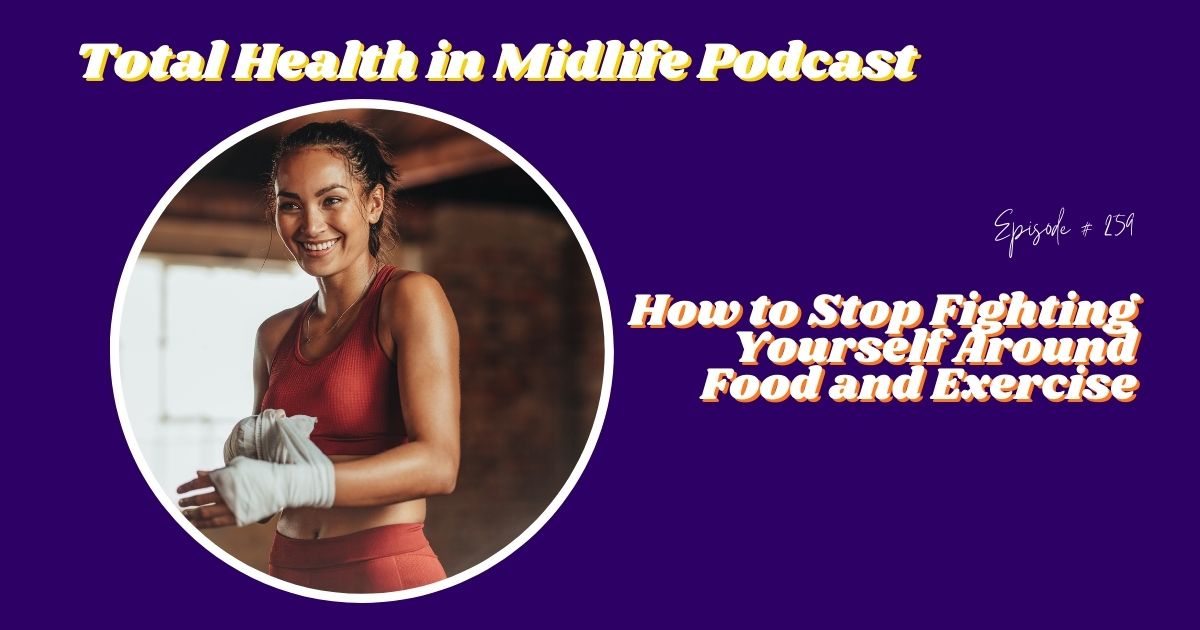
We’ve all been there—you wake up with the best of intentions. You know what to do. Move your body. Eat something green. Drink water instead of wine. But then… you don’t. And by the end of the day, you’re wondering what’s wrong with you.
In this episode of Total Health in Midlife, I’m walking you through a powerful framework I use with clients called competing models—the real reason smart, capable women sabotage themselves even when they want to do better. If you've ever felt stuck in a loop of “I know better, so why don’t I do better?”—this is the explanation you’ve been missing.
You’ll learn why information and logic aren’t enough to change your habits, how your emotional brain runs the show, and what to do when your cravings or exhaustion keep winning. You’re not broken. You’re just using an outdated playbook.
Midlife health doesn’t need to feel like a constant fight. Let’s make it make sense—so you can stop feeling stuck and start building habits that last.
The Biggest Problem Midlife Women Face Regarding Health Habits
The biggest reason women in midlife struggle to stick with healthy habits—even when they know exactly what to do—is because they’re trying to use logic to override emotion. We’ve been told that if we just “try harder” or “stay disciplined,” we’ll be able to eat better, move more, and finally feel in control. But that approach completely ignores how the human brain actually works.
In reality, we don’t act on what we know. We act on what we feel. And when you’re exhausted, overwhelmed, or burned out, the idea of doing something hard—like exercising or skipping the cookie—feels impossible, even if it logically makes sense. This emotional override creates an internal tug-of-war between your goals and your current needs, and your emotional brain usually wins. Understanding this conflict is the first step to real, lasting change.
What You Can Do Right Now
The first shift is to stop treating your health choices like a discipline problem and start seeing them as a pattern of emotional responses. If you find yourself repeating the same cycle—setting goals, then abandoning them when things get busy or stressful—that’s a clue that you’re experiencing competing models.
Instead of shaming yourself for not following through, get curious about what emotion is driving your action in the moment. Ask: “What am I feeling right now, and what thought created it?” Awareness is the first step. From there, you can start practicing intentional shifts—building new emotional connections to the habits you want to do.
The Listener Takeaway: Why This Episode Matters
If you’ve been quietly wondering why you can “handle everything else” in life but still struggle with food, movement, or energy, this episode offers the relief of understanding. You’re not lazy. You’re not undisciplined. You’re not broken.
When you stop blaming yourself and start working with your emotional wiring instead of against it, you open the door to change that actually sticks. No more all-or-nothing starts and stops. Just steady, human, sustainable progress.
Are you loving the podcast, but arent sure where to start? click here to get your copy of the Done with Dieting Podcast Roadmap (formerly Total Health in Midlife) Its a fantastic listining guide that pulls out the exact episodes that will get you moving towards optimal health.
Take the Quiz: Why Do Your Healthy Habits Keep Falling Apart? If you've ever wondered why you know exactly what to do but still can't seem to stick with it, this quiz was built for you. In about 3 minutes, it identifies your specific pattern: the real reason your follow-through keeps breaking down, and what to address first. Your results are delivered straight to your inbox.
I am so excited to hear what you all think about the podcast – if you have any feedback, please let me know! You can leave me a rating and review in Apple Podcasts, which helps me create an excellent show and helps other women who want to get off the diet roller coaster find it, too.
Watch or Listen to the Episode:
WHAT YOU'LL LEARN
- Why "I know what to do" isn't enough to change your habits
- How two competing thoughts can lead to inaction or sabotage
- What to do when your emotional brain keeps choosing comfort over consistency
RESOURCES
- Download the free Podcast Listener’s Guide
Full Episode Transcript:
259 - Competing Models
Elizabeth: [00:00:00] Have you ever had one of those days where you know exactly what would make you feel better? Like you could list it out for someone on a whiteboard, but then you don't do any of it. You know that going out and getting some movement would help your mood and you know that sugar makes you feel like crap.
You know that scrolling first thing in the morning turns your brain into high alert, and yet you still don't do the thing that you know is best for you. It's so frustrating. It makes you feel like maybe something's wrong with me, you're smart enough to know better.
Now, if that sounds familiar, don't go anywhere today because what I'm about to share might just explain everything. And guess what? It's not about willpower, motivation, or getting your mindset right. It's about how your brain actually works. And so once you understand it, you [00:01:00] can use it for your own good and you will never beat yourself up like you did before.
So let's get into it.
Welcome to the Total Health and Midlife Podcast, the podcast for women over 40 who want peace with food, ease in their habits, and a body that they don't have to fight with.
Hey everyone. Welcome to the Total Health and Midlife podcast. I am your host, Elizabeth Sherman, and I am really super glad that you are here because the one thing that people come to me about is, I know what to do, Elizabeth, but I just don't do it. And so I wanna start out with a little story, because the other morning.
I totally bailed on my own routine. I woke up, I grabbed my coffee, I fed the cats. I gave cocoa, my puppy, her breakfast, and everything was great. But then instead of doing the things that I know are going to help me to calm my nerves and set my day up for success, [00:02:00] I turned into Instagram. I picked up my phone and I started scrolling, and not because of anything that I was expecting, not an urgent message, not anything, but I just didn't have a plan.
And it was the dopamine rush habit, wanting to check out whatever it is. And of course, the rest of my day, I just felt off. I was distracted, I was edgy. I just. Was on high alert I couldn't focus, and by 3:00 PM I was completely frazzled and I didn't even remember like what I had done that day. Now, here's the thing, I know better.
I teach this stuff. I designed my morning routine because I know what happens when I don't do it, so why didn't I follow it? That's the question that [00:03:00] we are gonna answer today. Because I know I'm not the only one who does this. So let's talk about that tension, that tug of war between what you know and what you do.
Because if you've ever stood in front of the pantry and you've thought, I don't even want this, so why am I reaching for it? Or you stared at your running shoes and thought, I know that I'll feel better if I go, but then you still didn't go. That's not just you being lazy or broken or undisciplined or whatever it is, that story that's coming up in your head.
That is you being supremely human. It's one of the most frustrating things that I hear from my clients all the time. They'll say, I know that I should be doing this, so why don't I do it? And it's not just about food or movement. It shows up with sleep, with boundaries, with relationships, with finances, with water, with.
Everything that we [00:04:00] do in our lives, we make promises to ourselves. We swear this time it'll be different. You fill your head with all of the evidence, the logical, educated reasons why you should be doing the thing, and then when you don't, it feels like this weird betrayal, like, I literally know what to do, what is wrong with me?
Nothing, there is nothing wrong with you. Now, here's what's actually going on. Your brain is running on what I call competing models, or you might think of it as competing thoughts. Now there's a tool that I use with my clients. It's called The Model, and the foundation of most of the behavior that we explore is based in the model.
It has five different parts. There are circumstances, there are thoughts, there are feelings, there are actions, and then there are results. Now, circumstances, the [00:05:00] first part are neutral. They're like facts, like it's 6:00 AM there's a cookie on the counter. You have a gym membership. Then you have a thought about that circumstance, like it's too early to work out, or That cookie looks amazing, or I will be so glad that I did this later.
Now, whichever thought you think creates a feeling or an emotion in your body, maybe it's dread, maybe it's excitement, maybe it's comfort or resistance. Maybe it's joy, love, or. I don't know desire, and that feeling is then what causes your actions. So you either hit snooze, you eat the cookie, or you lace up your shoes, which of course then doing actions over and over and over again leads you to your [00:06:00] results.
And either you reinforce the habit that you want or you continue with the one that you don't. Now, here's where it gets really super interesting. For any given circumstance, you are not having just one singular thought. You might be having multiple thoughts, and some are helpful, some are not, and each of those thoughts creates its own mini model, for lack of a better word.
That's what I mean by creating competing models or competing thoughts. So let's say that your alarm goes off at 6:00 AM Now one thought might be, Ugh, I am exhausted. I need more sleep. That creates a feeling of fatigue or entitlement, like, I deserve a break. So you hit snooze, that's your action. But another thought might be, if I get up now, I will feel so proud of [00:07:00] myself later.
Now that creates a different emotion. Now, it might be motivation, but it might be determination. And that version of you puts her feet on the floor and starts her day. So the question is, which version wins the snooze alarm or the one that gets going? Here's the answer. It's the one that generates the strongest feeling.
That's it. That's the difference. We as humans don't act on logic. We act on emotion. The thought that carries the most emotional weight, that's the one that hits you in your gut. That's the one that determines what you're going to do next, and that can be exhausting. Because it's not a lack of information that's actually keeping you stuck.
It's not a moral failure or a willpower issue. It's that your thoughts are fighting with one [00:08:00] another and whichever one stirs up the most intense emotion in the moment is the one that drives your action. And once you're able to see this, it completely changes everything. Because now you can start to evaluate that.
You stop being confused and you stop being helpless. You're just caught between two thoughts and that's something that we can work with. So let me say this clearly. Your brain isn't broken. In fact, your brain is doing exactly what it was designed to do. It was designed to protect you, to conserve energy and to go after things that feel good.
It is running beautifully, predictably, and brilliantly, but sometimes that brilliance works against the version of you who wants to feel good in her skin? Who wants to get. Stronger sleep, better, have more energy, and [00:09:00] be more present in her life. So let's go back to that 6:00 AM alarm. The circumstance is the same, but the thought that you have about it, that determines everything.
So if you think I should get up and move my body, that might generate a feeling like responsibility or motivation. And if that feeling is then strong enough, it might get you out of bed. If the louder thought is, Ugh, it's already 6:00 AM I am so tired, I can't do this today. The feeling is probably exhaustion, maybe even resentment.
And if that feeling is stronger, then guess what? You're gonna stay under the covers and hit the snooze period. Now the same logic happens for food. I think that every one of us knows that sugar is bad for us. I put that in quotes. We [00:10:00] have a litany of reasons in our head of why we should not eat sugar. I know that sugar spikes my blood sugar.
It wrecks my energy and it makes me feel like garbage. That's true. It's logical, it's smart, but in the moment. If you also think that cookie is going to be delicious, I've had a day I deserve something. If that second thought only lasts for a second and it sparks a hit of excitement, desire, anticipation, pleasure, that emotional cocktail is probably gonna be stronger than all of your nutritional podcasts combined.
So, of course the cookie wins, and not because you don't know better, but because you are a human who runs on emotion. Here's the thing that we forget, especially as women, that we [00:11:00] are emotional beings, and I don't mean that in the way that it's been used to diminish us. I mean that in the most honest, grounded way possible.
We feel our way through the world, and it's not just women. Everyone does this. We all lead with emotion. We decide based on our feelings, and then once we decide, we go looking for the logic to back us up. Now, think about the last big purchase you made. Maybe it was a car, a couch, a vacation. You probably told yourself that it was a smart investment, but the truth is you really wanted it.
You imagined how it would feel to drive that car to sit on that couch to escape to the beach? The logic came later. The feeling came first. We do it in [00:12:00] relationships in our careers, and yes, in our health habits and finances. And when we try to override our emotional brain with information, it just doesn't stick.
Facts don't drive action. Our emotions do. So if you've ever felt like you are living in contradiction, like one minute, you're full of really good intentions, and then the next you're sabotaging yourself, you are not alone, you're not weak, you're not undisciplined. You are just a human with a very effective emotional operating system.
And when you start to work with that system instead of against it. Everything actually gets easier. So here's the part that blows people's minds in a really good way. You know how we just talked about competing thoughts and how the strongest feeling wins? Well, here's the flip side of that coin. You [00:13:00] already know how to change your thoughts.
You've done it your entire life. So let me give you a few examples. First, I want you to think about your very first car. Maybe you loved it, maybe you named it. Maybe you felt a little thrill every single time you turned the key, but now if you still had that car, you would probably think, why did I ever love this thing?
It rattles. It smells like fish. It's a death trap. Same car, different thoughts. Or that restaurant that you used to rave about, you told everyone it was the best thing ever. You loved the garlic knots, the service, the ambiance, but then one day the food kind of tasted off, or maybe the waiter was rude, or maybe you were taste just changed and now you're like, eh, it's fine.
[00:14:00] But we haven't been there in a while. There are other places that we'd rather go. Same restaurant. Different thoughts or, here's a really juicy one. Think about your very first crush. You were so into them, you couldn't stop thinking about them. They gave you butterflies, and now you probably wouldn't even touch them with a 10 foot pole.
You look back and you think, what was I even thinking back then? Nothing about the car. The food or the person changed. You changed your experiences, shifted. Your brain updated its beliefs, you reevaluated, reinterpreted, and without even trying, you thought differently about something that you used to feel so strongly about means you already know how to change your mind.
You just didn't realize that you could do it on purpose, and [00:15:00] that that's where coaching and mindset work becomes a complete, total game changer. Because when you can learn to recognize your thoughts, not just the loud ones, but the quiet ones, the little assumptions that are steering the ship, you get access to something that you didn't even have before, which is choice.
You don't have to keep defaulting to the thought. I'm too tired to exercise. You can actually start building the thought. This walk will give me energy. Or, yeah, I know that I'm too tired right now, but it'll make me feel better. You don't have to keep believing, I can't resist sugar. You can start shifting towards, you know, that cookie looks really good, but.
I'll feel better if I don't eat it. You're not faking it. You're retraining your brain to respond in a [00:16:00] way that aligns with what you actually want. And I wanna be clear here. This is an overnight magic. It's not about forcing you to think happy thoughts or pretending everything is fine either. It's about getting honest with the thoughts that you already have and gently choosing to practice new ones that serve you and who you want to become.
The habits that you wanna cultivate better, you've changed your mind before and you can do it again. And when you do it with intention. That's when everything starts to shift. Now here's what trips up. A lot of us, we do something that we didn't plan on. Again, we eat the cookies, we skip the workout, we pour another glass of wine, and then we say to ourselves, Ugh, why did I do that?
It was so dumb. And then we go straight into a shame spiral. We tell ourselves [00:17:00] that we're weak. We beat ourselves up for not having willpower. We act like the behavior was irrational, like it came out of nowhere. But let me offer you a reframe. You did it because there was an upside to that behavior. You ate the cookies because they taste good, because they're comforting, because they gave you five seconds of relief or pleasure after a day.
That felt like a lot. You skipped the workout because you were tired, because staying in bed felt cozy because you needed rest or you just wanted it. Now that doesn't mean that those were the best choices, but it does mean that they made sense. And when we pretend that they didn't, when we reject the benefit that we get from them, we make ourselves the problem.[00:18:00]
We say things like, I know better so I should do better, and we completely ignore the part of us that is just trying to feel good or safe or calm. So let's stop pretending and let's be radically honest with ourselves. Cookies are delicious. Scrolling on social, it's, it feels good. Sleeping in is so easy.
Those are all truths. And when you tell the truth, when you stop making your choices means something terrible about who you are, you create room to understand what's really going on. And when things start to make sense, that's when you stop feeling stuck, and that's when change really starts to feel possible.
So here's what I want you to take away from today's episode. You're not lazy, you're not broken. You're not self-sabotaging. Your brain [00:19:00] is working exactly as it was designed to. It's trying to protect you, it's trying to keep you comfortable, and it's trying to avoid discomfort, pain, or displeasure. And when you make decisions that don't line up with your goals, it's not because you're doing something wrong.
It's because in that moment, one emotion just felt stronger than another. That's it. The moment that you stop blaming yourself and start getting curious about your thoughts and feelings, that's when everything begins to shift. And not because you're forcing yourself into better habits, but because you are starting to understand the real reasons behind what it is that you do, your motivations.
And when that makes sense, change becomes possible. So if this topic makes sense for you, and if it all clicked, if you feel seen or you're wondering what else might [00:20:00] start to make sense, I wanna invite you into taking the next step. I have put together a free podcast listeners guide that can help you to find exactly the right episodes based on where you are right now, whether you're working on your food movement, sleep, or just trying to figure out why you feel so off lately.
It's a really great place to start and you can grab it by tapping the link in the show notes or just go to elizabeth sherman.com/roadmap and if something from this episode hit home for you, I would love it if you would connect with me on Instagram. I love hearing what stood out. What made you go, oh my gosh, Elizabeth, that is me.
You are not alone in this and you are definitely not broken. So that's all I have for you today. Have an amazing day, and I'll talk to you next time. Bye-bye. Hey, so if you've been nodding along and thinking, okay, I know what to do, Elizabeth, I'm just not doing it. I have got something for [00:21:00] you. It's my free podcast listeners guide. It's a curated roadmap to help you get started with the most helpful episodes based on exactly what you need right now. Go to elizabeth sherman.com/roadmap and take the guesswork out of where to begin with the Total Health and Midlife podcast.
Enjoy the Show?
- Don’t miss an episode, follow the podcast on Spotify and subscribe via Apple Podcasts or RSS.
- Leave me a review in Apple Podcasts.
- Join the conversation by connecting with me on Social!


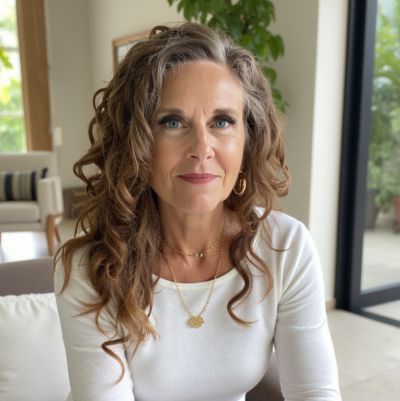
Elizabeth is a Master Certified Life and Health Coach with over 20 years of experience, dedicated to helping women in midlife thrive through holistic health and wellness. Her personal journey began with a desire to reduce her own breast cancer risk, which evolved into a mission to guide women through the complexities of midlife health, from hormonal changes to mental clarity and emotional resilience.
Elizabeth holds certifications from prestigious institutions such as The Life Coach School, Precision Nutrition, and the American Council on Exercise, as well as specialized training in Feminist Coaching and Women’s Hormonal Health. Her approach is deeply empathetic, blending her extensive knowledge with real-life experience to empower women in their 50s and 60s to build sustainable health habits that last a lifetime.
Recognized as a top voice in women’s health, Elizabeth speaks regularly on stages, podcasts, and webinars, inspiring women to embrace midlife with energy, confidence, and joy. Her passion is helping women regain control of their health, so they can fully engage in the things that matter most to them—whether that’s pursuing new passions, maintaining strong relationships, or simply feeling great in their own skin.